
The Ultimate Guide to Seeing Broadway's Musicals on a Budget
When in New York City you might have the urge to go see some theatre. There is really something for everyone. Here are some tips to help you save your pennies so maybe you can pack in more than one on your trip to New York City!
Tips on how to win in person Broadway lotteries to shows like The Book of Mormon and Wicked as well all the hidden secrets to finding cheap Broadway tickets.

When in New York City you might have the urge to go see some theatre. How can you not want to with all those beautiful billboards screaming at you?! Mamma Mia! The Lion King! Book of Mormon! There is really something for everyone. Even if you’re not a traditional musical or theatre fan I bet I could find something to appeal to pretty much anybody.
Some people, like yours truly, head to New York just for the chance to see one of the big shows on Broadway. Back in my home town of Brisbane, Australia we get maybe 4 shows a year, one at a time. So when I get to New York City it's a huge treat for me to have my pick of what to see.
Unfortunately, Broadway for broke people can be pretty unachievable and those Book of Mormon Broadway tickets can be upwards of $90 for the nosebleed seats plus all the crazy fees they want to charge you for the honour of seeing their show.
On my first trip to New York City, I had no idea what a broadway lottery was and so opted for what I thought was the best option to buy cheap broadway tickets - TKTS. Since then, I've visited many more times and seen some great shows and now have a handle on my favourite thing - the Broadway lottery!
Here are some tips to help you save your pennies so maybe you can pack in more than one Broadway show on your trip to New York City.
How do broadway lotteries work?
Generally a lottery allows you to put your name in the running for an allotment of tickets that are significantly reduced. The number of tickets available change daily depending on how many seats are left for that day's show. Lottery winners are awarded a double pass but if you’re attending on your own, which is also common, you can often indicate that you only need one ticket at the time of entering your name.
The lotteries usually open two to three hours before a show, there is a half hour to an hour period where people can enter their names and then once the time is up they will draw the winner. For in-person lotteries you have to be there to accept your ticket and for the online version you’re usually given a set period of time to accept and purchase the tickets before it’s offered to someone else.
For shows that have an evening and matinee performance, there will be two times that you can register. A lot of lotteries, like The Book of Mormon, also offer amazing seats for lottery winners, often front row.
Visit Broadway For Broke People for advice on which websites and apps you need for a particular digital lottery or what time the in-person lottery opens.
Digital lotteries
This is the lazy man’s lottery. You can log in each morning, register for whichever shows you’re interested in seeing and then go about your morning until you get notified a couple hours before the show whether you've won or not.
Before you arrive you can start downloading some of these apps to get an idea for what shows are available for online lotteries. Most of the digital lotteries seem to be accessible on the TodayTix app.
In-person lotteries
Visiting one of the in-person lotteries is an experience you should try at least once! There is a great atmosphere amongst all the other theatre goers and it’s like gambling but it doesn’t cost anything, unless you win of course but then it’s like a nice present to yourself.
There are several very popular in-person lotteries, one of which is The Book of Mormon in person lottery. There are often 200 entries in this lottery. The guy who runs the lottery turns the experience into an event and even has his own Twitter account. Follow him at @lotterydude.
You can either time it so that you arrive just before the lottery closes to put your name in (but be careful!) or arrive while it’s open and then grab some lunch or a drink while you wait. I enjoyed taking the opportunity to explore some new bars and eateries while excitedly waiting for the lottery to close.
5 Tips for winning a Broadway lottery ticket
1) Prioritise your must see Broadway shows
Put together a list of the 10 shows that you definitely want to see. This will help you narrow down your options. There are so many shows to see in New York that it can overwhelming! For a comprehensive look at what’s available and what’s hot right now, check out the Playbill website.
2) Make a list of lottery times and location
Map out when the lotteries run and where they are. Clever visitors with a partner can potentially enter two lotteries with theatres close to each other.
For example Book of Mormon and Wicked both have lotteries that run at the same time. You could both enter one lottery, walk the 5 minutes to the other theatre and enter the other lottery and then split up for the announcements. If you win one, quickly message your partner so they can head back and claim your discounted broadway lottery ticket.
3) Double your chances
Most Broadway lotteries award two tickets so if you have a partner with you then you get double the chances to win. If you’re on your own, try to look for other solo theatregoers and enter the lottery together. So instead of just having one chance at winning you can have two. This is pretty common practice so don’t be shy and strike up a conversation!
4) Big crowd? Don’t worry!
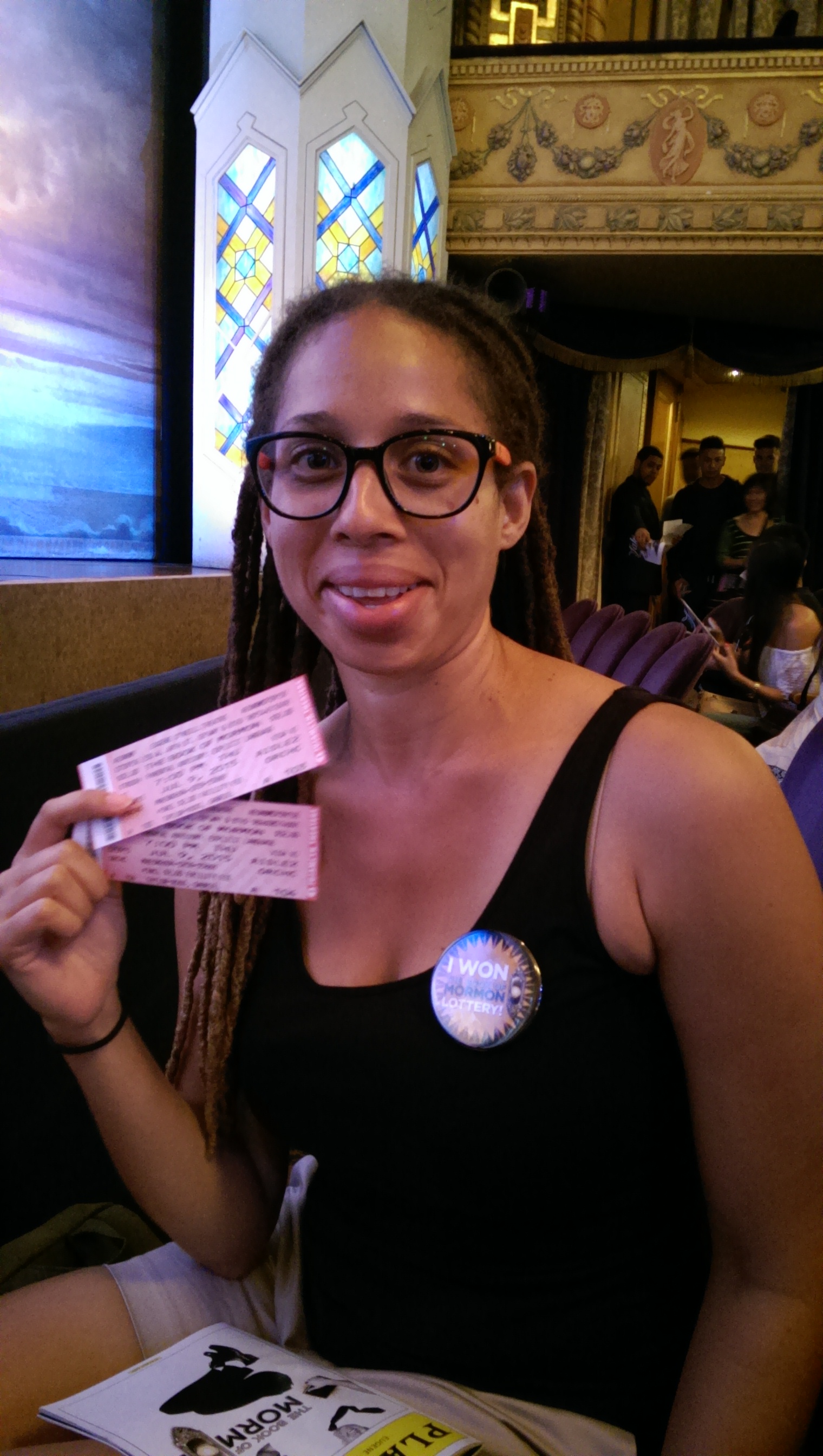
Don’t be disheartened if you see a lot of people in line for the lottery. Remember that everyone has equal chances of winning and you never know what’s going to happen. I was in New York City for one week and managed to win one lottery a day and I would never consider myself to be a lucky person! On my second try at The Book of Mormon lottery tickets my friend and I both actually won!
5) Cash Only
Many theatres only accept cash for these specially priced tickets. Make sure to bring enough just incase you win.

Rush and Standing Room Only (SRO) Tickets
Rush tickets are for the early birds. These are an unspecified allotment of tickets that are sold from when the box office opens in the morning (usually 9 or 10 am). For the more popular shows you can expect a wait time so try to get there long before the box office opens. Some theatres restrict these tickets to students only so make sure to bring along any valid student ID.
The very cheapest option, SRO tickets, are for numbered spaces that are the width of a regular seat, usually located at the back of the orchestra. Unlike the lotteries, only one SRO ticket is sold per person. These can be quite uncomfortable and definitely only for the young and young at heart!
HipTix
Hiptix is Roundabout Theatre's low-price ticket program for 18–35 year olds. It's free to join and gets you $25 tickets to all Roundabout shows.
You should buy tickets in advance as they only reserve 10-40 tickets for each performance and once they’re gone then you’re out of luck.
Check out their website for information on upcoming shows and it definitely doesn’t hurt to register for Hiptix in advance and see if there is anything that you’d like to see.

Other things To note
- Traveling with someone else? Make sure you’re both entering the online Broadway lotteries. Download the app on your companions phone and register both of you so you’re both in for a chance of winning.I
- If you're planning to be out all day and won't have time to duck back to your hotel for a change of clothes I would suggest bringing along something a bit nicer to wear just in case you are lucky and win one of the lotteries. You often only have an hour or two before the show starts and may not want to leave and come back. Trust me, I had to go to The Book of Mormon in shorts!
- Didn’t make it in for a show? Try TKTS. TKTS is not as cheap as the lotteries but they are still a really good deal. Especially if you’re flexible. There are three locations, Times Square, Downtown Brooklyn and the South Street Seaport. The last two are usually not busy at all. You can visit during the day and peruse the shows that are available. The staff are also really knowledgeable about what’s on and can suggest which show you might enjoy the most. I’ve been told that tickets become available for different shows throughout the day so it doesn’t hurt to stop in again in the afternoon if you didn’t see anything you liked in the morning.
At the end of the day, if you have your heart set on a particular show, depending on how much time you have you might just want to fork out the money and see it regardless. That’s ok too! No matter which way you do it you’re going to have an amazing time.
Need some more New York budget inspiration? Check out this guide on the Best of NYC on a Budget by a Native New Yorker. It includes tips on whcih museums you can visit under $5 and how to visit the abandoned City Hall subway station!
Apps to download
Websites to bookmark
- For information on individual theatre policies for lotteries, rush and SRO tickets: Playbill.com
- or Broadway For Broke People for a more summarised view
- For in-depth reviews of shows: Did He Like It
- For theatre lovers 18 to 25 years old: HipTix
- For discounted tickets without the chance: TKTS
- For more ideas on cheap and free things to do in NYC: The Skint
Looking for somewhere to stay?
These are my favourite options for different budgets. Check out their latest prices and reviews for more info.
Budget - HI NYC
TripAdvisor | Booking.com | Hostelz
Mid-range - Casablanca Hotel by Library Hotel Collection
TripAdvisor | Booking.com | Expedia
High-end - The Langham New York Fifth Avenue


Ultimate Guide To Volunteering Overseas
My very first time volunteering I was a young 18-year old. It was my very first solo trip around the world and I had chosen to spend three months in Ecuador volunteering with street kids and improving my Spanish. I hadn’t saved very much money for this trip, about $20,000 for a full year of travel after flights and needed to find ways to travel cheaper for longer. That was my start in volunteering while travelling and I personally think that it can be a very rewarding experience for you and the cause you are trying to help as long as you do your research and enter into it for the right reasons.
Note: I haven't included any pics in this post out of respect to the children that I have worked with over the years. I hope you enjoy the writing instead :D
My first time volunteering I was a young 18-year old. It was my very first solo trip around the world and I had chosen to spend three months in Ecuador volunteering with street kids and improving my Spanish. I hadn’t saved very much money for this trip, about $20,000 for a full year of travel after flights and needed to find ways to travel cheaper for longer.
I learnt through my research online that the longer you spend in one place the cheaper your overall travels will be. This philosophy of slow travel really stuck with me and even now you’ll rarely find me staying in a country for less than two weeks.
I found a great looking organisation in Quito, Ecuador using Volunteer South America's website. We emailed back and forth a few times to make sure it was a good fit and then I paid my deposit. This experience cost $290 a month and included meals and accommodation in a volunteer house as well as twice weekly Spanish lessons. I enjoyed my time here so much that I stayed an extra 3 months but because I was feeling a lot more confident as a traveler, chose to find my own place to live and worked out a deal to volunteer for free.
That was my start in volunteering while travelling and I personally think that it can be a very rewarding experience for you and the cause you are trying to help as long as you do your research and enter into it for the right reasons.
Don’t pay thousands of dollars to volunteer!
If there’s only one thing you take away from this then let it be this point. I cringe a little bit every time someone tells me they’ve found a great volunteer gig for two weeks taking care of elephants or as a teacher in an orphanage and it only cost them $3,000.
Firstly, I have a serious issue with how much good you can do in two weeks, especially working with children. There’s been a lot of discussion around the fact that you cost the charity time and resources by having to train someone, only for you to leave a few days later. This is why you will likely find yourself in a very unappealing position, cleaning elephant poo in the enclosure when the elephants are not around or as a teacher’s aide where you fetch materials for the actual teacher and have no interaction with the kids.
Sure you’ll get your necessary elephant selfie or snaps of you colouring with the poor orphans but did you really do any good and could you have just sent all that money to a grassroots organisation that is trying to make something of their community from the ground up?
This has been covered a lot more thoroughly here and here if you’re interested in learning more. Just know that I volunteer often while traveling and the most I have paid was $290 a month and that was for food and accommodation. I also believe that anyone who actually wants volunteers will never want someone for as short as two weeks much less have a maximum period. That is a major red flag!
What if I have an actual skill?
There are also lots of opinions around about volunteering your time in other countries when you have a useful skill like a heath professional or a skilled worker like a carpenter or electrician. These skills are widely needed all around the world and if you have them then you should definitely go for it!
Be sure to understand, though, that there are some perceptions in the world that you are taking jobs away from locals who could be getting paid for it and also you could be working for an organisation that is profiting from your free labour. Make sure you understand how volunteers fit in with the local workers and why they are supplementing their time with yours.
What is grassroots volunteering?
When I think of grassroots, i think of organisations that are working from the ground up. Actual people from a community identifying a problem and creating a solution to help fix it. They may still use help from outside influences, including financial backing from generous investors but the cause is still personal and real. They work hard at the cause because it is what they need to thrive as a community.
The alternative of this would be if I went to Tanzania, for example, and I saw that there was a particular area that didn’t have a primary school. The kids had to travel long distances or just couldn’t attend at all. I could say to myself, “Wouldn’t it be great if I could create a charity where we build a school and have volunteers teach the kids?” Then I started pestering all of my friends, maybe start a Kickstarter campaign or a GoFundMe page, eventually get financial backing, register as a charity in my country and then arrive with 20 volunteers with minimal experience in building anything or teaching and struggle along for the next few years eventually handing over the poorly built school with no long-term plans for paying a teacher to the local community to deal with.
Sure, I’ve done some good, helped some kids and all the volunteers and people who donated to “Cristal Cares” feel great about themselves. I would have spent a lot more money getting all those volunteers into the country when it would have been better spent just donating my time, energy and funds to a grassroots organisation who has the same intentions.
For more information on high impact giving opportunities I strongly suggest you have a look at Give Well’s website and specifically this excerpt from Peter Singer’s book “The Life You Can Save” on cost effectiveness of charitable organisations.
Where should I start?
These four websites are my go-to when I’m looking for volunteer opportunities around the world. They will give you a good starting point but always remember to do as much research as you can before you commit to anything.
- Worldwide organisations - http://grassrootsvolunteering.org/
- Latin American organisations - http://www.volunteersouthamerica.net/
- Summer and Year Long Teaching Programs - http://www.worldteach.org/
- Eco/green organisations - http://www.greenvolunteers.com/ (this one you have to pay a small fee to access their database)
Also consider
- Workaway and Helpx - More of a work exchange. Less helping charities and more volunteering your time in exchange for accommodation and sometimes meals. This could be babysitting for a local family, helping on a farm, a receptionist at a hostel or even helping on sailing boats
- Local or expat forums on Facebook or online - Try searching for these online as they can be a goldmine for volunteer opportunities that don’t have a strong online presence
- Lonely Planet's Thorn Tree forum - Always full of useful information and assistance from people who live in the area
- Couchsurfing - You can try asking in the country or city’s Couchsurfing group
- Fellow Blogger, Elly has been updating her page with volunteer opportunities that are fee-free
My suggestion would be to choose the region/country that you want to volunteer in and then do a google search for organisations that are on the ground. Try “Cusco volunteer” and see what comes up or if you want to be more specific “Namibia volunteer street kids”. Play around with some different search terms until you get a good list of 20 or so opportunities and then spend some time researching their website, looking for participant reviews and emailing the ones that you like to see if they’re a good fit for you.
Contact hostels
I have also gotten in touch with popular hostels in the city and asked them if they had any recommendations for volunteer opportunities. Hostels are in a good position to collect views from travellers who have volunteered with local organisations and can point you in the right direction or steer you away from the bad ones.
Even if you are not a hostel person, just remember that hostels are unique in this regard because of their social nature. You wouldn’t spend much time socialising with the staff of your hotel, would you? At a hostel, however, the staff and owners are always around, answering questions and potentially sharing a drink with the guests in the common areas. Feedback is a lot more honest after a few tequila shots and budget travelers always look out for each other.
What should I look out for?
This is the tough part. There are no global rules or regulatory bodies that provide guidelines on what is a good outfit and what is not. You will have to use your own common sense when vetting a company.
Perhaps it's easier to give you a list of definite don'ts and points to consider to help you decide:
- Don't work with anyone who offers for you to cuddle or take pictures with a lion cub, tiger, monkey or any wild animal. Riding elephants is also off the table. For example, anything that involves working directly with lion cubs in Africa directly contributes to canned hunting. There are greater implications to working with wild animals and if you would like to do work in this area be very careful about what you choose. Think about it carefully. What would they have to do to these animals to make them complacent enough to allow you to interact with them? Elephants, for example, are tortured when they are young to break their spirits. They are beaten with clubs, bull hooks, starved and deprived of sleep. Not really the stuff travel dreams are mad of, is it?
- Stay away from anywhere that will allow you to work with children for a period of less than 30 days. Please consider the impact many people entering and leaving an organisation can have on a child.
- If you can't clearly see where your money is going then stay away. The organisers should be able to advise how your fee is spent and if they can't then find somewhere else.
- Is it obvious how they are helping the local community? Are they working directly with them and constantly assessing and adapting their methods? Some orginisations start off with the best of intentions but over time, their methods become less and less effective. I recently heard of a sanctuary for orphaned gibbons in South Africa that doesn't allocate funds to desex their males, allowing captive breeding.
- If anything seems off or there is not enough information then just keep looking. Unfortunately, foreign aid in general and oversees volunteer is a complicated issue with many views on what is right and whether unskilled volunteering helps at all. The best that you can do is choose a program with plenty of information, reviews and a long history of helping the local community.
Why do you want to volunteer?
Be honest with yourself. What is the reason that you want to volunteer? Is it to make the world a better place? Is it to experience a different culture outside of the regular tourist activities? Is it to make long-term travel more affordable? It could be a combination of these and none of these are a bad thing. I am very honest with myself these days and know that I won’t really change the world with my volunteering activities and I probably will have little impact on the cause I'm working with.
Now that I’m older and I’ve been volunteering on and off for the last 12 years, I know the main reasons I volunteer are to get a unique insight into the lives of the locals and also to save money on my travels.
Orphanages and Voluntourism
Voluntourism has become a big enough industry that people with the worst intentions have cottoned on to not just how to profit from it but are also putting children in a worse situation because of the orphanage.
The way it works is the “founder” of an orphanage will start to traffic children from small villages or pay parents to take children away from them and place them in an orphanage. All of this so they can rake in donations from overseas investors and kind-hearted volunteers. Even worse, they will purposefully keep these children in awful buildings to encourage more investing. More sad children + terrible conditions = more donations.
There are certainly many worthwhile orphanages out there that you could work with but unless you can clearly see that the practices are completely above board then I suggest you steer clear.
For more information visit Journey Wonder’s article on Orphanage Ethics and ABC News' for some devastating examples.
Are there any pros to voluntourism?
The major positive and biggest draw for people is the peace of mind that you have handed your money over to a company that has promised to take care of you.
They include extras like:
- Pre-departure support
- 24-hour emergency phone
- Airport pick-up
- Welcome meeting
- Location orientation
- 24-hour in-country support
Essentially this is what you’re paying for. They do al the leg work, put you on contact with presumably good organisations so you don’t have to go through the steps I’ve detailed above and promise to be there for you if anything goes wrong.
For someone who has never stepped out of your own country, this can be an attractive proposition and I don’t blame you for this at all. Please consider, though, the impact that all that money you’re handing over to the for-profit organisations could have on the cause you’re wanting to help.
Just remember that the costs you pay do not usually include:
- Flights
- Medical and travel insurance
- Visa costs
- Extra local excursions
- International and domestic airport taxes
- Personal Equipment
Do some research into how much it would cost to live in the country you want to volunteer in and then compare that to what you are being asked to pay. What’s the difference? Is peace of mind really worth that much?
As a case study, I volunteered with a local group in Oaxaca, Mexico at no cost to me. I did have to pay for my own food and accommodation, which they offered to help with. I found a great one-bedroom apartment in a lovely neighbourhood and ate either street food or in comodores and the occasional nice restaurant and I spent on average $200 a week. This also includes regular activities and excursions when I wasn’t volunteering. I could have cut the costs significantly by opting to stay in a private room in a nice hostel or even a shared room. I felt supported the whole time, staff were always checking in on me. I got a cheap sim card for my unlocked phone where I spent about $20 a month for calls and data so always had a way to get in touch with my friends. I had my own kitchen so I could create my own Mexican inspired dishes as well as enjoying visiting my neighbourhood market to buy local ingredients.
Here is a similar program that costs $1,990 for two weeks, almost 5 times the price! The accommodation is stated as “shared and basic” so it you were to do a further comparison with my favourite hostel in Oaxaca, Casa Angel, you could get a bed in a 4-bed dorm for $10 a night which includes a full buffet breakfast and easily survive on $100 a week. That becomes 10 times less than paying these people to volunteer with them.
Where does all this extra money go and how do the two options compare in terms of experience? I certainly enjoyed every minute of my time volunteering and never felt like I was missing out on anything. You really need to decide for yourself.
Further Reading
I would love if you would check out these two books. They will open your eyes to the world of Effective Altruism and help you find opportunities for the right reasons in the future:


Please share any advice you have on volunteering overseas or any experiences you’ve had with me in the comments. I’d love to know what you think!

This post includes affiliate links. When you make a purchase via these links, I receive a small percentage at no additional cost to you. Very small but very appreciated.

A Day Trip To Semuc Champey
If you’re up for a 6 hour bumpy ride into the middle of the Guatemalan jungle then I would suggest staying in Lanquin for 2 or 3 days, relaxing poolside at Zephyr Lodge and doing a day trip to Semuc Champey. The highlight of my time in Lanquin was visiting the Kam’ba cave system during the Semuc Champey day trip and putting on my Indiana Jones hat for a couple of hours. It was so much fun and months later I have not been able to stop talking about.
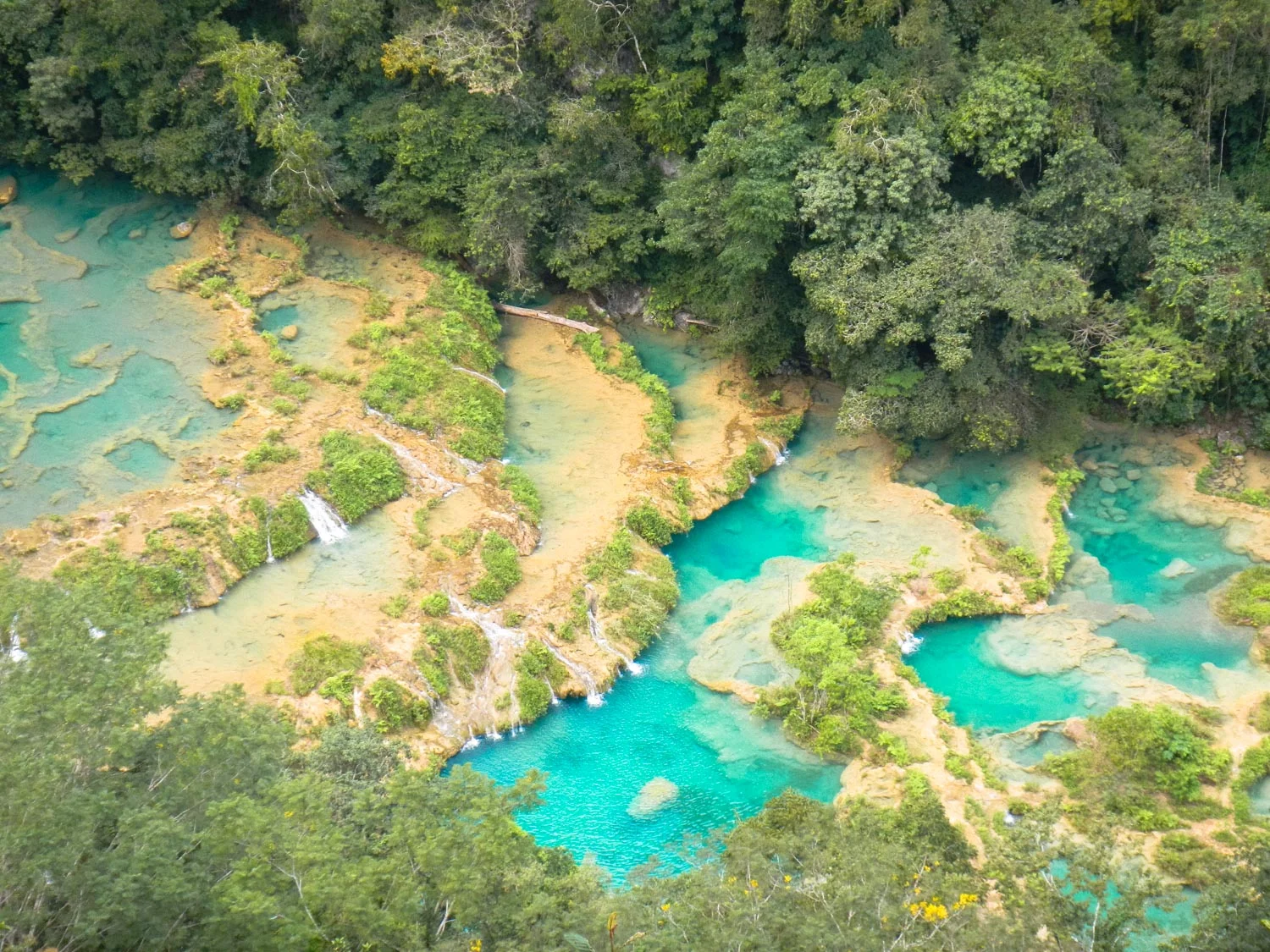
Semuc Champey is not easy to get to. It is out of the way and isolated but that’s part of its appeal. Imagine a jungle landscape with green as far as the eye can see and a beautiful turquoise natural pool in the middle.
If you’re up for a 6 hour bumpy ride into the middle of the Guatemalan jungle then I would suggest staying in Lanquin for 2 or 3 days, relaxing poolside at Zephyr Lodge and doing a day trip to Semuc Champey. I had a lot of fun wondering around the small town itself, hiking to the hill-top church and eating at the local eateries around town.
The highlight of my time in Lanquin was visiting the Kam’ba cave system during the Semuc Champey day trip and putting on my Indiana Jones hat for a couple of hours. It was so much fun and months later I have not been able to stop talking about.
Book your own local guide for your Semuc Champey tour here and read on for advice on how to get the most out of your trip and some Semuc Champey safety tips.

Semuc Champey Day Trip
All of the hotels and hostels in the area will offer a tour to Semuc Champey. It’s really your reason for visiting Lanquin and if you have the time, I recommend this as part of any Central American itinerary. Besides the main attraction of Semuc Champey, there are several other side activities that get to do on a day trip.
Cuevas de Kam'ba
At the time of my visit Zephyr Lodge had stopped offering the cave portion of the tour due to safety and theft concerns so a group of us just booked a complete tour through another hostel. Feel free to ask around but prices were all kind of similar.
One of the funnest things I have ever done in my travels was exploring the Kam'ba Caves at Semuc Chmpey and I’m so glad I took the gamble against my hostel’s warnings. It really isn’t the safest attraction and you are in the middle of the jungle in Guatemala so if you decide to do this trip then I suggest you walk and swim slowly and take your time when doing some more of the riskier activities. Also when walking through some of the darker section, keep a look out for sudden drops from the roof. Watch your head, there are no helmets on this tour!
Once you enter the caves, you are given a candle to light your way. No modern flashlights here! At the entrance the guides will decorate you with war paint fresh from the walls of the cave so it’s a good idea to be nice so you don’t end up with a moustache! Our guide joked it was bat poop but I chose to pretend it was something else.

I was quickly submerged in the cold cave water as we started the two-hour trek into the cave system. This wasn’t my favourite part as I don’t like the cold but I soon forgot about my discomfort when we got to our first adventure. Climbing a wood and rope ladder contraption that looked as old as the caves, one-handed, while trying to keep the candle away in the other hand.
There were a few spots where I actually had to swim through the cave when I couldn’t touch the bottom but luckily there was usually a rope to guide us along. These parts where I was fully submerged is where I got the majority of my bumps and scrapes from the stalagmites poking out from the bottom.
For the extra adventurous, there was an opportunity to scale up a rock face and dive into a deep pool below. I tried my best but I couldn’t get my little legs up there to even attempt the jump. I had also had more than my fair share of Guatemalan tostadas by then so I wasn’t in the best shape.
Halfway through I got to try the most challenging thing I had done in weeks, climbing up a mini waterfall by rope. With my candle down my bikini bottoms for safe keeping I had to scale a small cliff with water rushing into my face while looking out for the best foot holds. This was super fun and super scary. If this is too much for you, there is a slightly less challenging rope ladder that you can climb off to the side to help you get up away from the waterfall.
Towards the end of the trek you get to slide down a natural waterslide through a waterfall into a dark cavern. One of the guides stayed at the top to show you where to slide and one was down below to make sure you landed safely.
The cave tour was honestly worth the 6-hour ride to get to Semuc Champey on its own and its something I would do again in a heartbeat. My friend and I kept talking about how much fun we were having and that we wished we could stay longer. You don’t get much more fun and adventurous than this.

River tubing, bridge jumps and a rope swing
Once you’re out of the cave it’s time to relax. You can look forward to floating gently down the Cahabón River with a beer in your hand and a huge grin on your face. But first I was invited to try out the rope swing into the river. This one hurts if you don't land perfectly straight! Tuck your legs in while you’re swinging and make sure to let go at the end as it won’t be pretty.
Once we had floated all the way down to the rickety old bridge and had climbed out, we were invited to do one last jump - off the 10-metre high bridge into the river below. I had had enough adventure for one day and lunch was calling my name so I just watched the brave souls jump in and then struggle to swim back to shore in the current. What an exhausting morning!

Semuc Champey
After lunch, we walked across the bridge and entered the park of Semuc Champey. At this point you can just head straight to the main attraction and just relax or you can opt to do the one hour long hike to get to the view point so you can see the whole effect of these beautiful natural pools. Hiking through the jungle covered in war paint and a bikini is one thing I never imagined I would do but there I was, living the dream!
It’s a muddy hike up and very steep but once you’re up there it’s really quite breathtaking. Once you’re down you can pack away anything you don’t want to get lost in the lockers provided and can finally jump into the pools!
Semuc Champey consists of a natural 300 metre long limestone bridge, under which passes the Cahabón River. Atop the bridge is a series of stepped, turquoise pools that are perfect for exploring. My guide took us to some of the more impressive parts of the pools including showing us where we could safely jump from and the hidden mini caves including one that you needed to swim underwater to get to.
Semuc Champey is really beautiful and my photos don’t do the pools any justice. If you’re in Guatemala I really hope you don’t miss this trip.


Where to stay
I stayed at Zephyr Lodge. Zephyr is a great place to stay in Lanquin but does have its downsides. If you have the budget, their private rooms are great and include your own balcony overlooking the jungle. The dorms are hit and miss. Comfortable beds but the dorms located near the bar are noisy at night until the party dies down. The shared showers have their own individual view of the jungle which is kind of cool as do some of the toilets. Everything is very clean and well maintained.
The infinity pool is really the attraction here. The pool has a stunning backdrop and a swim up bar. There’s a large sun deck for perfect days relaxing by the pool with a strong drink as well as a hot tub with very restrictive opening hours. Overall I recommend Zephyr Lodge. It’s a good place to stay for a couple of days, you can relax or party and have a good place to rest your head after a long day at Semuc Champey.
You could consider staying at a hotel or hostel close to Semuc Champey. There are a few that sounded really nice and it means you can visit Semuc Champey more than once or for longer than we did on the tour. One friend recommended Utopia.
Check out TripAdvisor for some more options.
Never stayed in a hostel before? Read my posts on what to expect and your hostel packing essentials.

Other points
A good option is to use this as a stop over point between Tikal and Antigua.
Most travel agencies and hostels offer a shared shuttle service to Lanquin from Flores, Antigua or Lake Atitlan. Once you’re here an onward shuttle is just as easy to find. From memory, shuttles were a bit more expensive at Zephyr so if you’re feeling up to it you could walk into town and book something from another hostel or agency.
You don’t necessarily need a guide to just visit Semuc Champey. You can arrange a ride in town or try to hitch along the main road. Entry fee to the site is approx USD $6.
Stay safe by sticking to groups, not venturing off the path too far and be mindful of where your putting your feet and head in the caves.
You can pre-book a local guide for your Semuc Champey tour through Get Your Guide.
What do you think? Are Semuc Champey and the Kam'Ba caves worth the trip? Let me know in the comments below!
You Might Also Like


Hostel Packing Essentials
I’ve written a lot recently about my hostel experiences, what they’re like and some great ones to stay in. One important topic to cover is the essentials specific to hostels that you should make sure to pack when traveling and planning to stay in a hostel.
Some of these might already be obvious to you but hopefully you’ll pick up on some new items. I’ve covered what you should definitely pack and some things that I read on other “must pack” lists that I didn’t really need. These are my hostel essentials only so doesn’t cover the basics for every trip like clothes and adaptors etc.
I’ve written a lot recently about my hostel experiences, what they’re like and some great ones to stay in. One important topic to cover is the essentials specific to staying in a hostel. These are all the things that you should make sure to pack and some that I have ditched along the way. Some of these might already be obvious to you but hopefully you’ll pick up on some new items.
I’ve covered what you should definitely pack and some things that I read on other “must pack” lists that I really didn’t need. These are my hostel essentials only so doesn’t cover the basics for every trip like clothes, adaptors and other travelling essentials for backpackers. Check out this awesome eco-friendly packing list for an idea of everything you should pack.
What to Bring
1) Eye mask
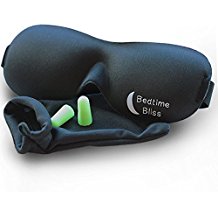
Eye masks are great not just for hostels but also for any travel you might be doing along the way. In airplanes, buses and trains, if you need to do any sleeping, this is a must have! There’s often an unwritten rule in hostels that the light will stay on until a “reasonable” time. I’m usually in bed by 10 pm and am not afraid to just turn it off when I’m ready for bed but if you’re less assertive you might just want to throw your eye mask on and get some sleep on your own time.
Personally, I prefer the ones that don’t rest against your eyes as I can’t stand that feeling but there are loads of options out there. Look for ones that say "contoured" or "3D" for the most comfortable fit.
2) Ear plugs
This one is similar to the eye mask, great to help you get to sleep when everything is happening around or you have a snoring sleep mate or two. I’ve tried a few different brands out but love these ear plugs. They’re the easiest to put in and seem to block out most noise.
If you've got the cashoola you could consider the Noise Cancelling Ear Plugs by Crioxen. Even better, if you’ve got the space and are serious about your head phones, you can get noise cancelling headphones and use the noise cancelling function to block out even more snores.
3) Travel towel
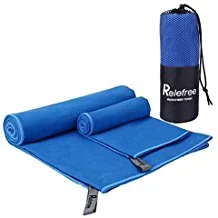
Most places you stay these days will offer a towel during your stay, either free of charge, for a small deposit or maybe for a fee. If you want to save money, then a travel towel can still be a great investment and don't take up much room in your bag. You could also use one as a beach towel when heading out as most places won't let you take the towel out of the room.
They range in price but you can get a teeny tiny one for as little as $10 and I've seen some fancy ones get up to $100+. Look for them in any camping or adventure store and of course online.
They take a little getting used to as they are made out of that shammy-type material but they are super quick dry and pack very small, a lot smaller than an actual towel. My top tip is to get either a Large or X-Large size. It won’t add that much more bulk and there’s nothing worse than not being fully wrapped when needing to run from the shower to the room.
4) Lock

When you stay in a hostel you will usually be provided with access to a locker but will need your own lock. I suggest carrying two strong padlocks with a combination instead of key access. Trust me on this, I’ve travelled with someone who lost BOTH of their keys and had to have the lock broken.
The locks can also be used if you’re leaving your backpack in a luggage storage room after check out or to lock your backpack while in transit. Make sure to use a TSA lock if you’re travelling through the US.
5) Toiletries
As with the towel situation, hostels usually don’t provide toiletries like you would find in a hotel. Depending on your situation you might want to bring along some travel size toiletries or just buy some products when you get there. For me it depends on how long I’ll be staying in a particular place and when my next flight is. I don’t mind carrying around a full tub of toothpaste but as I travel carry-on only I’m unlikely to get it past the airport checkpoint.
You don’t need to go overboard with the toiletries though. If you’re away for 3 months then you probably don’t need to take a 6-month supply of floss with you but DO check what will be readily available for you to buy at your destination. In some places sunscreen is more expensive than crude oil and tampons are the devil so just make sure you’re prepared.
6) Flip flops
So, if you’ve never stayed in a hostel before, then the idea of sharing a bathroom with a group of people must seem very strange. It’s actually not that bad! Sometimes each dorm will have its own bathroom and sometimes there’s be a big shower block for all the rooms to share.
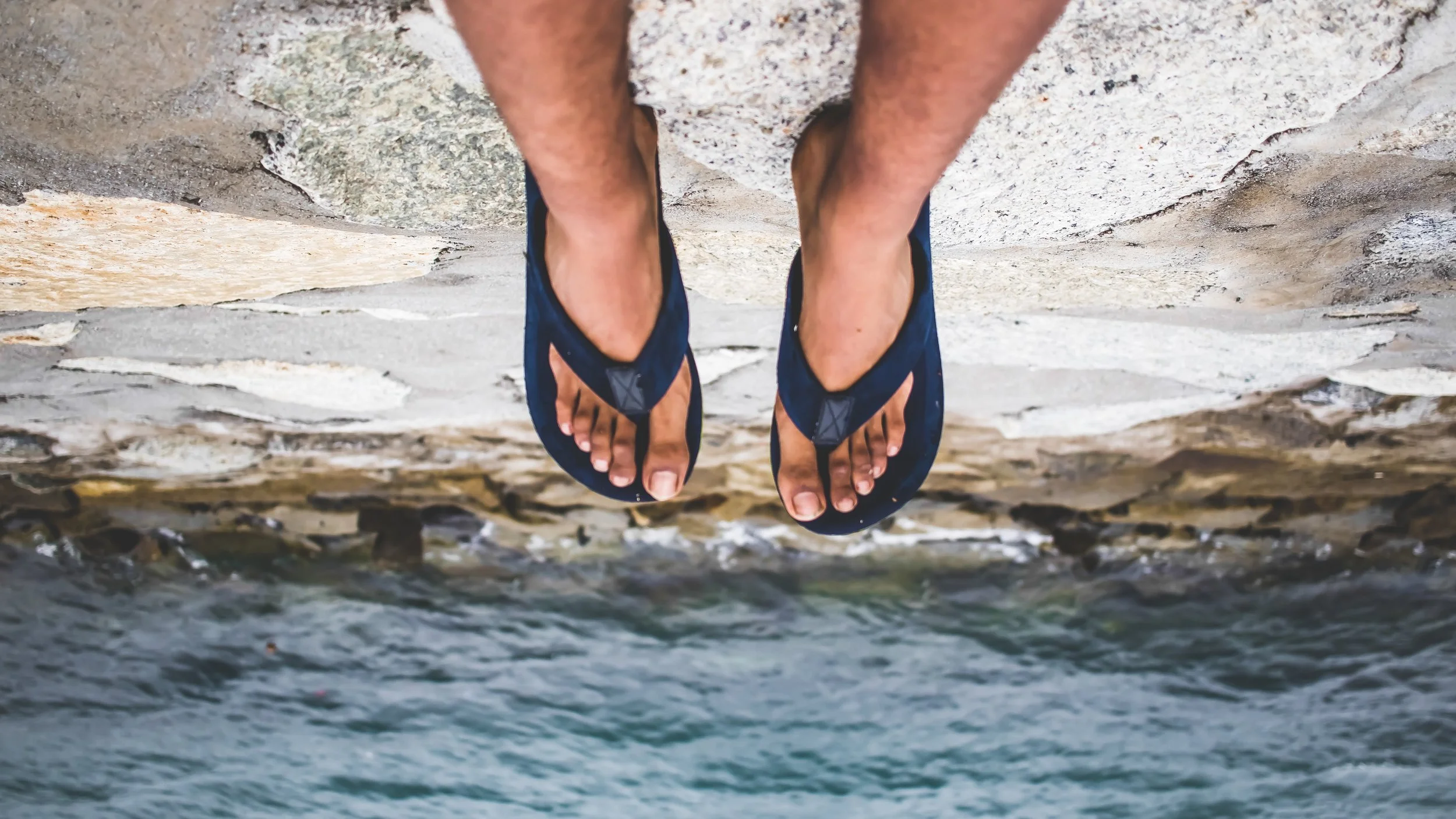
Either way, those showers are seeing more people in them every day than is usual and they might only be cleaned once a day. I’m no hygienist but my personal preference is to wear a pair of flip flops into the shower so I don’t catch any potential cooties. If you’re like me and live in them 24/7 then they probably need a good wash anyway.
7) Flashlight/head lamp

Depending on your trip you might have use for a dedicated torch or head lamp anyway but just in case think about the types of experiences you’re likely to have. Often I’m mixing city stays with off the beaten track activities in jungle and river lodges. There is likely to be some sort of camping or “eco” situation where I will have to use an outside toilet.
Head lamps are awesome for this as you can go "hands-free" if you know what I mean… Ever tried wiping with one hand while directing a torch in the direction of the giant centipede you just saw 2 inches from your face?
At the every least, make sure your phone has a flashlight app that you can use in a pinch. This should be sufficient for rummaging through your stuff at four in the morning for an early departure without waking the whole dorm up.
8) Plastic bags
These are very multi-purpose: to separate your dirty clothes so they don’t stink up the rest of your clothes; to store your muddy shoes in that are still wet from a rainforest like but you have a 20 hours travel day ahead of you; keep your electronics dry during a rainy open water ferry crossing; super cheap way to store your soap so you don’t need a fancy soap case. Just make sure you always have a couple on hand and you’ll always have a use for them, I promise.
One thing to keep in mind is that plastic bags are noisy as all hell in the middle of the night so try to avoid your immediate demise at the hands of your fellow bunk mates by not rummaging through your plastic bags when all is silent.

9) Bottle opener
Hostels are filled with happy travelers who are having the time of their lives, maybe this is the only two weeks they get off every year and they want to make the most of it, maybe they’re on an extended multi-year trip to find themselves and "every day is Friday” and “every hour is happy hour”.
Whatever the case, when you stay in a hostel, you will make the best of friends if you have a bottle opener on hand. Even better, if you know how to open a bottle with any object on hand. I once saw a guy open a beer with a shoe! How do they even do that??? Why did I not learn this in school?
10) A tupperware container
I learnt this one from a vegan I met traveling and thought it was a very cool idea. If you’re going to be cooking a bit and using those awesome hostel kitchens, then chances are you’re going to have some leftovers to contend with. Rather than throwing it out or leaving it to the other life in the hostel fridge, you can throw it into a tupperware container. This way you can eat it the next day and even carry it with you as a lunch option. The best part is they don’t take up any room, just stuff them with something else and you’re good to go!

11) Bonus - A playlist that reminds you of home
Before I leave on any trip I always put together a playlist of all my favourite songs and my friends’ favourites. Why? When I’m feeling homesick I just pop my headphones in, tune into Spotify and listen to all the music that makes me think of the people that I leave but in the best way possible. You could also try having some photo albums on your phone or even a couple of real life pics if you’re a visual person.
Don’t bring
1) Door jamb
So, this is a tricky one. I’ve never chosen to stay anywhere that I felt unsafe enough that I would use a door jamb. Saying that, I would hate to be the one to tell you not to bring it and then something happens to you so I’ll leave this one up to you. They’re heavy as hell but maybe there are some new solutions that can help you feel safe and not weigh down your luggage.
2) Sink plug
This is used for hand washing and soaking clothes in sinks. If you’re staying in a dorm this is just not practical. You’ll be sharing a room with at least 3 other people and they’re not going to be happy with you using the sink to keep your laundry in. If you’re in a private room it’s a little more practical but I usually just take my clothes in the shower with me to give them a good rinse and wash with whatever I have on hand. I’d wash my clothes like this maybe once or twice and then take them to a laundromat to give them a good wash after that.
3) Clothes hanger
This one is probably a personal choice and depends on how many clothes you’ll be washing at one time or how expensive it is to wash clothes where you’re staying. When travelling through Latin America I found that I was happy to pay the $2-$3 a week to wash, dry and fold a full load of clothes. Laundromats in the US and Canada were also reasonably priced. When I did want to save money, I would usually be washing clothes overnight and hanging them up on my bed or somewhere convenient. I only once saw anyone hanging clothes up on a line but again this could be appropriate for you.
Any surprises for you or is there anything that you would add? Let me know in the comments!
This post includes affiliate links. When you make a purchase via these links, I receive a small percentage at no additional cost to you. Very small but very appreciated.

Laguna De Apoyo - The Resort For Budget Travelers
Laguna de Apoyo is a crater lake said to be the result of Volcano Apoyo imploding on itself over 20,000 years ago. It is 48 square kilometres and the deepest point has been measured at 200 metres. It gets deep very quickly but is naturally warm and filled with volcano mineraly goodness. Like many beaches in Central America, the lake has a black sand beach.
While in Nicaragua I was desperate for a break from traveling for a few days. Long term traveling can take its toll if you try to pack too much in and at that stage I was feeling like I needed a holiday. I was indulging in some touristy pleasures in Granada when I learnt about a cool hostel that was supposedly like a resort for budget travelers at a small lake nearby. The dorms also had the best view of any dorm around the world! I booked myself onto the next shuttle.
You can go for the just the day or stay overnight. Once you arrive, there will be a staff member with a clip board to check you in. My group was separated into day trippers and over nighters and were led to the check in area. The hostel is very well run and I was checked in and shown to my bed within half an hour which is pretty great considering there was a lot of people waiting to check in.
I also noticed some travellers who had stayed the night and were hoping to book for longer! I did the same as soon as I saw the view and knew this was where I needed to be.
You’re given a token with an animal on it and this is what you use when ordering anything so they know what tab to put it on. The hostel is completely cash free until you check out! Which could be a good thing or a bad thing depending on how many $2 cocktails you clock up.

Rooms
Once I was taken down to the dorm I understood why it was so popular. I had heard that the view from the dorm was better than any other room and it was actually quite stunning. The dorm consisted of about 10 bunk beds and where the fourth wall should have been, there is just a large roller cage. This is great for keeping the room cool and also afforded spectacular views out to the lake. Dorms are just $10 a night!
There are also private rooms that are still quite affordable if you’re not into dorm life and everyone has access to all the resort facilities. A single room with shared bath is only $15 and you can get a double room with private bathroom for $32 a night.
If you’re traveling with a group they even have quadruple rooms! Check out their rates page for more information.
Day trips
The resort offers a day trip option which is great if you don’t have a lot of time but still want to experience lake life in Nicaragua. Day trippers can access all the facilities from 9 am to 5 pm at the cost of $7 per person. They also get free tea and coffee all day as well as access to restrooms and change rooms.
Eating and drinking
There are two spots where you can order and eat, upstairs near the check-in area has a great view of the lake and is more chilled out. A good spot for reading a book or getting lost in the view. The second and main area for eating is located right on the lake front. This is a more social spot where you can order your $2 mojito and take it right into the lake with you. No one’s judging here!

There’s a wood fire pizza oven and they do pizza nights a couple times a week. The pizza is actual some of the best I had while in Nicaragua so definitely give it a try while you’re visiting.
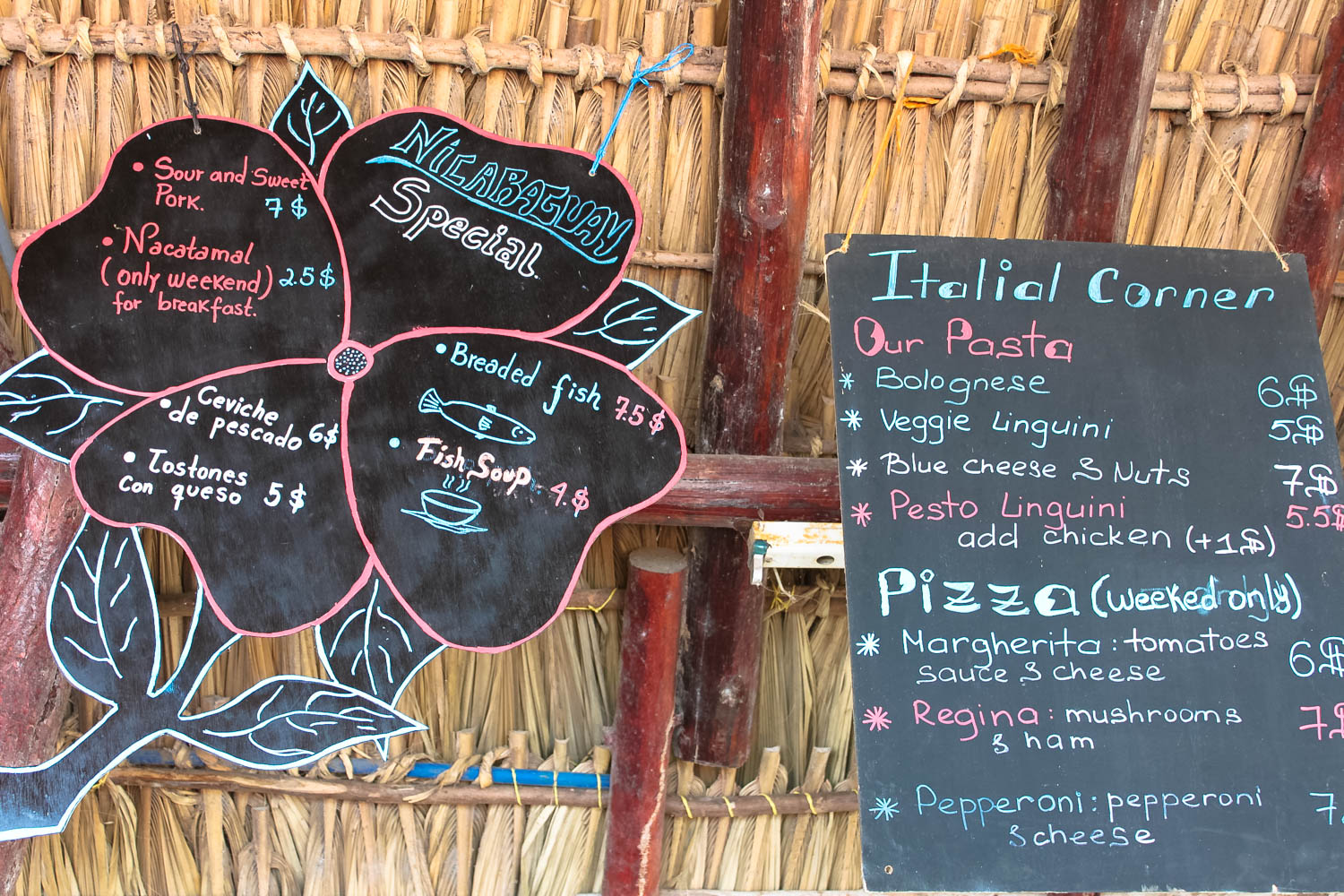
The menu is available to view online so check out all the awesome options. Meals range from typical Nicaraguan fare to more western treats, like my favourite the Blue Cheese and Walnut Linguine. Drool!
If you have any special dietary requirements you can confirm them with the staff before you arrive. Vegetarians and celiacs should be pretty comfortable here as I stayed 5 nights and didn’t feel like I was lacking variety.

Laguna de Apoyo
Apoyo Lake is a crater lake said to be the result of Volcano Apoyo imploding on itself over 20,000 years ago. It is 48 square kilometres and the deepest point has been measured at 200 metres. If you imagine the big cone that would have been left behind by the volcano you can get a good idea of the shape of the lake.
It gets deep very quickly but is naturally warm and filled with volcano mineraly goodness. Like many beaches in Central America, the lake has a black sand beach. This takes a little getting used to if you've never experienced it before.

Facilities
One of the best parts of Hostel Paradiso is their expansive grounds. It’s basically set into a slope (due to crater like shape described above) so there are lots of levels and lots of stairs. It’s worth taking 15 minutes to just explore the area to see what’s available. I mentioned to some friends that I was going to read my book on a hammock and they didn’t even know there was a hammock area!
There’s loads of water sports and other games available to occupy your time if you ever get bored of just lounging. These include: kayaks, stand up paddleboards, beach volleyball, beach badminton, pool, ping-pong, or traditional French boules.
There’s a chill out cabana with hammocks, couches and bean bags with a tv and dvd player. Great for rainy days!


There is a floating dock on the lake that you can swim to or grab one of the tires and float there in your own time. My top tip is grab a book or your kindle, wrap it in plastic bad or even better a zip lock bag and take it out to the deck. There is really nothing better than floating along on the dock with a good book.
I also enjoyed some night swims out to the floating dock with my new friends. Hanging out, sharing stories and laughing by moonlight in Apoyo is one of my most treasured travel memories.
There is wifi available but mostly on the very top level and sometimes in the reception area. Be prepared to be a bit off the grid, though, as the signal can be weak and cut out a couple of times while I was there. They’ve advertised recently that they have since doubled their bandwidth so you may be surprised!
The staff are super helpful and friendly. If you have any issues they were always happy to help. Especially the restaurant staff. They created a fun environment for all the guests.
I had a couple of friends who did the Spanish classes on offer and they really enjoyed it. The classes are in a cute little garden area on the property with lovely lake views so you still feel like you’re in paradise while doing your lessons
You can do single lessons or Paradiso offers a package deal if you want to stay for a few days and do lessons as well.


The lake and area
The best part of this hostel is the lake. It would be very easy to spend days lounging in a beach chair or floating along in an inner tube. The big surprise for me was that this is THE warmest lakes I have ever been in.
If you want to get out and explore the area there’s some great birdwatching and also monkey spotting. There are over 200 bird species that you can try to spot in Apoyo including 65 migratory species. Feel like getting out of bed early? Head out of the resort and to the right and you can certainly hear, if not see, the local howler monkeys.
There are also white-headed capuchins in the area, although, you would be very lucky to see those! On the Paradiso property I saw my first anteater in the wild so you should certainly keep your eyes open for all the wildlife that’s around.
There are several hikes to small towns in the area including Santa Catarina which has a flower and handicraft market and a stunning lookout where you can see the lake and Mombacho volcano.

Getting there and away
Paradiso has a shuttle that picks up traveler from different spots around Granada. It is $6 for a round trip and leaves around 10 am and 3pm every day, returning by 4 pm.
You can also catch a local bus heading to Masaya and ask to be let off at the entrance to Laguna de Apoyo. These buses leave from Granada every 10 minutes. The bus drops you at the entrance of the small town so you can either catch a taxi (100 cordobas aprox.) or walk for about an hour. Hitchhiking is also an option and you’ll see the locals doing it.
If there’s a couple of you, consider getting a taxi. You should be able to negotiate a fare for about $15 one way.

The important stuff
Paradiso Hostel
Email: paradisolaguna@hotmail.com
Phone: Mov: (505) 81874542 Claro: (505) 25203571
Skype: hostel.paradiso
Apoyo Tips
Make sure to book in advance
Bring enough cash with you for your whole stay
Try the tipico for breakfast - so good!
Meals range from $3.50 to $10
There are smoothies on the menu and you can add a shot of rum for $1 >.<
If you’re traveling during the off season (September and October) they have discounted rates for longer stays
Try to get up for at least one sunrise, they're amazing over the lake
Have you ever found a budget resort like this in the world? I'd love to visit more! Let me know in the comments below.

You Might Also Like

Top Travel Websites For Planning A Trip
If you've ever thought that planning a vacation and booking a flight yourself was too difficult and complicated then check out these travel websites which I use personally to plan and book my own trips.
Updated November 2016: I have added some new favourites and have ditched some websites that are no longer as amazing. Let me know if you have any favourites to add. Cristal
If you've ever thought that planning a vacation and booking a flight yourself was too difficult and complicated then check out these travel websites which I use personally to plan and book my own trips.
This article is part of a larger series called "The Ultimate Guide to Booking Affordable Travel On Your Own". A Guide with detailed information to help you find and book travel for any budget.

Flights
Skyscanner
This is my #1 go to for flight booking. I generally check a selection of websites but Skyscanner usually the cheapest. It’s pretty flexible in terms of allowing you to explore a variety of destinations and dates so if you don’t really mind where or when you go it can help you find the cheapest place to fly in a country, region or even all over the globe! You can search for a specific date, a whole month or even just ask it for the cheapest date to travel to specific location.


Momondo
This is not as flexible so it’s the most useful when you know where and when you want to go. The best thing about Momondo though is that it rates each fare based on a calculation of duration and price so you can easily see which fares are the best deal. Momondo also has some great filters if you want to be more specific about which airline, how many stops you’d prefer and maximum flight duration.
Google Flights
This is probably the most flexible flights search engine of them all. It’s as searchable as Skyscanner but also allows you to see the destinations and prices on a map view which works well for me as a visual person. My only criticism of Google Flights is that not all of the super budget airlines are included so you might not always find the best deal. It’s a great starting point though if you really just want to explore the options.

Skiplagged
Skiplagged is a special search engine that checks if there are any flights that stopover in your destination city that could potentially be cheaper than a direct fare. For example, you want to fly from Miami to Salt Lake City and you can get a fare for $200 but Skiplagged can see that there is a flight from Miami to Portland with a stopover in Salt Lake City for $150. You would take this fare and just leave the airport at Salt Lake City, no worries. They also claim to take advantage of other inefficiencies and round trip prices that could save you money. I have never actually found a better deal on Skiplagged probably due to my unique choice of destinations but I always check this website before I book anything and have heard some positive reports from the travellers.

Other Transport
Rome2Rio
A great website to help you discover options to get from Point A to Point B. Rome2Rio includes links to purchase directly with the providers and incorporates bus and train schedules, flights and car hire options.
Seat 61
This website encourages train and ferry travel by providing detailed information. Seat 61 has a heavier focus on UK, Europe and Africa travel but there is some information on most destination around the world. If you’ve ever fantasised about grand train journeys like traveling on the Trans Siberian Railway this is the place to go. There is ample information on what to expect, changing stations, connection times, classes and special needs. Honestly, if you’re thinking of train travel at all, I strongly suggest you check out this website.

Accomodation
Tripadvisor
Once I’ve decided on where to go and I’m ready to look into accommodation, Tripadvisor is my first stop. TripAdvisor relies on reviews from regular people staying in a hotel, compiles these into one page and ranks each hotel. If you enter your dates in it will also give you an idea of the cost and who you should book it through.
There are some useful filters including one for ‘Type of traveler’. You can choose ‘Family’ to read reviews by guests who stayed as a family or ‘Business’ for guests who stayed specifically for business purposes. My favourite filter is the ‘Time of year’ where you can see whether the hotel is as enjoyable in winter vs summer.
So Tripadvisor is a fantastic resource but this recommendation comes with a caveat. Like anything that is online, it’s very easy for someone to fake a review. This could be because maybe they represent a rival business and want to leave a damaging review or maybe the business wants to leave some sparkling reviews on themselves. There have been reports of business paying companies to leave reviews and other dodgy activity.
My number one tip is to take most individual reviews with a grain of salt. If it doesn’t sound like something a regular person would right then it’s probably a fake. Are there a spate of reviews left by people who only have one review? Then they’re probably fake or a business has enticed people to sign up and leave a review by offering some good or service, which is completely against Tripadvisor's terms and conditions. If there are hundreds or thousands or reviews and you just want to get an idea of whether somewhere is good or not, then just check out the overall score and leave it at that.

TravelPony
TravelPony is a great hotel aggregator that claims to have the best prices you can find anywhere. They’ve never steered me wrong and the website is very easy to use. It’s all about price on this website so you won’t find much more information besides the hotels address and contact number and a list of amenities.
Expedia
Even though I use either TripAdvisor or TravelPony to help find the best prices for a particular hotel, if there was a choice, I would use Expedia to book. I have only ever received great customer service from Expedia and they have travel guarantees built in and a reward program that actually rewards you!
Agoda
Agoda is a recent gem of mine for hotel booking. It's not always the cheapest but it does seem to be one of the cheapest options and their interface is one of the most pleasant to use. It's especially worth checking Agoda for travel around the Asia, Pacific and Europe regions.
Airbnb
Airbnb allows you to book the home of a local host. It can be just a room with access to the common space or a whole hours or apartment. There are also some interesting accommodation types listed in Airbnb, like castles, tree houses and houseboats if you want to try something different. Sometimes it can work out cheaper to book a vacation home through Airbnb than a traditional hotel and it can be a great option when traveling somewhere off the beaten track without a lot of accommodation options. There’s also a built in review system for piece of mind when booking.
If you haven’t used Airbnb before, click here to get $25 off your first rental.
Hostelz
Hostelz is a great resource for those who like staying in hostels and other budget accommodation. It aggregates the hostel booking sites and gives you an overview of the reviews and prices so you can choose where to book from. It also includes the contact details and websites for each hostel so you can check them out and book directly.

Location Research
To get an overview of a place it can be helpful to google the official tourism websites. Some are great and interactive and full of information and advice and others are lacking or non-existent. I would usually do a quick Google search to see what’s available and use that as a starting point in your research.
Travel blogs like this one are also a great resource. You get insight from actual people who’ve been to these places and what their experiences are like. Just be mindful that most f the time, when someone writes about a destination, place or service, they’re only writing the positive stuff. It’s just human nature to want to highlight the ’best of's’ but it doesn’t paint the whole picture. When wanting to get inspiration from travel blogs, try searching: ‘destination’ ‘blog'.
An example of a great destination blog is this Sayulita travel blog. It’s packed full of info on what to eat, where to sleep and what to do,.
Thorntree forum
A forum is a place you can go to online to find like minded people and participate in discussions. Lonely Planet’s Thorntree forum is filled with other travellers just like you who are either destination experts that provide insights and updates or people searching for help and advice. You can post things like a tentative itinerary that you’ve planned and seek feedback on it or ask a specific question that you can’t find the answer for elsewhere. There’s usually a FAQ or destination guide for each place as well.
Tip: Basic forum etiquette is to search for your query first to make sure the answer hasn’t already been provided.
Local expat forums
Some locations have such a huge expat community that they’ve developed their own forums online. It’s worth it to google 'destination' and ‘forum’ to see what’s available. Often users on Thorntree will be the first to advise that you should check out another forum for help. When planning my trip to the Dominican Republic, I was directed by a Thorntree user to the forum DR1 for help with my questions.
Wikitravel
A crowdsourced travel guide, Wikitravel is a great place to get an overview of a location with information on getting in and out, pubic transport options, top sights, places to eat and places to stay.

Activities
Tripadvisor is a great site to find things to do at a destination, with their user submitted reviews and ranking system you can find the most popular activities and tours available.
Vayable
A website to discover unique, cultural experiences from local hosts around the world. You an find a variety of tours on Vayable centered around design, photography, street art, ethnic food tours, private dinners hosted by locals, underground history and general sightseeing.
You can even get $10 off your first booking, click here for more information.

Don’t forget about travel insurance!
World Nomads
Like my flights and accommodation I used to always compare prices for travel insurance. Now, after 10+ years of solo travel, I just book through World Nomads. They’re the most comprehensive, flexible and easy to understand. You always know what you are and are not covered for. For people traveling long term, World Nomads is one of the only companies that will let you buy cover while you are already traveling.

This post includes affiliate links. When you make a purchase via these links, I may receive a small percentage at no additional cost to you. Very small but very appreciated!
You Might Also Like


How To Have a Successful (Temporary) Travel Partnership
Meeting other travellers on the road can be one of the most enjoyable parts of travelling. As a solo traveller, it can also be a great opportunity to band together for a time, giving each other company and sharing costs.
Here’s some advice to help you succeed in your new travel duo or trio.
Meeting other travellers on the road can be one of the most enjoyable parts of travelling. As a solo traveller, it can also be a great opportunity to band together for a time, giving each other company and sharing costs.
I am naturally quite introverted at home and really enjoy my own company and a good book but when you're travelling for weeks at a time even the most hermity of all hermits will eventually crave some human interaction. I generally find myself travelling with other people for at least 20% of my time away. That could just be hanging out for a couple days at a time or my record was two whole months (on and off) with a lovely couple from Alaska.
I've learnt ALOT from my experiences with my temporary travel buddies; made some poor decisions and also let my temper get to boiling point a few too many times. There are definitely some do's and don'ts when it comes to partnering up while on the road.
Here’s some advice to help you succeed in your new travel duo!
Talk about your budgets
This is extremely important! Arguments about where to stay and eat can ruin friendships. Some travelers like to stay in the cheapest local hotels available and cook very low cost foods for every meal, choosing instead to spend money on activities or just extend their trip for the longest time possible. Others spare no expense, staying in 4-star hotels and eating out. The majority, like myself, sit somewhere between these two extremes.
At the very least you need to understand where your travel buddy sits on the spectrum and I highly recommend agreeing ahead of time on daily budgets for accommodation and food.
Discuss interests and priorities
Once you’ve made sure you’re on the same wavelength money-wise, it’s a good idea to talk about what your “must-sees” and “must-dos” are. If these don’t match up at all then it might make for some frustrated conversations over how to spend your days or in which towns you want to stop.
Make sure it’s clear to each party what the priorities are so you don’t get too far before realising your priorities aren’t aligned.
It’s also important to make sure you are somewhat similar in your travel habits. Are you a party animal or do you get up to watch the sun-rise? Would you be annoyed if someone was never on time and kept you waiting, or are you happy to keep things flexible?
Figure out what’s important to you in a travel partner and make sure to figure out if this new person meets your minimum criteria. Opposites can attract, but you don’t want to be stuck with someone who has completely different values.
Give each other space
Regardless of if you are travelling together for one day or one week, make sure that you’re aware of your own need for space as well as your travel buddy’s. Making new friends, seeing new things and having new experiences is exhilarating, but can also be tiring and sometimes emotional.
There’s likely a reason you’re travelling on your own in the first place and if the reason is that you like your own space then make sure to communicate that to your new travel buddy.
Plan your time together in chunks
I recommend against planning extended time together. Once you’ve figured out that you have some similar travel plans, I suggest tentatively booking only a few days in advance. Our feelings towards people change as we get to know them and that’s fine, but it’s worth keeping in mind.
Remaining flexible and not booking accommodation and travel too far ahead can help you avoid feeling trapped with your travel buddy if you need space or your feelings about them change.

Maintain your level of security
One of the benefits of setting out with a temporary travel partner is sharing the cost of accommodation. If you would usually stay in a dorm bed you might be able to share a private room instead for a similar or slightly higher cost.
This means that where before you might have had your own locker you will have to trust this person with all your valuables. As you travel together you will start to gain each other’s trust, but make sure to keep your things safe, ultimately they are your responsibility.
Keep up the communication
After being on the road together a while it could be a good idea to have a chat and make sure your travel plans are still what you both want. Bring up anything that you think you want to hear as a travel partner.

Not getting along so great?
Know when to call it quits
There could be many signs that it’s time to part ways:
you’re no longer enjoying each other’s company;
you’re headed in different directions; or
if your travel plans or goals are not quite aligned
Having this conversation with your travel buddy can be difficult, but the key is to be respectful and honest. Don’t take the easy way out and leave them with a lot of maybes. “Maybe we can meet up in this town” or “Maybe we can do this together in a couple of days”. Just let them know that you’re ready to move on and you’ve enjoyed the time you have had together. Keep it simple and try to give them enough notice so they can make other plans.
Note: If the reason you want to head off solo is because the other person is just not a great mate for you then no need to tell them all the reasons why!
Make the most of your time together!
This is the fun part. It can be great having another person to share special experiences with and to talk through the events of the day.
While you are together make sure to also take advantage of having another person to help you with all those little things that could get annoying when you’re solo. No longer do you need to take your backpack into the gross toilet at the bus station. No more awkward selfies at important monuments. No more solo surcharges on tours or getting knocked back because there’s only one of you.
Summary
Travelling on your own is great and I would never have it any other way, but when you find someone you enjoy spending time with and getting to know, that also happens to have similar plans as you, rejoice! This could be just the break you need from being on your own.
Do you have anything to add? Ever met up with someone new on the road and figured out too late that they were not the right fit for you? What are some other advantages of finding a temporary travel buddy on the road?

How to Budget and Save for Your Trip
When I made the decision to head off on a long-term trip I had to first work out how much it was likely to cost me, how much I wanted to save and if I was willing to work on the road. Once I knew what my saving goal was I then set out to work out achievable ways to get there.

When I made the decision to head off on a long-term trip I had to first work out how much it was likely to cost me, how much I wanted to save and if I was willing to work on the road. Once I knew what my saving goal was I then set out to work out achievable ways to get there.
This outline might not be relevant for everybody as I do confess to having quite an indulgent lifestyle. These costs are also all in Australian dollars and you might not be aware but us Aussies get charged way too much for things.
Step 1: Cut out the small things
My very first step was to identify what spending I could cut-out of my life without drastically changing my lifestyle. Here are some examples of what I found in my own life that I could do without or have less of:
Spotify subscription $9.99 pm
Other subscription services (online magazines etc.) - $15 pm
Daily coffee $4 pd
Daily lunches $8 pd average
Occasional breakfasts - $15 pw
Drinking during the week (unless it’s for an occasion) - $30 pw average
Total saving - $444.99 per month!!
Basically, I started cooking more at home so I could have delicious left overs for work, switching to yummy flavoured tea instead of suffering the office's instant coffee and finding free alternatives to paid subscriptions.

What about the big stuff?
Everyone has different goals. If you're like me and travel is a major goal you could consider making some bigger changes to your lifestyle. Consider getting some financial advice and seeing where you could adopt an alternative lifestyle to start putting money away for a big trip or even many small ones.
To provide further context on my personal situation, I had already gotten rid of my car when I first started travelling ten years ago and rent instead of owning. Where I live in Australia, I could save a lot more money by renting an apartment than paying a mortgage. When considering home owner costs like insurance, rates and body corporate fees I decided to put the amount that I saved every month directly into a savings fund specifically for travel that I never touch.
Likewise with car ownership, as a depreciating asset that only costs you more money to maintain, I opted to become one of the few of my friends who waked, biked or used public transport. The important thing is to consciously make the decision to take the hundreds that you would save from these major expenses and put them away.
Step 2: Be more mindful about casual spending
I wasn’t super frugal but I did make an effort to really think about whether I needed the “nice-to-have” items that I encountered during the day.
If my friends were having delicious bubble tea, did I have to have one? Could I just sip on my water bottle?
Do I really need that chewing gum? The answer could be yes if I cooked the night before as I am pretty heavy handed with the garlic.
Do I actually need 3 glasses of wine with dinner or could I be happy with just one?
I’m also a big reader and instead of picking up a new book anytime someone recommended one to me, I put out a call to my friends to lend me any they thought I would like.
More often than not it was pretty easy to abstain if you give yourself some guides to measure against. Here were some of mine:
Two lunches = one night in a hostel in Antigua, Guatemala
A bubble tea = Dinner out
Two glasses of wine = A one hour horse ride in the Nicaraguan countryside

two glasses of wine or a ride on this beautiful girl? I know which i would choose!
Step 3: No more Shopping
The lifestyle I had grown accustomed to saw me buying what ever caught my fancy. I loved “sales” and quickly accumulated a wardrobe filled with more clothes than I could ever need. Once I made the decision that I was going to be travelling long term, I enforced a “No New Stuff” rule.
That meant:
No clothes;
No jewellery;
No shoes;
No house stuff; and
No electronics (unless I would be taking it with me).
To be perfectly honest, it started to feel very liberating. I realised I was under the control of big corporate marketing, getting excited every time I got a sale email or spotted a 2 for 1 deal and by allowing myself to step outside of that space, I felt like a weight was lifted off my shoulders.
I no longer needed to think about whether I should buy something new to go to a friend's wedding or if I should replace my ailing frying pan. Buying something new was no longer an option, I just had to make do.
Summary
These are just some of the things that worked for me. I do know that I could have made some more drastic changes to save much more money but for me it was important to find a balance. I started planning for my trip a year out and I knew that if I made too big of a change I would just be miserable for a year.
I could have moved in with my parents, who live 40 minutes away from the city and my work, but I would not have been able to see my friends as much or as easily and I wouldn’t have the privacy that I am used to.
I could have also eliminated more socialising from my life but again I didn’t want to treat that year as a waiting period. A whole year in my life that I was just wishing away waiting for it to be over so I could start travelling.
I hope that these points at least give you some ideas to help you with your own saving goals. Check out this guide on saving money while traveling for tips once you've bought your ticket and have headed off!
Create a budget and be aware of where your money is going.
Start looking for the small things in your life you can stop paying for.
Look for cheaper transport alternatives, could you ride a bike or walk instead of public transport?
Have a clear idea in your mind how much certain things will cost when you’re on your trip to help make quick decisions about casual spending.
Unsubscribe from all email marketing lists (unless it’s travel related of course).

Isn't this worth all the sacrifice?
After 10 years of travel in Central America, I finally made it to Belize, my elusive last country. Here are my very first impressions after spending a few weeks there.