
Big Corn Island Vs Little Corn Island
Little Corn or Big Corn Island, Nicaragua? Find out what you can expect from these two island gems in the Caribbean.
The Corn Islands in Nicaragua, Big Corn Island and Little Corn Island, are two Caribbean islands approximately 50 miles (70 kilometres) off the east coast of Nicaragua. They were once ruled by the British but are now considered part of the Autonomous Region of Nicaragua and are largely self-governed. The islands are still unspoiled by major development and cruise ship-style tourism compared to what you might experience in other popular Central American islands.
One of the charms of both islands is that they are very undeveloped. You’re not going to find any condos or big resorts here. There is one fancy resort on Little Corn Island that is way out of my budget but other than that you can’t expect much by way of accommodation or perfectly manicured beaches. The term "rugged" comes to mind, especially on Little Corn.
One question I get a lot of is which island people should visit when they go, Big Corn Island or Little Corn Island. Usually I suggest both since it’s so easy to visit together but I started writing this comparison to help see the main differences between the two islands. This turned into a massive post so to prepare you for the beautiful place that you are hopefully about to visit, here’s a video with some drone footage over Little Corn. Enjoy!
Contents - Which of the Corn Islands, Nicaragua?
First things first, if you’re heading to somewhere like Corn Island, Nicaragua then you’re definitely going to need to think about Travel Insurance. Check out World Nomads which I use personally. They’re flexible and you can buy and claim online, even after you’ve left home. Check out my full list of why they’re my favourite here.
Culture and vibe in the Corn Islands
Big Corn Island is definitely less touristy than Little Corn Island. This was probably my biggest driver for writing this comparison because most people completely discount Big Corn Island as an option and head straight to Little Corn Island.
You can do very similar things on each island but the difference is Little Corn has a tight knit community of under 1,000 residents and Big Corn has about 7 times that. What that means is with the huge popularity of Little Corn over Big Corn and the fact that most of the tourist spots are along the main strip there will be times where you will look around and only see other tourists on Little Corn Island.
Little Corn Island is the more pristine and less developed of the two and is free from pollution by cars as there aren’t any roads. At some parts of the island you’re likely to find yourself without any light pollution at all. It’s the perfect place to star gaze or stumble around in the dark pretending you’re on a desert island.
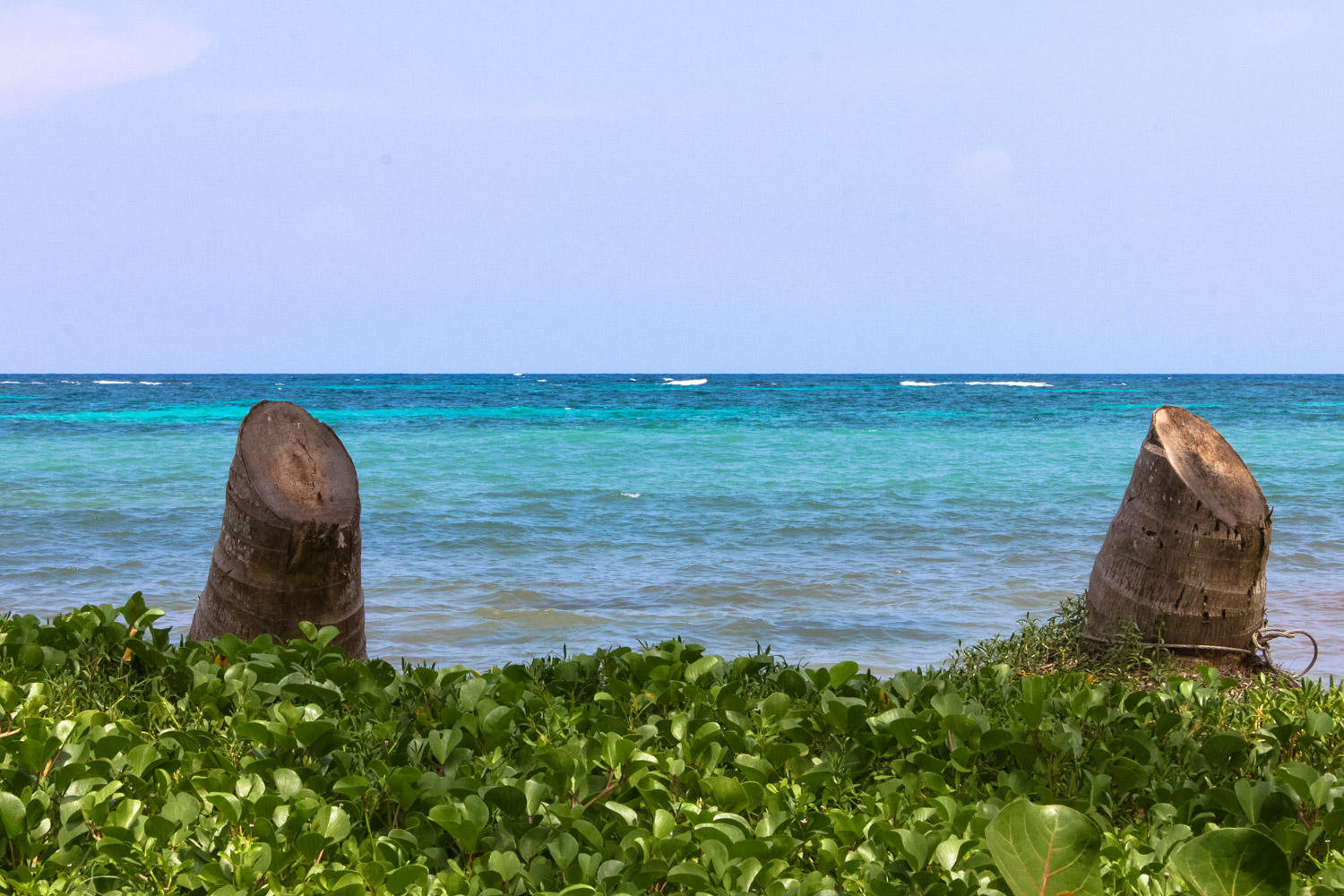

Little Corn Island, Nicaragua
Since tourism is so low-key on Big Corn Island you could really go for days without seeing another tourist if you stay away from the wharf. There aren’t any souvenir shops or people harassing you to buy anything. Big Corn has a couple of long stretches of beach but the attraction is really the chance to experience the unique mix of cultures without feeling like you’re just another tourist. On Big Corn Island, people are friendly and usually up for a chat.
Prices on Big Corn Island are about 1/3 less than on Little Corn, including your day to day grocery items and restaurant prices. You do tend to get more variety by way of Western food in Little Corn. The difference in costs is negligible though, as both of the islands can be consider cheap when you compare it to tourist host spots in Costa Rica or Belize.
The Corn Islands could not be considered fancy. There are some nice places to stay but it would be very difficult to actually splash out if you wanted to, especially on Big Corn. This adds a nice element to your trip because most tourists you meet will have very similar travel styles to you. It’s impossible to walk away from Little Corn Island without making a bunch of new friends. I stayed on my own in a hotel room and still managed to have a great time with a bunch of people that I met regularly, either at the dive shop, one of the cafes or exploring the island.
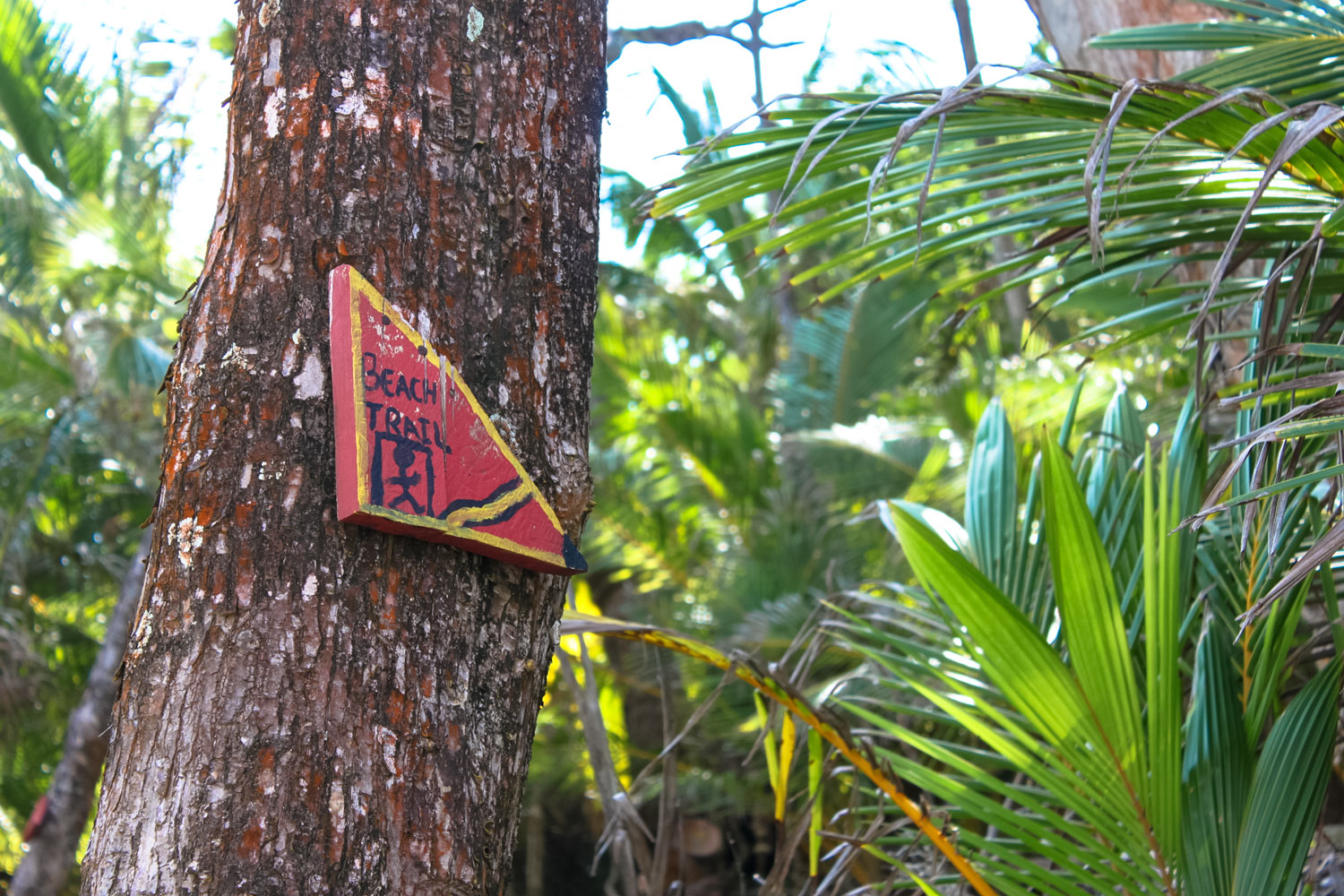
Amenities on the Corn Islands
Little Corn's electricity can cut out unexpectedly and is available only from 2 pm to 6 am. Which means you need to be mindful about charging your devices when you can and if your hotel doesn’t have a generator then you probably won’t have wifi during the down time. If these things are important to you, there are a couple of cafes that have generators (Tranquilo Café and Desideri Café) and a handful of hotels offer 24/7 wifi as well.
On Big Corn you will find faster internet speeds and electricity 24 hours. Most hotels should offer wifi and some of the bigger restaurants as well.
There are no roads on Little Corn and of course no cars which is lovely and this along with the no internet make for an ideal place to really disconnect. What you will find, though, if you’re staying on the far east side of the islands and need to head to one of the two dive centres, for example, you could be looking at up to a half hour walk. Not really a deal breaker but it’s good to know. There are also no lights on that side, outside of the houses dotted around so if you’re wandering around after dark, make sure your phone is charged or you have a flashlight.
Big Corn has one main road that circles the island and a couple of smaller side streets. There’s a small bus that goes around both ways and also shared taxis are available. Both will cost you less than $1 to ride and it shouldn’t take you more than 10 minutes to get where you need to go. You can also rent a bike while you’re there either by the day of by the hour.
There is no ATM on Little Corn Island and most places do not accept cards for payment. Make sure you have enough cash when you’re heading over there or you will have to make a long trip to Big Corn to withdraw money. There are a couple of places that will allow you to do a cash advance on Little Corn but you’ll be charged around 10% for the convenience.

Pin for later -->

Accommodation in the Nicaragua Corn Islands
Corn Island Hotels
Neither place has much on the higher end of the scale, with most accommodation falling under $100 per night.
Big Corn Island has a few more hotel offerings and a couple of smaller guesthouses. I strongly suggest Los Escapados Corn Islands if you’re into glamping or Hotel Casa Canada or Arenas Beach Hotel for a regular style hotel.
Little Corn offers more rustic style accommodation as well as a few hotels and one higher end resort at the far end of the island, Yemaya. When it comes to Little Corn Island hotels, I personally suggest Sunshine Hotel or Little Corn Beach and Bungalow for a mid-priced stay or Lighthouse Hostel for both private and dorm options.
Update: Yemaya Little Corn now offers rooms to fit all budgets so I highly recommend you check them out. Prices start from $109 a night and they get amazing reviews on Trip Advisor. I can’t wait to try them out myself so please let me know if you do!
Airbnb on the Corn Islands, Nicaragua
Airbnb is a great choice on both these Nicaragua islands. You get to choose your place before you get there and will still get access to some of the more locally owned options. There are single rooms, cabins and you can even rent a whole place with all the amenities right on the beach.
Use my personalised link for $35 USD or $50 AUD/CAD off your first stay. Check them out here.
Here are some great homes to check out:
The White House - 2 bedroom jacuzzi suite with access to large indoor lounge area, outdoor pool and outdoor terraces set within 1.7 acres of grounds.
Marlene's vacation home - Entire 3 bedroom home plus loft with two porches and air conditioning just 6 minutes walk from the beach.
Paraiso Beach Hotel - Located on Playa Coco, this cabana is just 80m away from the beach and includes breakfast.
Sunhill Villa - A modern house with a sea view located on top of Quinn Hill. Two bedrooms, two baths and big terrace create the perfect environment for relaxing the day away.

Los Escapados Corn Island

Eating - Corn Islands Nicaragua
The main difference between the two is Little Corn island has many more Western style options for meals, like popular Tranquil Cafe right near the wharf. If you’re ever craving a burger or spaghetti then you’re covered. They even have live music nights and it's definitely a fun place to hang out with all the perks of a typical gringo cafe. This is one benefit of the influx of tourists.
If you’re a vegetarian or vegan then Little Corn is going to be a haven for you. Cafes are usually well versed in special dietary requirements (thank you gringos that came before me!) and a couple places, like Rosa’s Restaurant even have a vegetarian section on their menu with yummy local options.
Food and drinks are pricier than over on Big Corn but if you’re careful you can still get some great value options. I personally ate at Rosa’s for breakfast and dinner most days. Breakfast with a main, coffee and a side of fruit was $3 USD and dinner with salad and dessert is around $4 USD. Rosa’s Restaurant also offers the popular local dish “rundown” as well as many great Nicaraguan classics.
On Big Corn meals are about a third less but you’re not going to get as much variety. You also need to consider that because the island bigger, everything is further away so the shared taxi or bus will need to be used if you want something across the island. If you like fresh seafood then you’ll be a happy camper as most places offer several dishes, including whole fish, lobster and shrimp.
If you’re vegan or vegetarian most places will still be able to accommodate you but be prepared to eat a lot of pasta and potatoes. As produce and fresh vegetables are harder to find on the island and needs to come over by boat, salads will be small and expensive.
Make sure you try “pan de coco” or coconut bread from one of the small, home based bakeries scattered around the island. This is a good place to stock up on things like buns, cakes and patties.

Pan De Coco and other treats from a home run bakery, Big Corn Island


Corn Island, Nicaragua Activities
Snorkelling on the Corn Islands
On both of the Corn Islands snorkeling is a popular activity. You can snorkel very easily on Big Corn Island but there are only a couple spots off Little Corn that I would consider easy to access. You can also arrange a snorkeling tour through one of the dive centres or your hotel.
I had a lot more luck with the bigger underwater creatures, snorkeling off of Little Corn Island but I probably didn’t give Big Corn as much of a chance since I was diving so much. The best snorkel spots on Little Corn can get very choppy so just be careful if you’re not a strong swimmer.
I suggest bringing along your own set of snorkel gear to avoid having rent them everyday. You’ll be in the water often so it’s a good idea to have a set with you when you go for your long walks along the beach.
I planned to do a walk around the island and got called into the water by a local who saw some spotted eagle ray. I spent the next hour snorkelling around the site and would have missed a lot if I didn’t have my gear with me.
Diving Nicaragua Corn Islands
Diving is a great option and it’s a good place to learn if you’ve never tried it before. I visited the Corn Islands in the off season so I was able to negotiate some really good deals for multiple dives but even during the high season prices are some of the lowest I’ve seen. The water is a constant 27-28°C (81-83°F) making for a very pleasant dive and visibility is usually great.
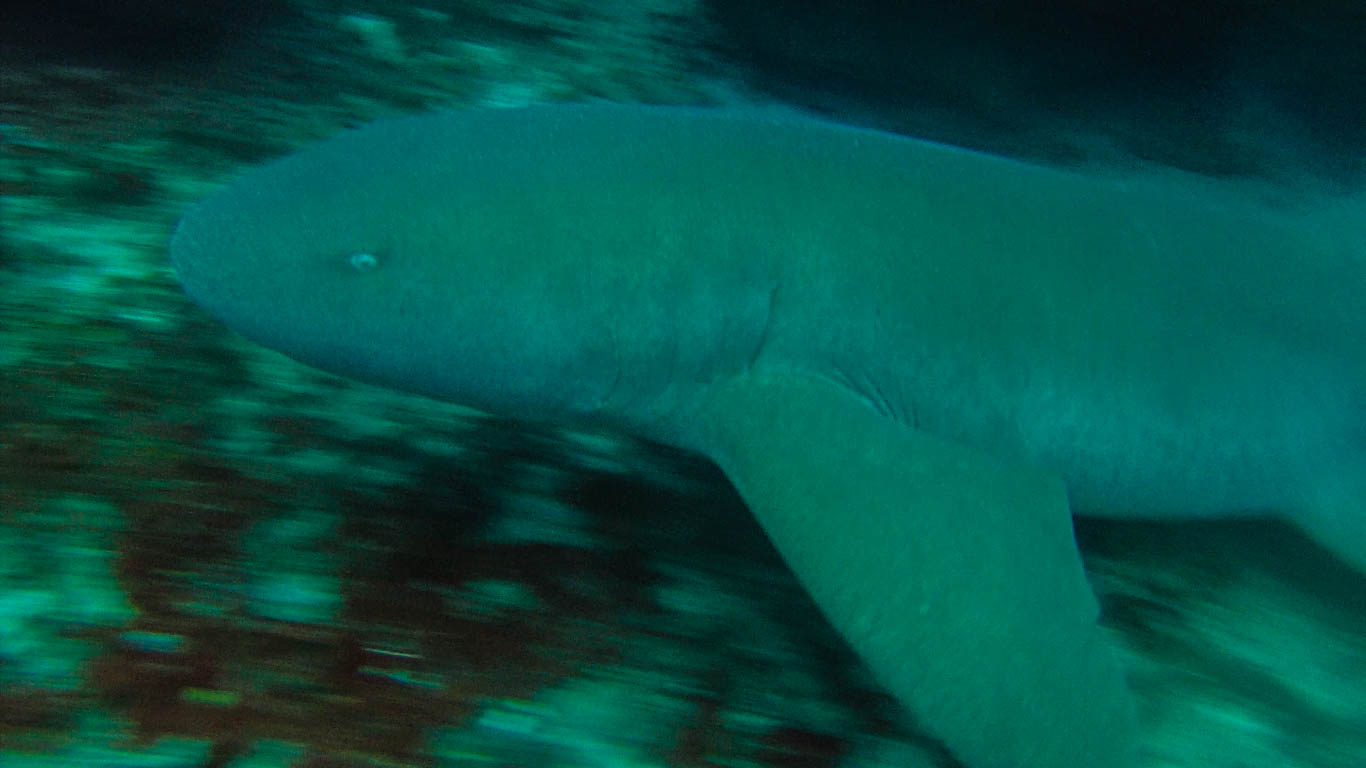
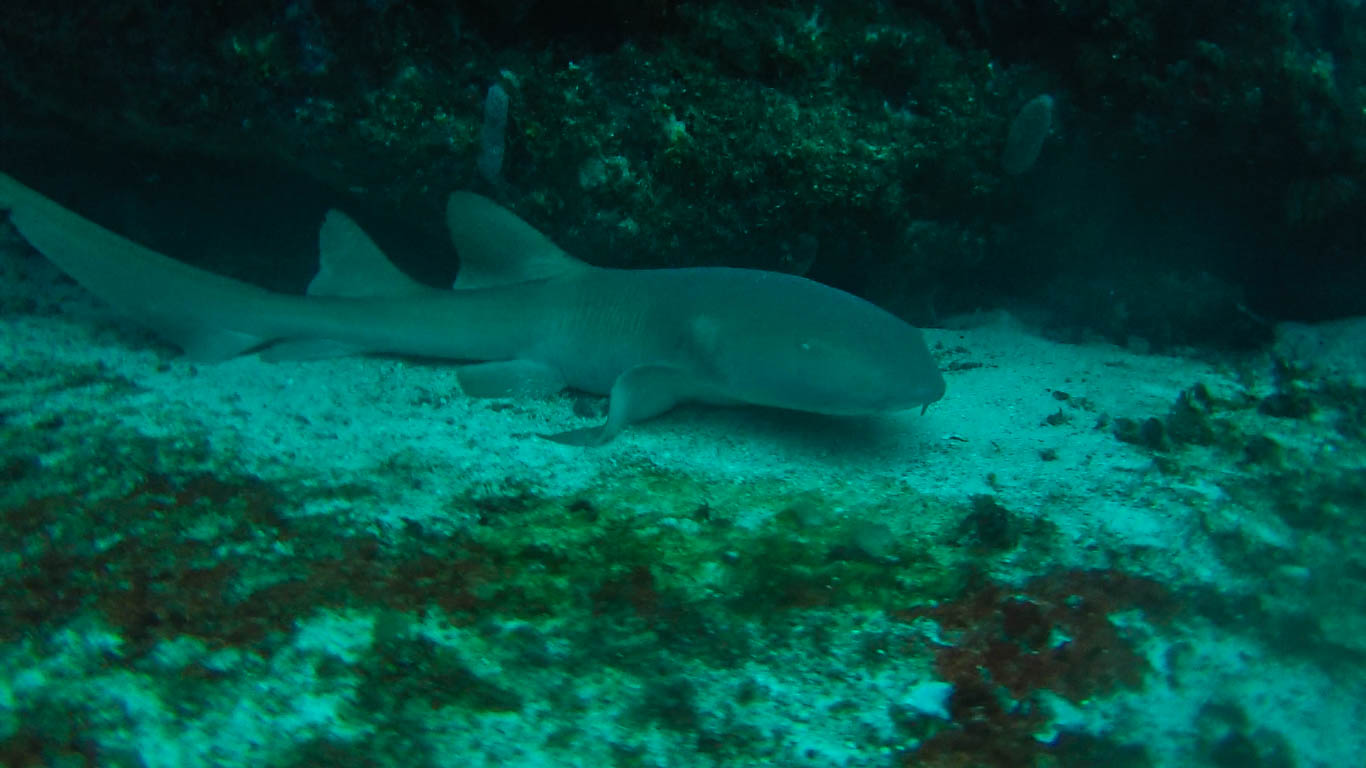
Some of the sea life you can spot are lobster, schools and schools of barracuda and other larger sport fish, eagle rays, nurse sharks, Caribbean reef sharks, and even some hammerhead sharks if you’re very lucky. I spotted a loggerhead turtle at one of the best dive sites, Blowing Rock, which is a must do if you can manage it.
I dove with Dos Tiburones on Big Corn Island and they were amazing. Super friendly, very knowledgable and they also took some shots while diving and sent them to me for free!
On Little Corn Island, diving is just as great. I dove with Dolphin Dive Little Corn Island and the staff were always lovely and made the dives really fun. For some reason, it’s also really easy to spot sharks breaching near the shore on this side of the island so keep our eyes peeled when wandering around.
Other activities on the Corn Islands
On Big Corn Island you can rent a bike to get around the island and it’s a super fun to explore. There are two big beaches and lots of little ones dotted around the island. There are usually baseball games and a soccer game on Sundays and they’re both a great place to spend time with the locals.
Hiking is also an option with some pretty hills in the centre as well as an art instillation at the top of Quinn Hill.
On Little Corn Island there is a lot less to see but you might be able to rent a bike and it is a good idea to spend at least a couple hours exploring inland where you’ll see where the locals live, shop, and go to school and church. An old, run-down lighthouse sits at the north-west of the island next to the huge cell phone tower. If you’re game, it’s claimable and you can get an amazing view from the top.
Kitesurfing has officially arrived to Little Corn where the east side offers a nice steady wind with an average of 18 - 20 knots.
If you’re into yoga there are a couple spots on both islands that offer practice in season. On Little Corn Island you could even try your hand at SUP yoga!

How to get to Corn Island, Nicaragua
If you’re wondering how to get to Corn Island, the most important thing to know is you have to get to Big Corn Island first before you go to Little Corn Island. You can either fly there via La Costeña Airlines or take a cargo ship.
Boat to Big Corn Island
I’ll get this one out of the way first. The boat option is really only for people who are flexible and have some time on their hands. The boats leave only once or twice a week from Bluefields and before that you need to take a six hour bus ride to El Rama and a panga to Bluefields. You’ll also have to factor in at least a night in Bluefields or El Rama. The cost is about $45 one way all up and it’s going to take you a minimum of 30 hours if all the stars align for you.
You also need to consider that the boats don’t run in rough weather or if they do go you could be in for a rocky trip. I met some people who had such a tough time that they decided to fly back instead. One poor couple got stuck on the boat for three days. There’s also not a lot of definite information on the trip so if you’re up for an adventure then check out this post with more information. It is from 2014 but it does have the most details of the route that I could find.

Flights to Big Corn Island in the small La Costeña plane
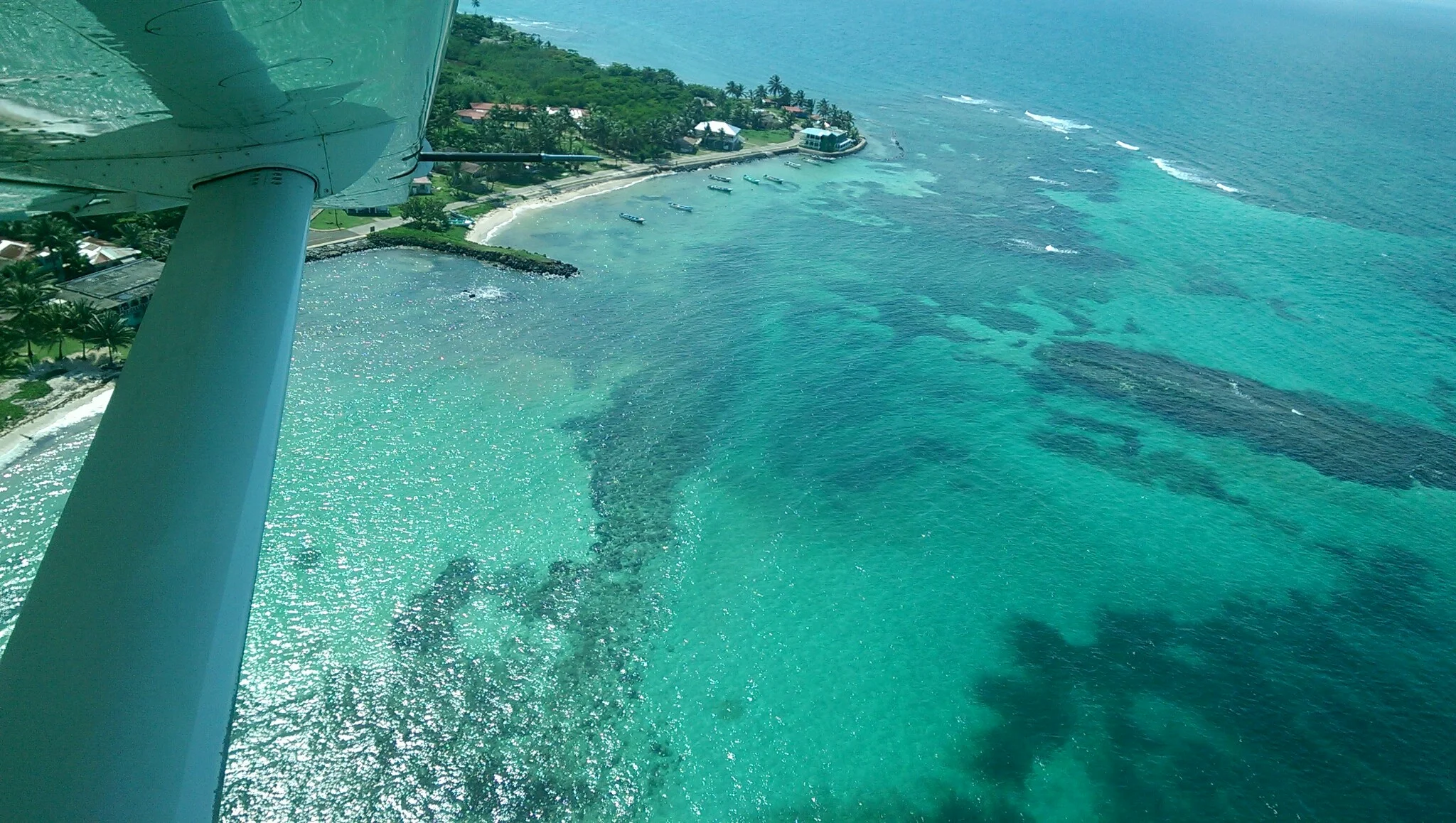
Flying towards Big Corn Island
Flights to Big Corn Island
Most major airlines should get you to the capital of Managua quite easily and from there La Costeña have direct flights to Big Corn Island. There are usually three flights a day to the Corn Islands. The last one leaves at 2:30 pm so if you arrive in Managua after 2 pm then you will have to spend a night there before you can fly out the next morning. I recommend either the Hilton Princess Managua ($$) or La Bicicleta Hostal ($).
Flight time is around 90 minutes including a stop in Bluefields. You are allowed up to 35 lbs (15.88 kgs) of checked baggage and every pound over is charged at $1.20 per lb. Check out La Costeña’s website for current prices and full travel info.
The boat to Little Corn Island
Once you get to Big Corn Island you need to take an open panga to get to Little Corn. From the airport take a taxi to the wharf. It’s less than 10 minutes and should cost around $1. The panga leaves daily at 10 am and 4:30 pm, returning from Little Corn at 6:30 am and 1:30 pm. The trip is about 20 minutes and can get quite wet and bumpy. Personally, I didn’t experience any issues except having to get up to catch that 6:30 am panga to meet my morning flight.
Once you get to Big Corn Island you need to take an open panga to get to Little Corn. From the airport take a taxi to the wharf. It’s less than 10 minutes and should cost around $1. The panga leaves daily at 10 am and 4:30 pm, returning from Little Corn at 6:30 am and 1:30 pm. The trip is about 20 minutes and can get quite wet and bumpy. Personally, I didn’t experience any issues except having to get up to catch that 6:30 am panga to meet my morning flight.
Top tip: Try to sit at the back for a more comfortable ride, the middle for a drier one and bring a couple of garbage bags to put your luggage in in case it rains or gets wet on the boat.
So….Big Corn Island or Little Corn Island?
Little Corn Island is beautiful, isolated and an ideal place to unwind. You’ll still have access to Western food and can have a lot of fun having a cocktail or three and partying the night away at the reggae bar or over a bonfire on the beach.
Big Corn Island has more to explore, with some hills and isolated coastal areas. You have a better chance of experiencing life in a small Caribbean town with access to great views and some long stretches of beach.
To be honest, I would strongly recommend you spend time on both islands. I budgeted for two weeks and I split my time evenly between the two and was glad I did. They’re both so different while sharing a lot of similarities and it would be a shame to go all that way and just see one side of the coin.

Got any thoughts to add on this comparison guide? Let me know in the comments if you've visited and which was your favourite spot!
Disclosure: Please note that some of the links included are affiliate links, and at no additional cost to you, I may earn a commission if you decide to make a purchase.


Want more on Nicaragua? Check out some of my most recent posts below!


A Day Trip To Semuc Champey
If you’re up for a 6 hour bumpy ride into the middle of the Guatemalan jungle then I would suggest staying in Lanquin for 2 or 3 days, relaxing poolside at Zephyr Lodge and doing a day trip to Semuc Champey. The highlight of my time in Lanquin was visiting the Kam’ba cave system during the Semuc Champey day trip and putting on my Indiana Jones hat for a couple of hours. It was so much fun and months later I have not been able to stop talking about.
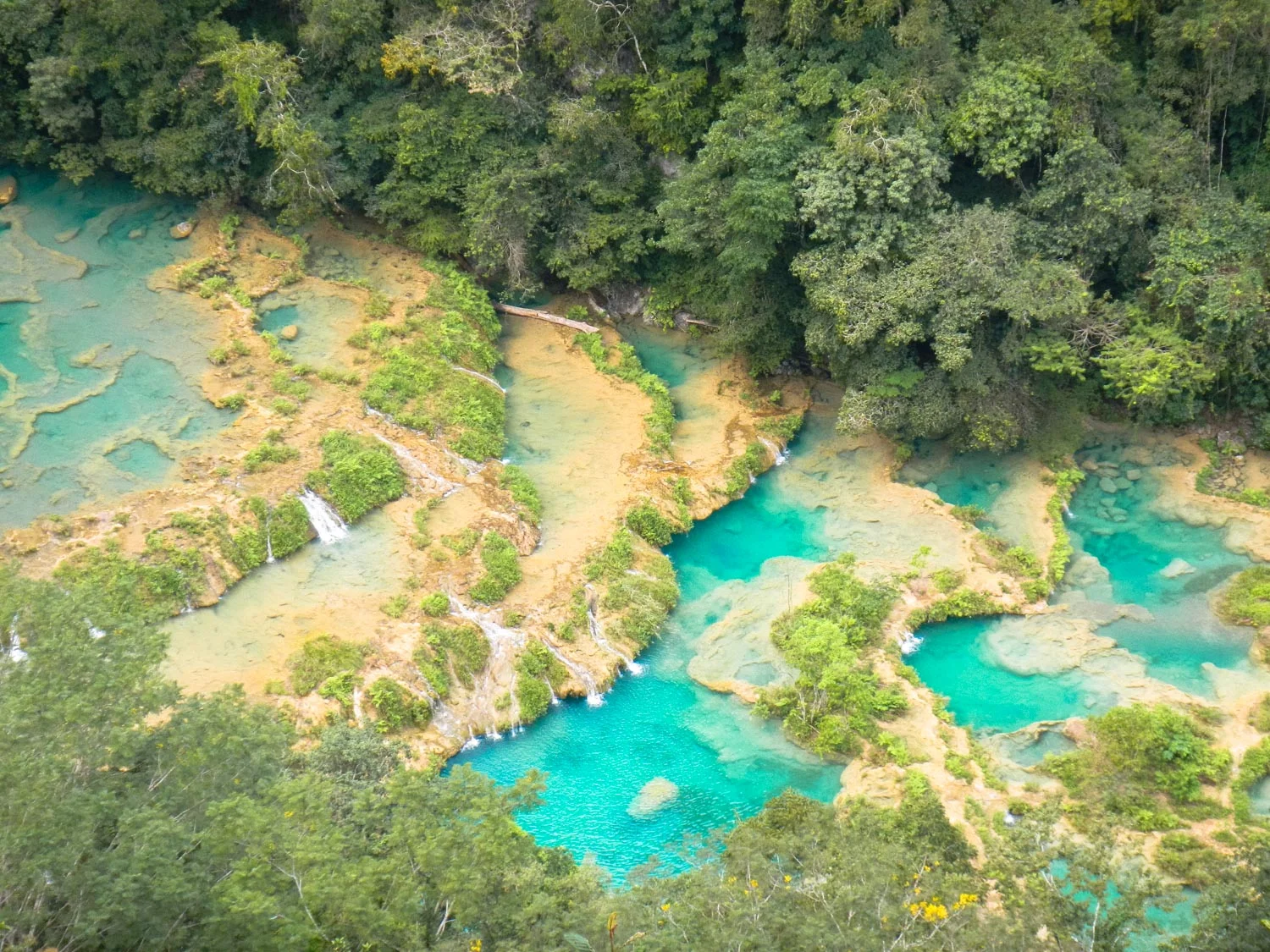
Semuc Champey is not easy to get to. It is out of the way and isolated but that’s part of its appeal. Imagine a jungle landscape with green as far as the eye can see and a beautiful turquoise natural pool in the middle.
If you’re up for a 6 hour bumpy ride into the middle of the Guatemalan jungle then I would suggest staying in Lanquin for 2 or 3 days, relaxing poolside at Zephyr Lodge and doing a day trip to Semuc Champey. I had a lot of fun wondering around the small town itself, hiking to the hill-top church and eating at the local eateries around town.
The highlight of my time in Lanquin was visiting the Kam’ba cave system during the Semuc Champey day trip and putting on my Indiana Jones hat for a couple of hours. It was so much fun and months later I have not been able to stop talking about.
Book your own local guide for your Semuc Champey tour here and read on for advice on how to get the most out of your trip and some Semuc Champey safety tips.

Semuc Champey Day Trip
All of the hotels and hostels in the area will offer a tour to Semuc Champey. It’s really your reason for visiting Lanquin and if you have the time, I recommend this as part of any Central American itinerary. Besides the main attraction of Semuc Champey, there are several other side activities that get to do on a day trip.
Cuevas de Kam'ba
At the time of my visit Zephyr Lodge had stopped offering the cave portion of the tour due to safety and theft concerns so a group of us just booked a complete tour through another hostel. Feel free to ask around but prices were all kind of similar.
One of the funnest things I have ever done in my travels was exploring the Kam'ba Caves at Semuc Chmpey and I’m so glad I took the gamble against my hostel’s warnings. It really isn’t the safest attraction and you are in the middle of the jungle in Guatemala so if you decide to do this trip then I suggest you walk and swim slowly and take your time when doing some more of the riskier activities. Also when walking through some of the darker section, keep a look out for sudden drops from the roof. Watch your head, there are no helmets on this tour!
Once you enter the caves, you are given a candle to light your way. No modern flashlights here! At the entrance the guides will decorate you with war paint fresh from the walls of the cave so it’s a good idea to be nice so you don’t end up with a moustache! Our guide joked it was bat poop but I chose to pretend it was something else.

I was quickly submerged in the cold cave water as we started the two-hour trek into the cave system. This wasn’t my favourite part as I don’t like the cold but I soon forgot about my discomfort when we got to our first adventure. Climbing a wood and rope ladder contraption that looked as old as the caves, one-handed, while trying to keep the candle away in the other hand.
There were a few spots where I actually had to swim through the cave when I couldn’t touch the bottom but luckily there was usually a rope to guide us along. These parts where I was fully submerged is where I got the majority of my bumps and scrapes from the stalagmites poking out from the bottom.
For the extra adventurous, there was an opportunity to scale up a rock face and dive into a deep pool below. I tried my best but I couldn’t get my little legs up there to even attempt the jump. I had also had more than my fair share of Guatemalan tostadas by then so I wasn’t in the best shape.
Halfway through I got to try the most challenging thing I had done in weeks, climbing up a mini waterfall by rope. With my candle down my bikini bottoms for safe keeping I had to scale a small cliff with water rushing into my face while looking out for the best foot holds. This was super fun and super scary. If this is too much for you, there is a slightly less challenging rope ladder that you can climb off to the side to help you get up away from the waterfall.
Towards the end of the trek you get to slide down a natural waterslide through a waterfall into a dark cavern. One of the guides stayed at the top to show you where to slide and one was down below to make sure you landed safely.
The cave tour was honestly worth the 6-hour ride to get to Semuc Champey on its own and its something I would do again in a heartbeat. My friend and I kept talking about how much fun we were having and that we wished we could stay longer. You don’t get much more fun and adventurous than this.

River tubing, bridge jumps and a rope swing
Once you’re out of the cave it’s time to relax. You can look forward to floating gently down the Cahabón River with a beer in your hand and a huge grin on your face. But first I was invited to try out the rope swing into the river. This one hurts if you don't land perfectly straight! Tuck your legs in while you’re swinging and make sure to let go at the end as it won’t be pretty.
Once we had floated all the way down to the rickety old bridge and had climbed out, we were invited to do one last jump - off the 10-metre high bridge into the river below. I had had enough adventure for one day and lunch was calling my name so I just watched the brave souls jump in and then struggle to swim back to shore in the current. What an exhausting morning!

Semuc Champey
After lunch, we walked across the bridge and entered the park of Semuc Champey. At this point you can just head straight to the main attraction and just relax or you can opt to do the one hour long hike to get to the view point so you can see the whole effect of these beautiful natural pools. Hiking through the jungle covered in war paint and a bikini is one thing I never imagined I would do but there I was, living the dream!
It’s a muddy hike up and very steep but once you’re up there it’s really quite breathtaking. Once you’re down you can pack away anything you don’t want to get lost in the lockers provided and can finally jump into the pools!
Semuc Champey consists of a natural 300 metre long limestone bridge, under which passes the Cahabón River. Atop the bridge is a series of stepped, turquoise pools that are perfect for exploring. My guide took us to some of the more impressive parts of the pools including showing us where we could safely jump from and the hidden mini caves including one that you needed to swim underwater to get to.
Semuc Champey is really beautiful and my photos don’t do the pools any justice. If you’re in Guatemala I really hope you don’t miss this trip.


Where to stay
I stayed at Zephyr Lodge. Zephyr is a great place to stay in Lanquin but does have its downsides. If you have the budget, their private rooms are great and include your own balcony overlooking the jungle. The dorms are hit and miss. Comfortable beds but the dorms located near the bar are noisy at night until the party dies down. The shared showers have their own individual view of the jungle which is kind of cool as do some of the toilets. Everything is very clean and well maintained.
The infinity pool is really the attraction here. The pool has a stunning backdrop and a swim up bar. There’s a large sun deck for perfect days relaxing by the pool with a strong drink as well as a hot tub with very restrictive opening hours. Overall I recommend Zephyr Lodge. It’s a good place to stay for a couple of days, you can relax or party and have a good place to rest your head after a long day at Semuc Champey.
You could consider staying at a hotel or hostel close to Semuc Champey. There are a few that sounded really nice and it means you can visit Semuc Champey more than once or for longer than we did on the tour. One friend recommended Utopia.
Check out TripAdvisor for some more options.
Never stayed in a hostel before? Read my posts on what to expect and your hostel packing essentials.

Other points
A good option is to use this as a stop over point between Tikal and Antigua.
Most travel agencies and hostels offer a shared shuttle service to Lanquin from Flores, Antigua or Lake Atitlan. Once you’re here an onward shuttle is just as easy to find. From memory, shuttles were a bit more expensive at Zephyr so if you’re feeling up to it you could walk into town and book something from another hostel or agency.
You don’t necessarily need a guide to just visit Semuc Champey. You can arrange a ride in town or try to hitch along the main road. Entry fee to the site is approx USD $6.
Stay safe by sticking to groups, not venturing off the path too far and be mindful of where your putting your feet and head in the caves.
You can pre-book a local guide for your Semuc Champey tour through Get Your Guide.
What do you think? Are Semuc Champey and the Kam'Ba caves worth the trip? Let me know in the comments below!
You Might Also Like



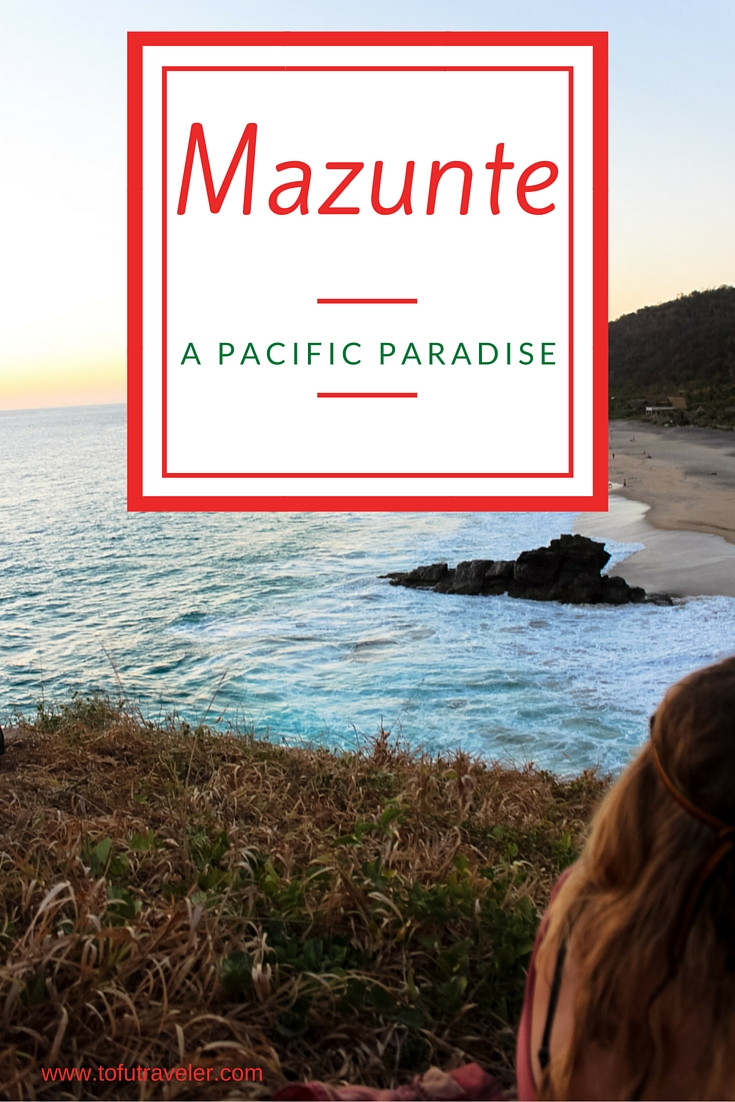
Mazunte - A Pacific Paradise
Of all the beaches I’ve been to on the Pacific coast, Mazunte is definitely my favourite. During the day there are huge pelicans diving for fish and beautiful hummingbirds flitting around. Everyone seems to respect the peace and there is rarely any loud music blaring, at the most you might hear the strains of a guitar or drumming.
Here’s a tale about one of my favourite places in the world. I intended to visit for a couple of days just to de-stress and get some sun after the chilly nights of San Cristobal but ended up staying for a whole week. I could have stayed much longer had I not already committed to volunteering in Oaxaca City.
I took a night bus to San Pedro Pochutla and then a colectivo to Mazunte. A colectivo can really be anything, often a minivan or taxi but in this case, it was the back of a pickup truck. As more and more people piled in along the way, I was eventually squished next to two lovely older men and got to find out about what they did in Mazunte and they loved telling me about their families.
As we were nearing the coast and I could start to smell the sea air, we got stopped by a road block. The police were checking licences and it turned out our driver deigned not to carry one that day. We sat in the back of the truck for about five minutes as the passengers continued to make jokes and were in general good spirits even though we were about to be stuck a 20 minute walk from our destination.
Everyone eventually realised the police were not going to let us continue so we all hopped out and made our way down the hill to Mazunte. By this time it was seven in the morning and not much was happening. I heard this could be a bit of a hippy town and witnessed a few early morning locals going about their business but it was quiet otherwise.
Upon my first sighting of the beach I knew this was the place for me. I settled into my new hostel, Posada Del Arquitecto, which was right on the beach and started my new life in Mazunte.
There is really not much to do in Mazunte but everyday my friends and I would find ourselves declaring, “Another perfect day in Mazunte!” The weather is lovely, the people are relaxed and if you want to spend some time doing absolutely nothing surrounded by natural beauty then this is the place to be!
Eating and drinking
There are some genuinely great places to eat including a spectacular wood fired pizza place run by a real Italian, a fish and chip shop, a falafel place, an Italian gelato stand and a juice bar where you can get a litre of juice for 35 pesos! Due to the large expat community you will really be surprised by the variety and quality of food available.
Cafes and restaurants seem to open whenever they want to so you can't plan anything. It's like a nice surprise as you walk through town and find that your favourite places are open. The main street always seem new to me because of this phenomenon; there's always a different combination of stores opened on any given day.
You can also eat your way around the world just by laying on the beach as food vendors bring around a variety of treats for you to snack on. My personal favourites were the sushi lady, the pizza lady and the donut guy.
Most nights there's usually a movie night in one of the hostels. The organisers post a flyer up everyday with details of that night’s movie and location. Depending on the hostel they’ll offer some drink specials and even some dinner options. While I was there, they played a variety of movies from recent blockbusters (like The Revenant) and more classical movies from the 1920’s.
There's not much party life here so you could easily find yourself in bed by 11 so you can get a full night's sleep before you wake up for the sunrise or morning yoga.
If you do want to party, you can walk the streets and there’s usually a gathering of people outside the juice bar, where they offer 2 large mojitos for 100 pesos or the Mezcaleria is open Friday and Saturday nights with live music late into the evening along with free mezcal tasting.

Chasing the sunset
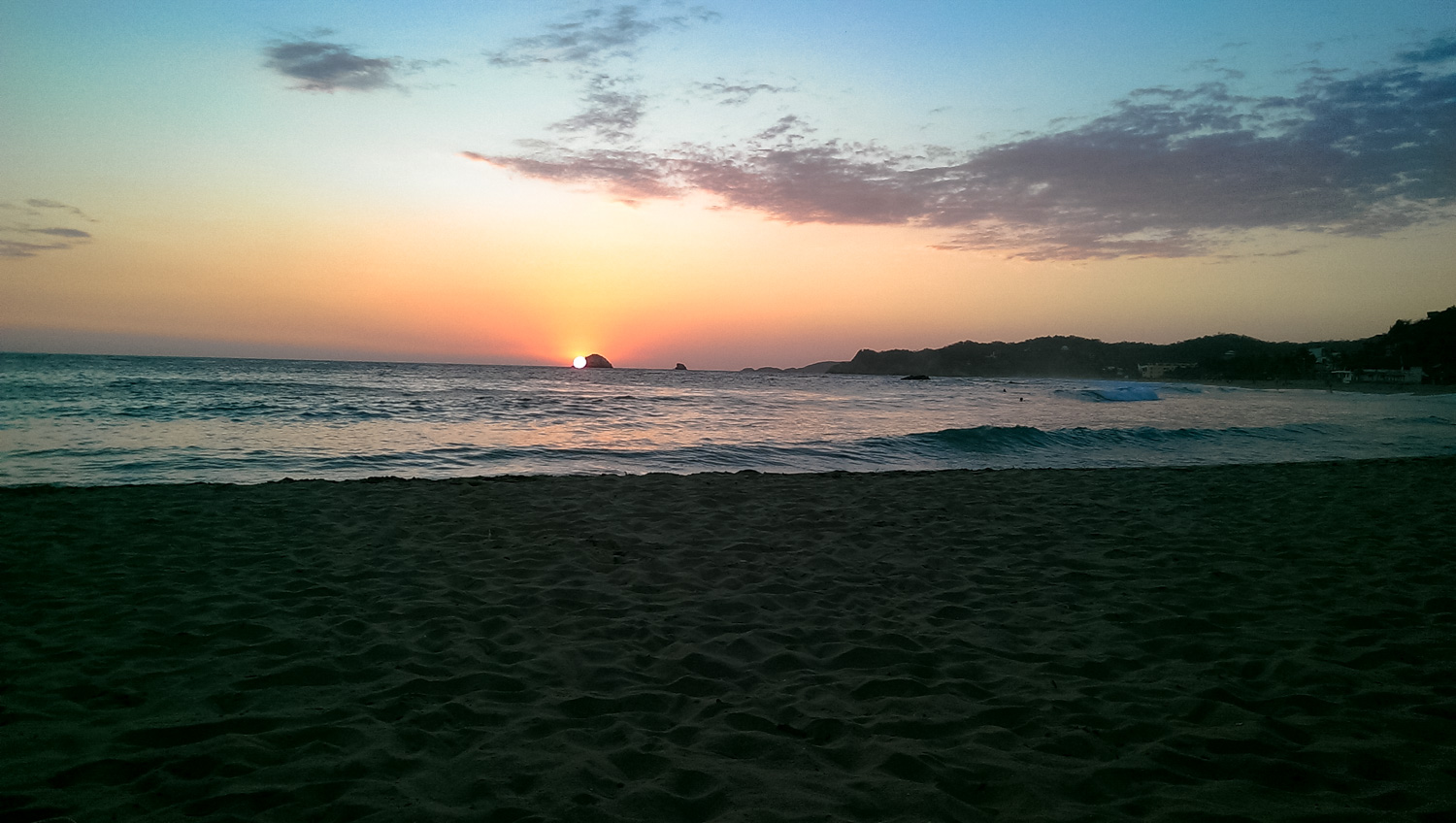
You can watch the sunrise right from the beach in Mazunte but need to walk to another beach to see the sunset. Every afternoon about 4:30 pm locals and foreigners alike start congregating on the beach to see the evening in. Those who are up to a walk start heading to the hill to do the sunset hike.
You start by walking through some local forest while gradually climbing up to a point looking back down to the Mazunte beach. There’s usually a lovely Portuguese lady selling some delicious chocolate truffles and other treats and you could stay here and witness the sunset if you’re not up for anymore walking (or you ate too many chocolate truffles!).
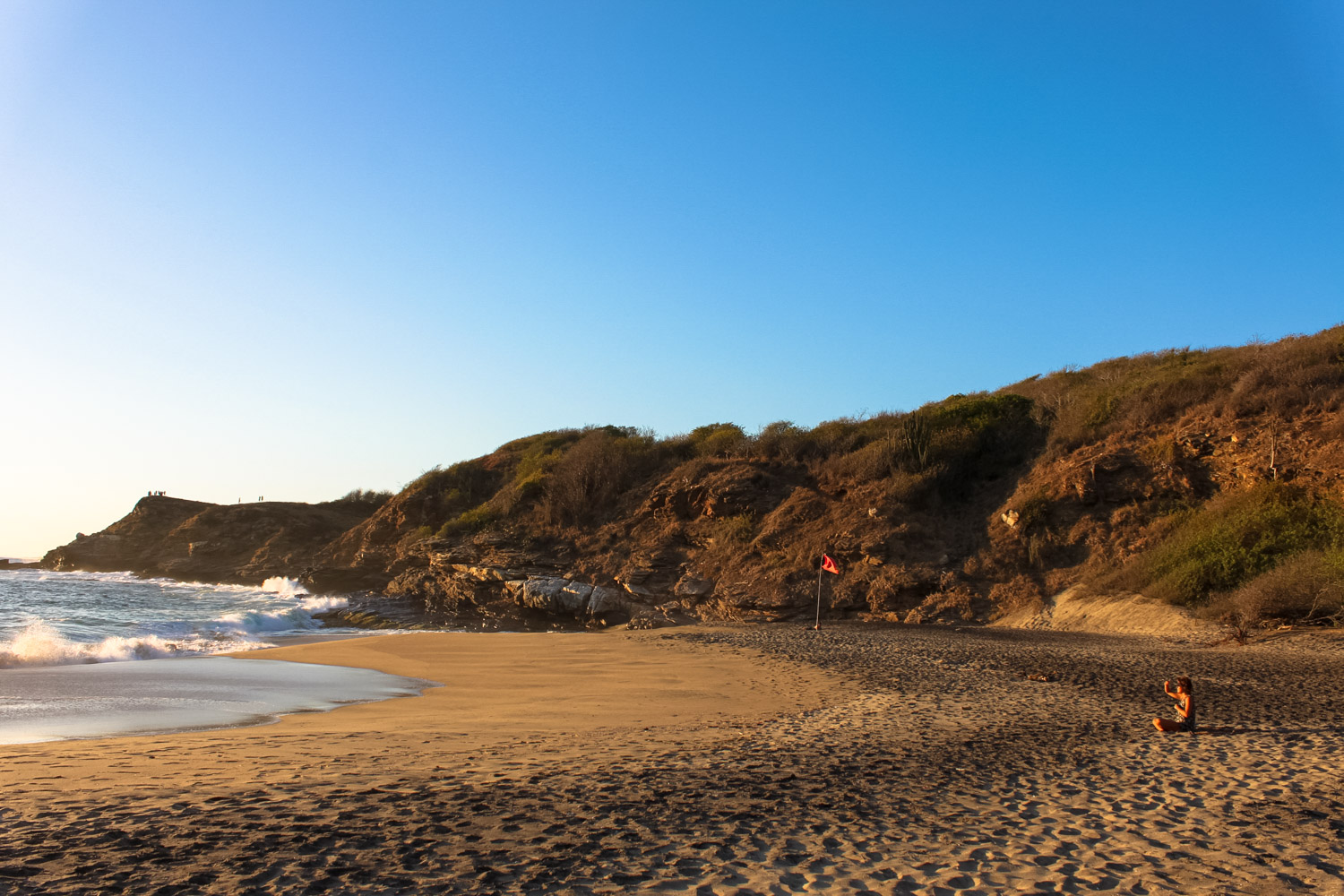
After hanging out here for while, you climb down to an almost deserted little beach where you can sit and stare as the sun sets seemingly right in front of you. Take a dip in the orange waters and fully immerse yourself in this spectacular time of the day.
After watching the sun set for a bit on this beach, everyone then heads up to the furthest point, Punta Cometa. You walk through some more forest, pass some spectacular rock formations and then come upon the point which takes my breath away every time.
The sunset is different every day and since you’re now on Mexican time and you take things as slow as possible then you’re always in a hurry to catch that last bit of sunset as you head toward the point, making it even more special.
From here, it’s all about sitting and staring in awe at the sunset and the otherworldly atmosphere of the beach below. There are huge rocks with some real personality and it almost reminds me of landscapes you encounter when traveling through Salar de Uyuni and South East Bolivia.
Once the sun sets, you still have another hour or so of dramatic orangey-coral landscapes to soak up so you can stay on the point or climb down to the beach below. Once there you can take another swim or head to the small bar located right on the beach for a very strong cocktail or some nibbles.
A Pacific Paradise
Of all the beaches I’ve been to on the Pacific coast this is definitely my favourite. During the day there are huge pelicans diving for fish and beautiful hummingbirds flitting around. Everyone seems to respect the peace and there is rarely any loud music blaring, at the most you might hear the strains of a guitar or drumming.
In Mazunte you can do yoga every morning for as little as 50 pesos. You can sleep in a swinging bed looking out into the coast for 90 pesos. You can eat like you’re in Europe or indulge in local Mexican fare. You can do nothing at all and still end the day with a contented sigh and a stupid grin on your face because you’re just so happy to be there.

Little Corn or Big Corn Island, Nicaragua? Find out what you can expect from these two island gems in the Caribbean.