
ATM and Banks in Playa del Carmen Guide
Whether you’re here to stay or just for a visit, find out all you need to know to navigate the ATMs and banks in Playa del Carmen with this complete guide.
If it’s your first time traveling outside the country or you’re new to Mexico, there are some quirks about banking here that you should be prepared for. Banks in Playa del Carmen are not necessarily going to be like what you find at home and ATMs in Playa also have their own quirks.
After four years living here and experience with visitors trying to navigate the banks around town, here are my top tips to help you avoid the mistakes I made and hopefully save you some money as well.
ATM and banks in Playa del Carmen guide
Decline the conversion
One thing I’ve noticed here more than in other places I’ve traveled is ATMs and banks in Playa del Carmen will often give you the option to lock in a conversion rate when you’re withdrawing cash and even sometimes when you’re buying from restaurants and stores.
This is one way banks make money on top of all those fees they like to charge you. So you might be paying the Mexican bank’s ATM fee, your bank may have international transaction fees and then the Mexican bank will add this exchange rate markup on top of the real exchange rate.
In most cases, you should decline the ATM’s conversion rate. Usually, it’s a very unfavorable exchange rate and you could end up forking out much more than you anticipated. You can confirm with your bank but more often than not their rate is closer to the real exchange rate.
Watch out for the middle and the end of the month
This is one quirk about banks in Playa del Carmen that I didn’t pick up on until I actually started living here. Locals usually get paid twice a month: once in the middle and once at the end of the month. You’ll notice long lines at banks as everyone is getting their pay packet at the same time.
The most troublesome part about this situation, besides having to wait in a line, is that ATMs will often run out of cash or there will be a limit to how much you can withdraw. In general, the end of the day and Fridays are also busier times so it’s a good idea to plan around these if you can. If you’re traveling to Tulum as well, this can be even worse because there are less ATMs around and banks can be more spread out.
There are usually two lines
So often in the past, I would walk past a bank desperate to get some cash out and keep moving when I saw a long line snaking outside the branch. It wasn’t until I had to get money out one day to pay for my rent that I joined the end of a long line, beholden to my fate, and started chatting with the person in front of me.
Luckily I did because she pointed out that she was waiting for a teller in the bank and if I wanted the ATM, there was a much shorter line inside. Facepalm to me because once I actually walked through the doors into the refreshing AC, there was only one person waiting to use the ATMs.
So the moral of the story is, always ask at the end of the line if it’s for the ATM (cajero automatico in Spanish) or not. Chances are you will get to avoid a long wait.
Your card might not work in some ATMs
This is a given for anywhere you might be traveling and is one of my top travel tips. You should always travel with multiple cards in case one doesn’t work. If possible, you should have at least a credit card and a debit card but also, a Mastercard and a Visa.
Your card not working is less common compared to 10 or 15 years ago but I do see it still happening now. And it’s not fun when you need to take out a bunch of cash for a tour to Chichen Itza and you’ve left it to the last minute. Cue me running around the city at 7 in the morning trying to figure out why my card doesn’t work.
Some banks are only associated with one type of financial institution, either Visa or Mastercard, also known as the Plus and Cirrus networks. So if you try to withdraw money using a Mastercard and the machine only accepts Visa, then you won’t be able to use it and need to hunt for another ATM.
The network could be one issue or it could just be that the two banks don’t talk to each other (my technical term). Either way, if you’ve tried a couple of times and you’re getting no luck, then try a different card type or move on to a different ATM.
Having multiple cards also helps in the unfortunate situation of your card getting stolen or the ATM eating your card. The practice in banks in Playa del Carmen (and nearby Cozumel) is if something goes wrong and your card gets taken by the ATM, then they won’t return it to you, it will get destroyed.
Don’t use ATMs on Fifth Avenue
While out exploring all the things to do in Playa del Carmen, you might notice all the conveniently placed ATMs dotted along Fifth Avenue. My suggestion is to avoid these like the plague.
Many have been tampered with in the past leaving you with a greater chance of getting your card read. They also have the highest ATM fees that you’re likely to find. I’ve seen upwards of USD$15.
Likewise, if there is a problem with your transaction or your card gets eaten by the ATM, you’re much more likely to get help if you use a machine connected to or inside a bank.
Watch out for ATM fees
Unlike some countries where ATM fees have mostly been abolished (hello, Australia), these fees are alive and well in Playa del Carmen. Not only that but depending on which ATM or bank you choose, you might end up paying two or three times as much as a bank right next to you.
Each bank not only has its own ATM fee but you might also have a different fee depending on which card you’re using.
So my Card A might attract a fee of $32 at Bank A and a fee of $96 at Bank B while Card B could have a fee of $50 at Bank A or $17 at Bank B. If my bank has a relationship with the Mexican bank, I might not get charged a fee at all. Clear as mud, right?
If you’re going to be in Playa for a while, it’s worth a little effort to figure out which banks charge you the least as this could add up to savings in the long run. As a long-term traveler, I know how important it is to not only save and budget for your holiday but also to keep costs down while you’re on the road as well.
Generally speaking, Scotiabank seems to have the highest fees overall, unless you have a Scotiabank card from home. Any ATM on Fifth Avenue or non-bank ATMs in convenience stores are also way up there fee-wise. Likewise, watch out for any standalone ATM near the ferry to Cozumel.
Meanwhile, Santander and Banamex seem to have the lowest fees. You’ll need to do your own experimentation of course, but these are a good place to start.
ATM and banks in Playa del Carmen guide
I’ll keep adding to this list as I come across new and wonderful changes to the banks here in Playa. If you know of anything that should be added or if you have any questions, please add it to the comments below.




How to get to Playa del Carmen from Cancun Airport by bus
Get your trip started off right with this full guide on transport from Cancun airport to Playa del Carmen. Find out how to get to Playa del Carmen by bus and answers to some of your most common questions.
You’ve bought the flights, booked your accommodation and now the last thing on the list is to just figure out how to get to Playa del Carmen. The good news is, the city is very well connected by bus and it’s one of the cheapest and easiest ways to get from the airport.
I personally use the bus, especially if I’m traveling on my own so I’ve detailed how to get from Cancun to Playa del Carmen by bus to help you with your vacation planning.
If the bus is not on the cards for you, check out this full guide on transport from Cancun Airport to Playa del Carmen with suggestions for private drivers, shuttle companies, and rental cars.
How to get to Playa del Carmen from Cancun Airport by bus
Fast facts
Cost: MXN$208 or roughly USD$10
Travel time: 1 hour 15 minutes
Bus station in Playa del Carmen: Corner of Fifth Avenue and Benito Juarez Avenue
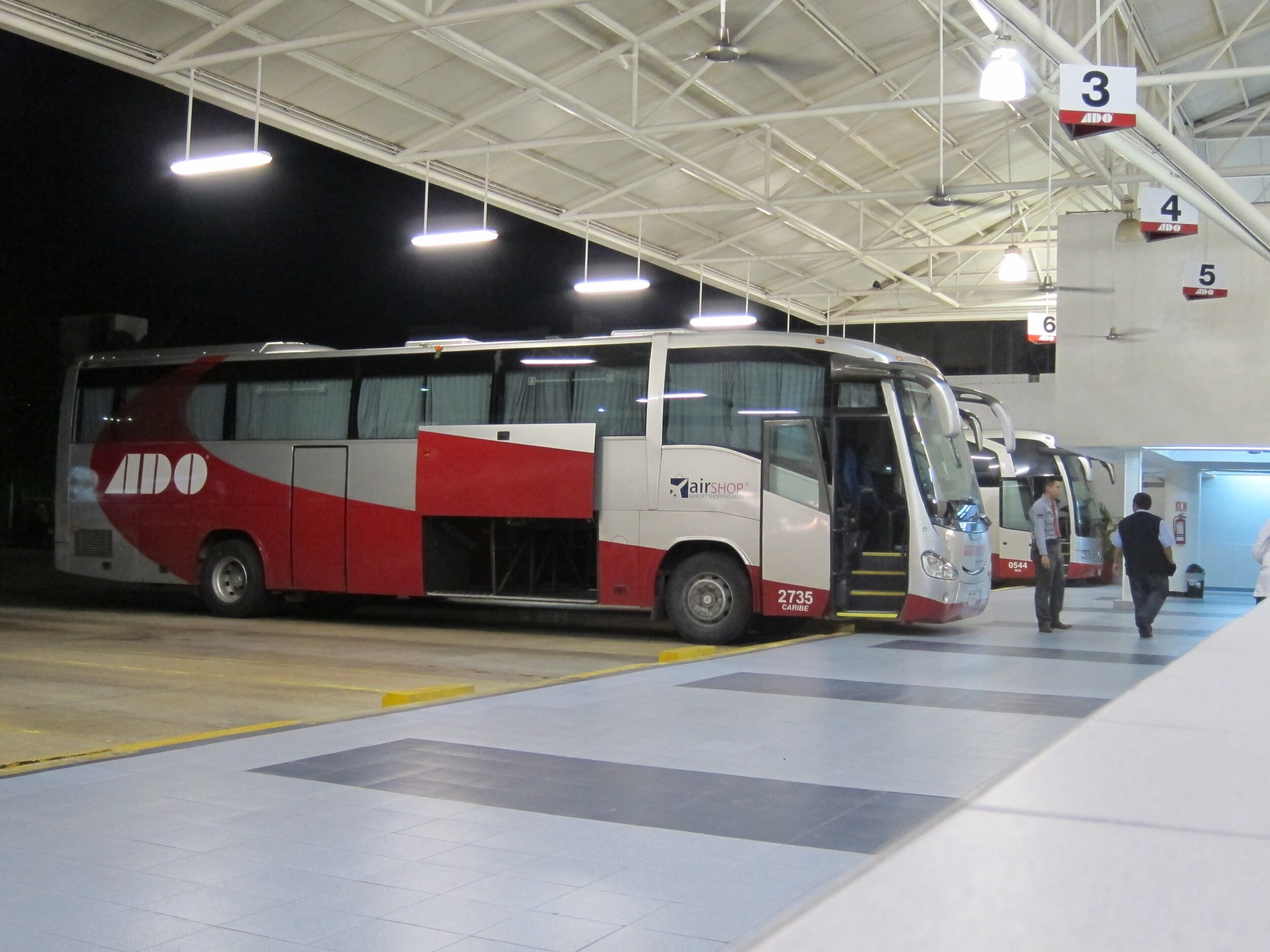
“ADO BUS STATION - PLAYA DEL CARMEN”, BY Stephen Rees, LICENSED UNDER CC BY 2.0
Step by step guide
Getting the bus from Cancun Airport is relatively painless and I’ve had many visitors go through the process with no drama. You don’t need to book in advance and the bus will drop you directly on Fifth Avenue in central Playa del Carmen.
Step 1 - Find the bus stop
Head straight outside the terminal where you’ll likely see a mob of drivers with signs asking you where you want to go. Each terminal layout is slightly different but you should find a sign for the buses or you can ask one of the taxi drivers to point you in the right direction.
Note: There have been complaints by people online that taxi drivers have told them the buses are not operating to try to get them to take a taxi instead. If this happens to you, just be firm and tell them you already have a ticket. This has never happened to me in my ten years traveling here but I thought it was important to give you a heads up.
Step 2 - Buy your ticket first
You can buy your ticket from the small ticket kiosk located right by the bus stop. Tickets are currently MXN$208 and you must pay in cash. You can withdraw pesos from the ATMs located inside the terminal or, you can purchase your ticket using a credit card from the ADO salesperson found near the rental car companies right after baggage claim.
Note: If you’re buying a ticket from inside the terminal, they may not sell you a ticket for the next bus departure if they think you won’t have enough time to make it. This could mean a longer wait which is why I would avoid this method if possible and try to have the cash to pay curbside.
Step 3 - Get on the bus
Look for the bus heading to Playa del Carmen as they are also buses going to Cancun, Tulum, and Merida. The bus driver will scan your ticket and remind you to sit in the seat assigned to you. There should only be one stop in Puerto Morelos before you get to Playa del Carmen but the bus driver will make announcements to make sure you get off at the right place.
Sometimes the driver will put on a movie but this will likely be dubbed over in Spanish. A great opportunity for you to practice your language skills. Or maybe just pop some headphones in and have a nap. The trip will take upwards of 1 hour and 15 minutes depending on which terminal you get on at as the bus will make a stop at each one before leaving the airport.

“ADO BUS STATION - PLAYA DEL CARMEN”, BY APPAIOOSA, LICENSED UNDER CC BY 2.0
Which bus company to use to get from Cancun Airport
ADO is the bus company that serves much of the Yucatan Peninsula and can get you around the Riviera Maya with ease. The buses are comfortable, air-conditioned, and driven by professional drivers to get you to your holiday destination safely.
Who should use the bus to get from Cancun Airport to Playa del Carmen?
If you’re traveling on your own or with a friend, looking to save some money, or want a pain-free way to get to Playa del Carmen then the bus is your best option.
The bus might not be the best option if you’re staying at a resort outside of Playa del Carmen. You can get a taxi once you arrive at the station but the costs of the cab fare and the time taken to switch from bus to taxi makes getting a private driver or taking a shuttle a much better option.
Where does the bus stop in Playa del Carmen?
Playa del Carmen has two bus stations but the bus from Cancun Airport only stops at one of these. This bus station is located on the corner of Fifth Avenue and Benito Juarez Avenue on the south side of town.
How to get from the Playa del Carmen bus station to your hotel
One thing to note is that the bus will drop you at the main bus station located on the corner of Fifth Avenue and Juarez Avenue so if you’re hotel is not located within walking distance or you have a lot of bags, you will have to get a taxi on the other end.
Taxis in Playa are usually cheap with a standard fare around the downtown area costing no more than MXN $40 (USD$2) and you can flag one down quite easily. When you’re around the more touristy parts of Playa, however, you’re going to find taxi ranks set up with taxis ready to get you wherever you want to go.
The downside of these taxi ranks is that they’re going to charge you far more than the standard fare for the benefit of not having to look for your own. One such taxi rank is located right outside the Playa del Carmen bus station and you’re be expected to fork out around MXN$100-$150 even if your hotel is not far away.
If you’re happy paying more, then these taxis are a safe way to get to your hotel and still a good option. If you’re willing to walk two blocks west to 15 Avenue then you can flag a regular cab down and bring your costs back down. Just remember to confirm the cost with the driver before you get in as it is unfortunately common practice to try to get unwitting tourists to pay a higher price.
Arm yourself with the Playa del Carmen taxi zone chart so you know the correct fare to get you to your accommodation and help you get around town without getting ripped off.

Cenote Azul near Playa del Carmen
Frequently asked questions
How much luggage am I allowed on the bus from Cancun Airport?
Technically, you’re allowed one bigger bag in the bag storage area under the bus and one to carry on. Practically, the bus drivers don’t ever seem to monitor this so as long as you’re not taking the piss with an entourage of 10 bags, you should probably be fine.
Can I take my pet on the bus from Cancun Airport?
The official rule is that pets have to go in the baggage storage under the bus in a carrier and most drivers will enforce this rule. I have known people to get away with carrying a small dog in their bag but you might not want to rely on this method lest you be stuck with an unusable bus ticket and the last resort choice of getting an expensive taxi to Playa del Carmen.
Your best bet is to hire a private driver and I’ve listed a few options who are happy to have a pet tag along in the full Transport from Cancun airport to Playa del Carmen guide.
Is the bus from Cancun Airport good for small kids?
You can certainly use the bus if you’re traveling with kids but my recommendation when traveling in a group is to use a private driver. The cost will be cheaper once you have at least three people and you will get door-to-door service with enough space for car seats and luggage.
If you have any questions or comments, please let me know in the comments below. I read them all and would love to know if there is anything else you’re like to know or share about Playa del Carmen.

How to get to Playa del Carmen from Cancun Airport
Ready for your Mexican escape? Read on to find out how to get to Playa del Carmen from Cancun Airport to help make your holiday planning a breeze.
Planning your Mexican escape? Once you’ve got the flights and hotel sorted, the next step is figuring out how to get to your tropical vacation.
Cancun Airport is located 35 miles (56 km) away from Playa del Carmen and getting there is actually quite easy. Even if you’ve left it to the last minute, there are still a few transport options to get you to Playa Del Carmen without much fuss.
Read on to find out how to get to Playa del Carmen from Cancun Airport including some frequently asked questions to help you with your planning.

“Boeing 787 / Aeroméxico”, by Hector Martínez, licensed under CC BY 2.0
How to get to Playa del Carmen from Cancun Airport
Whether you’re going solo or got the whole crew in tow, there are several options you can take to get to Playa del Carmen. The bus is the cheapest option, especially if you’re traveling alone while renting a car can be the most pricey but it will give you the freedom to get around the area and explore.
Rent a car
If you’re planning to rent a car anyway for your visit, renting a car at Cancun Airport could be the easiest option. It’s an easy 45-minute drive to Playa del Carmen and I often found the car rental agencies located at the airport to be some of the best to deal with.
Make sure to book in advance and have a Plan B in place just in case your flight arrives too late. Unlike some other international airports, the car rental places in Cancun seem to close early and some travelers have been stuck.
Take the bus
The ADO bus is usually my go-to if I’m traveling on my own from Cancun Airport. It’s about USD$10, air-conditioned, comfortable and there is only one stop in Puerto Morelos before you get to Playa del Carmen. Depending on the time of day, the buses can depart as early as every half hour with a longer wait in off-peak times.
The buses drop you off at a bus station located on the south end of Playa where you have a choice of walking to your accommodation if it’s near enough or getting a taxi.
You can get your ticket once you arrive from either a ticket booth within the airport found after baggage claim and near the car rental booths or curbside next to the bus stop. The booth inside takes cards but the one outside is cash only.
My best advice is to get your ticket curbside if you can. The tickets are for set departure times so if you’re too close to the next departure, the booth inside will usually sell you the following departure time even if you still have a chance of making the next one. I was unfortunate enough once to not have cash so had to use the booth inside the airport and when I got outside the bus was sitting there for a good 10 minutes before it left followed by another half an hour wait before the next one.
Check out the full guide on How to get to Playa del Carmen from Cancun Airport by bus for more detail.

“ADO Bus Station - Playa Del Carmen”, by appaIoosa, licensed under CC BY 2.0
Hire a driver
There are a ton of drivers willing to pick you up at Cancun Airport for a fair fee. I usually pay around MXN$600-$800 or USD$30-$40.
Here are some personal recommendations of drivers I use regularly:
JF Riviera Tours: +52 984 176 1374
Daniel: +52 984 105 1368
Tania: +52 984 322 5142
They all speak English and can also be hired for day trips and as guides to help you explore the area. I suggest you get in touch with them through WhatsApp, one of the must have apps for travel.
Book a shuttle
A shuttle from Cancun Airport is a slightly cheaper option than a private driver if you’re on your own and don’t mind sharing a van with a few strangers. Shuttles will take you from door to door and you will usually have to pay in advance.
Grab a taxi
This is the last resort if the bus wait is too long or you haven’t already arranged any other transport in advance. Once you exit the terminal, you will see a large group of taxi drivers happy to take you where you need to go but this is definitely the priciest option.
You’ll have to do some negotiating here as they are going to start prices as high as MXN $1,200 (USD$60) or even more.

Chichen Itza - one of the New Seven Wonders of the World and an easy day trip from Playa del Carmen
Frequently asked questions
How can I get to Playa del Carmen with a pet?
The ADO bus only allows pets to be placed in the luggage storage underneath the bus and not onboard so this is probably not the best option unless you have a particularly chill pup. I do know of some people who have snuck on with a small dog in their bag but you might not want to rely on this option.
Your best bet is to either rent a car or use one of the suggested drivers who are all happy to have a pet on board.
How can I get from Cancun Airport with a lot of luggage?
If you’re struggling to pack light, then get in touch with a private driver. Fernando at JF Riviera Tours and Christian both have a variety of vehicles to fit multiple bags.
How can I get from Cancun Airport with a group?
If you’re travelling with a group of more than 3 people, it makes sense to hire a private driver or get a taxi as a last resort. The recommended drivers can carry large groups and all their luggage with no worries.
Can I use the colectivos to get to Playa del Carmen?
The colectivo vans that travel up and down the main highway between Cancun and Playa del Carmen are a cheap way to get around the Riviera Maya. Unfortunately, you can’t use them to get from the Cancun Airport.
Practically, you would have to walk almost 40 minutes in the heat and humidity that the area is known for, along roads not designed for pedestrians before you get to the busy highway where you’d have to wait for a colectivo to pick you up. I can be pretty frugal at times but I haven’t heard of anyone attempting this, especially since the bus is only about USD$10 and a much comfier option.

Should You Use the Baz Bus in South Africa?
When I was planning a trip to South Africa it was hard to avoid any mention of the “backpacker bus” called Baz Bus. After two trips and spending six months total in the country, here’s my guide to whether the Baz Bus in South Africa is a good choice depending on your travel style.
2025 Update: Baz Bus has made some significant changes since my last update and bus travel in South Africa as a whole is a completely different ball game. I’ve updated the guide to show Baz Bus’ changes and also a differing view of who Baz Bus might suit.
When I was planning a trip to South Africa it was hard to avoid any mention of the “backpacker bus” called Baz Bus. It’s in all of the guides and you’ll find mentions on most of the hostel websites. I initially thought something like this would not be my style but when planning my first trip in South Africa, I wasn’t sure how difficult it was going to be to get around.
In past years, this service was met with mixed reviews in various Baz Bus reviews and on platforms like TripAdvisor. However, times have changed. Now operating exclusively on the Garden Route, Baz Bus in South Africa has reinvented itself to meet the evolving needs of backpackers and independent travelers.
After a total of six months in South Africa across two trips, and speaking with numerous other travelers, I formed a pretty solid opinion of the Baz Bus and even tried it out for myself. Hopefully, this information will help you plan your own trip and decide whether the Baz Bus is for you or not. This article aims to provide a balanced, in-depth perspective on the service by comparing it to other bus travel in South Africa, reviewing personal driving experiences on the road, and sharing tips for making the most of your journey.
What’s New with Baz Bus?
In response to past criticisms and changing travel needs in South Africa, the Baz Bus team has recently overhauled its service. The biggest change is Baz Bus SA now sticks to a single route—the Garden Route.
Daily Runs and Clearer Operating Hours: They run buses every day (with a slightly lighter schedule in the off-season), so you’re not stuck waiting for days on end.
Lower Prices: Prices have dropped considerably—hop on hop off passes now start at around $119, down from a $199 starting price when I first used them.
Online Flexibility: A new online login lets you shift your bus dates and times up to 12 hours before departure, which sounds like a win if things change suddenly.
Social Vibe: They’ve added social activities at various stops—quizzes, karaoke sessions, and such—to help break up the ride. This seems to have contributed to much improved Baz Bus reviews, including a recent 96% overall rating on TripAdvisor.
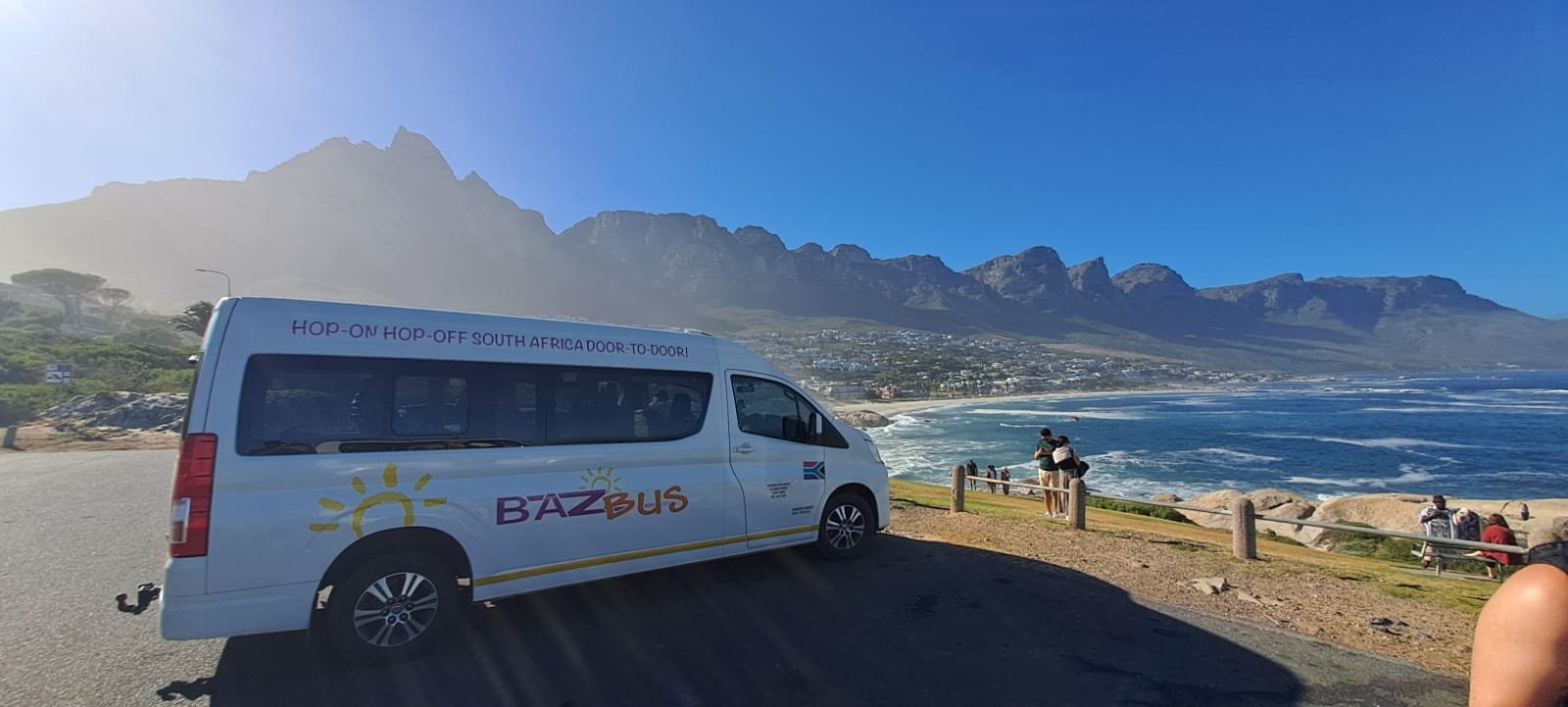
What is the Baz Bus?
The Baz Bus is a hop on hop off bus service that connects travelers to South Africa’s Garden Route between Cape Town and Port Elizabeth. It offers a flexible and social alternative to public transport, rental cars, and guided tours.
Designed for independent explorers who still want structure, it allows you to book one pass covering all bus journeys, with pickups at hostels, hotels, guesthouses, and bed & breakfasts, and drop-offs at carefully chosen towns and hidden gems. Buses run daily, and you can change your schedule online up to 12 hours before departure. Drivers double as local guides, sharing stories and tips along the way, making the journey more than just a ride.
The service is popular among solo travelers looking to meet like-minded adventurers while avoiding the stress of driving. Compared to renting a car, it’s cheaper and safer, with no parking worries.
There are two pass options to choose from. You can either buy:
A hop-on, hop-off pass to your chosen destination and get on and off as many times as you want along the way, in one direction within one year; or
A travel pass from a chosen starting point and get on and off as many times as you want, in any direction (back and forth), within a specific period.
A ticket on the Baz Bus will cost you from $119 with an additional discount when booking more than one passenger. It includes:
One 23kg bag and one small hand luggage
Unlimited free bus and date changes
Discounts on restaurants and accommodation
My Baz Bus Review: Pros and Cons
No transport option is perfect. Here’s a balanced look at the key benefits and challenges of the current Baz Bus service based on my experiences and recent feedback from fellow travelers.
Some advantages of using Baz Bus include:
Door-to-Door Service: The convenience of being picked up directly at your accommodation is a major draw, especially for first-time visitors who may not be comfortable navigating local public transport (and South African bus stations)
Daily Departures & Predictability: The improved schedule means less downtime waiting for the next bus and more time enjoying the journey.
Social Atmosphere: Organized activities like quizzes and karaoke provide a relaxed environment to meet other travelers. In many Baz Bus reviews, passengers have praised the friendly, community feel onboard.
Cost-Effectiveness for Solo Travelers: The new pricing structure makes Baz Bus tickets more affordable than renting a car on your own. For solo backpackers, this can be a particularly attractive option.
Flexibility: The online login system allows you to change travel dates and times with ease, giving you the freedom to adjust your itinerary as plans evolve.
Some disadvantages of Baz Bus are:
Limited Coverage: By focusing exclusively on the Garden Route, Baz Bus no longer serves areas like Johannesburg or Durban. Travelers looking to explore beyond the Garden Route will need to consider other options, such as renting a car, flying, or using public transport.
Not Ideal for the Experienced Traveler: If you’re comfortable with independent travel and have experience with bus travel in South Africa, you might find the structured schedule and stops a bit restrictive. Some travelers prefer the freedom of self-driving in South Africa, especially when compared with the more leisurely pace of the Baz Bus timetable.
What Are the Other Options for Garden Route Travel?
If you’re considering bus travel in South Africa, it’s a good idea to weigh your choices. Here’s a comparison of Baz Bus with the more traditional public buses and even the option of renting a car.
Using Public Transport
South Africa offers a range of public bus options through companies like Intercape, Translux, and Greyhound. These services usually boast comfy, reclining seats and air conditioning, yet they don’t offer door-to-door pickups like Baz Bus does.
Public buses are generally more direct, with fewer stops, which means you might get to your destination faster, yet you miss out on that extra bit of social interaction and the convenience of being dropped off right at your accomodation. If speed is your priority and you’re less interested in the communal vibe, public buses could be a better fit.
Prices on public buses can be incredibly low—sometimes as little as R180 for shorter routes. Here are some examples of bus prices in 2025:
Cape Town to Stellenbosch: R180
Mossel Bay to Wilderness: R180
Swellendam to Plettenberg Bay: R220
Hermanus to George: R300
Cape Town to Port Elizabeth: R303
There are also mini-van taxis that can help you get from one neighboring town to another for R15 or more. These are easy and cheap once you’ve caught a couple and are a great way to spend some time with actual locals. One of my first memories in South Africa was taking a mini-van taxi and singing along to the radio with a car full of people. We were squished but had a great time!
The (Huge) Downsides of Public Buses
After saying all that, I couldn’t personally recommend public bus travel to anyone anymore. A decade ago, taking a long-distance public bus in South Africa was a solid budget-friendly option, but things have changed. Reports of violent attacks, hijackings, and conflicts within the transport industry have made public buses less reliable and, in some cases, outright dangerous.
That said, if you’re sticking to a well-traveled route and have thoroughly researched the current safety situation, public buses can still be an option. Some travelers continue to use them without issues, but the risks have increased significantly, and it’s not as carefree as it once was.

Pit stop while hitching a ride with a fellow traveler in Oudtshoorn
Hire a Car
Another great option if you have a driver’s licence is to hire a car. My last trip to South Africa was mostly self-drive as I had a friend with me and it worked out to be around USD $30 per day. Most roads in South Africa are paved and easy to navigate and you will be able to make your own schedule and access places that even the buses don’t often go to.
Having your own car also makes it a lot easier to get to sights and activities which means you don’t need to spend money on expensive tours that you can do on your own.
A great example of this is the popular waterfall hike in Northern Drakensberg. Amphitheatre Backpackers charges R3100 for a day trip where you can easily do the hike on your own, pack your own lunch, and save over R500 per person if you can just drive the two-hour-long trip to the top of the trailhead.
Why You Might Not Want to Rent a Car
There are two big downsides of car rental. The first applies to getting around anywhere in the world, not specifically in South Africa. If you’re traveling on your own, you really miss out on the opportunity to interact with locals or other travelers. That’s totally fine if you’re an introvert or just happy to meet people at your next stop but, driving down the N2, trying to sneak peeks of the view while attempting to stay on the road can be a lonely prospect for some.
The solution that I discovered on my first trip, was to pick up eager backpackers on the way. I met several solo travelers in hostels and guesthouses who were keen to open up a seat in their hire car just for the pleasure of some company on the way. On my last trip, I was with a friend but we were traveling for a few weeks together and were more than happy to listen to a voice that wasn’t ours after a few days.
The next downside is unique to South Africa (and a few other places that I wouldn’t dare drive solo). It’s the safety aspect. I’m not trying to freak anyone out because remember, I’m a petite female often traveling on my own with no self-defense skills to speak about, and I still do it. However, driving in South Africa takes a few extra precautions.
Key safety tips for driving in South Africa:
Keep doors locked and windows up when stopped at traffic lights or in slow-moving traffic. Opportunistic theft can happen in cities and busy intersections.
Never pick up hitchhikers, no matter how harmless they appear. If you’re concerned for someone’s safety, report it at the next town.
Avoid driving at night, particularly in rural or remote areas where visibility is low and animals may wander onto the road.
Park in well-lit, busy areas and never leave valuables visible in the car, even for a quick stop.
Follow local advice. Hosts, guesthouses, or lodges will often know which areas are safe to drive through and which should be avoided.
Stay calm in road disputes. Aggressive drivers exist everywhere, and it's best to avoid confrontation.
Watch out for road obstacles. In some areas, criminals place objects like rocks in the road to force cars to stop—carefully drive around them rather than stopping. (Personally, I encountered someone parked across a street to block the road close to Pretoria. I quickly realized what was happening and drove around it onto the pavement)
Be mindful of wildlife. Rural roads aren’t always fenced, and you might encounter livestock or even large antelope, particularly at night.
Plan fuel stops in advance. Petrol stations aren’t as frequent in remote areas, so top up when you can.
Ask for directions at petrol stations instead of stopping in unfamiliar areas.

A unique beach outside of Knysna that would be near impossible/costly to get to without a car
How Did I Get Around South Africa?
During my time in South Africa, I used a combination of mainliner buses, mini-van taxis, sharing rides with other travelers, car rental, and then finally the Baz Bus. To provide a balanced review of Baz Bus I brought a 14-day pass to get me from Port Elizabeth to Johannesburg.
I chose this segment for a couple of reasons:
I wanted to visit Northern Drakensburg which is very difficult without a car. Even the mainliners don’t stop nearby, meaning you have to spend a few hours changing to get to your accomodation, whereas the Baz Bus drops you right at their doorstep.
The mainline buses left Port Elizabeth at 6:45 am which is the same time the Baz Bus started its accomodation pick-ups and it arrived around the same time in Coffee Bay. I thought I would be happy to pay for the convenience of not getting up extra early in PE to get a taxi to the bus station.
Tips for Making the Most of the Baz Bus
If you’re leaning toward giving Baz Bus SA a try, here are some pointers that might help smooth out the rough edges of the experience:
Familiarize Yourself with the Route
Before you set out, spend some time checking the official Baz Bus route map to see which stops are on the route. Knowing the layout of the Garden Route bus service can help you plan which stops are must-sees and which might be best skipped.Use the Hop On Hop Off Option
The Baz Bus hop on hop off feature is a cool way to explore on your own terms. Heard about a cool hike at your last hotel that isn’t in your plan? It’s super easy to edit your booking so you can include a new stop on the way.Book Your Tickets Early
Snagging your Baz Bus tickets in advance can lock in a good deal and secure your seat, especially during peak periods.Pack Essentials for a Basic Ride
Even though comfort has improved a lot, the bus ride can be rather utilitarian (it’s more like a van than a bus). Bring along water, snacks, and something to keep you entertained for longer trips.Stay Open to Social Interactions
One of the unique aspects of Baz Bus is the social vibe—whether you’re joining a Baz Bus day tour or just chatting with fellow passengers, it’s a chance to connect.

Road Tripping to St Lucia, South Africa
So, Should You Use the Baz Bus in South Africa?
I would recommend the Baz Bus to a couple groups of people:
1) It’s your first time traveling to South Africa or you’re traveling solo
Baz Bus is a big confidence booster when you’re traveling through South Africa. Even though I can attest to the fact that it is one of the more modern and well-connected countries I’ve traveled through, it can still be daunting when you haven’t seen it for yourself.
Baz Bus will drop you off at your accomodation door and pick you up there when you are ready to leave again, albeit on their schedule. You get to spend time in transit with other backpackers and your opportunity to meet other travelers increases. There’s something special about arriving at your new hostel with some new travel friends already made.
It’s also the safest option these days, so if you’re in any doubt about traveling around the Garden Route, this is a great option.
2) You don’t have a lot of time
If you have just a week to explore the Garden Route then Baz Bus is a reasonable option. It’s flexible enough that you can still change your plans around but it follows a set schedule so you know you’ll be where you need to be on a certain date.
I would also suggest checking out a local tour company. One popular company, Hotspots2c offers an 8-day tour for R8,900 including all accommodation and most entry fees and activity costs. I think this takes all the stress out of planning a shorter trip and you don’t have to worry about Baz Bus’s failings and fitting into their schedule. While I didn’t get the opportunity to try this company out I did meet a few people doing the Hotspots tour at some of my hostels.
My Suggestions
If in doubt, give it a shot. Costs are now reasonable, it’s a safe choice and you might make some friends along the way. You could start your trip with the Baz Bus and then branch out once you’re more comfortable getting around.
Rent a car if you are two or more people and you feel confident enough to navigate South Africa’s roads.
If you are new to traveling, on your own and would like the security and peace of mind of a door-to-door service then the Baz Bus is the best option in South Africa.
If you’re up for a challenge, looking to save money, and have used public transport in similar countries then you could consider public transport. Be aware of the current safety risks before taking this option.

Elephant hugs in Oudtshoorn
Frequently Asked Questions About the Baz Bus in South Africa
Q: Why is the Baz Bus suitable for backpackers?
A: The Baz Bus is ideal for backpackers because it offers a safe, flexible, and social way to travel without needing to rent a car or figure out public transport. It provides door-to-door service to hostels, hotels, guesthouses, and bed & breakfasts, a hop on hop off system for independent exploration, and a built-in community of fellow travelers.
Q: What is the safest bus in South Africa?
A: The Baz Bus is one of the safest options since it avoids public terminals, picks up and drops off at hostels, hotels, guesthouses, and bed & breakfasts, and only operates in well-traveled tourist areas. For longer routes beyond the Garden Route, Intercape is one of the more reliable public bus companies, but safety concerns have increased in recent years. If traveling long distances, flying is the safest choice.
Q: How long does it take to travel by bus from Port Elizabeth to Cape Town?
A: A direct public bus from Port Elizabeth to Cape Town takes 10 to 13 hours, depending on stops and road conditions. The Baz Bus takes longer as it stops at multiple towns along the Garden Route, making it a more scenic but slower option. The current timetable sees buses leaving Port Elizabeth at 6:30 am and arriving in Cape Town at 8:00 pm
If time is a priority, flying is the fastest way to travel this route.
Q: Where exactly does Baz Bus operate now?
A: Baz Bus South Africa now focuses solely on the Garden Route, running between Cape Town and Port Elizabeth with regular, daily departures.
Q: What do Baz Bus tickets cost these days?
A: Prices have dropped noticeably—hop on hop off passes start at around $119, while full-route tickets generally fall in the $139 to $199 range, yet these costs might still stack up depending on your travel style.
Q: Is it possible to change my Baz Bus booking if my plans shift?
A: Yes, the online system allows you to adjust your bus dates and times up to 12 hours before departure, a feature that adds a bit of leeway, yet it still leaves you with the core fixed schedule.
Q: How safe is bus travel in South Africa with Baz Bus?
A: Generally speaking, most travelers feel secure using the Baz Bus due to its established pickup points and regular stops, yet it’s always a good idea to keep your belongings close. Common sense is your best companion whether you’re on a bus or in a rental car, yet the structured nature of Baz Bus often provides an extra sense of security.
Q: Who uses the Baz Bus?
a: The Baz Bus is best suited for travelers new to independent travel or if you don’t have much time in South Africa and just want to easily see the highlights along the Garden Route.
Q: Does Baz Bus still operate?
A: Yes, but it has reduced its routes and stops and now focuses on trips between Cape Town and Port Elizabeth.
Q: What is the Baz Bus route?
A: The Baz Bus route covers 14 stops along the South African coast, from Cape Town to Port Elizabeth.
Q: Can I travel between Cape Town and Johannesburg using the Baz Bus?
A: Not anymore. The Bas Bus now focuses on travel between Cape Town and Port Elizabeth.
If you have anything to add or have any experience with travelling around South Africa, please share this with me in the comments!
Check out another review of the Baz Bus from the Indie Traveller website here.

5 Quick Tips For More Affordable Holidays
Sometimes it’s hard to imagine how some people can afford to travel every year not just once, but two or three times. Where do they find the money and how do they find the time to research all of the options?
Fortunately, making travel more affordable and much less complicated is absolutely achievable with just a little time and by being smart about where, when and how you travel. Check out these five strategies for planning an affordable holiday. You might find that you’re a lot closer to your dream holiday than you thought!
Sometimes it’s hard to imagine how some people can afford to travel every year not just once, but two or three times. Where do they find the money and how do they find the time to research all of the options? Answering questions like "Is it safe?" and “Will I be able to find vegan food options?” Travel seems dauntingly expensive and time consuming to plan.
Fortunately, making travel more affordable and much less complicated is absolutely achievable with just a little time and by being smart about where, when and how you travel.
Check out these five strategies for planning an affordable holiday. You might find that you’re a lot closer to your dream holiday than you thought!
1. Pick cheap countries
Some regions are known for their budget appeal. The first spots that come to mind are South East Asia and Latin America. Here you can survive on much less than $40 a day (or $60 a day for a couple). You could stay in a place like Bali and enjoy your own private villa with plunge pool and butler service for $100 a night or an all-inclusive eco-lodge in Panama where the monkeys swing by your room on the way to breakfast for the same.
If you chose to live a bit more frugally (give up the butler service, I mean) then you can still find great places to stay for much less than you would in a country like Australia or Canada.
If safety concerns are plaguing you, consider that based on the Global Peace Index rankings Chile (#27) Malaysia (#30), Costa Rica (#33) and Uruguay (#35) are considered safer than both the UK (#47) and the US (#103).

Full day island hopping excursion (including lunch) in The Philippines = $24 USD
2. Know your shoulder seasons
If you are set on visiting a certain country then consider being there in their shoulder season. A shoulder season is the short time between peak and off-peak seasons. This is usually between two and six weeks when the weather is still reasonably good and the prices haven’t yet increased for the high season visitors.
Overall, May is a great time to travel. It’s just before North Americans get their summer vacation, high season hasn’t yet started for European summer and winter has not yet set in for most of the Southern Hemisphere. November is also a great shoulder season. It’s just after the hurricane season has left places like Mexico but before the end-of-year vacationers descend for their annual escape from the cold of the north.
The main benefits of travelling during the shoulder season is lower prices and also much less people around. If you can manage to schedule your holiday during a shoulder season you will get to see your favourite destinations in a new light. You might get to interact with more locals rather than only other tourists and the more popular attractions will have smaller lines. Sounds like a great vacation already!
3. Stay in hostels
Hostels have been the secret to many a backpacker’s budget travel adventure. To everyone else they can seem like a strange place. Dorm rooms? Bunk beds? Shared bathrooms!
It’s important to know that hostels come in many different shapes and sizes, just like hotels. Private rooms have always been a common option, including ensuite bathrooms but there are even some hostels that are designed for the new breed of backpacker - The Flashpacker. These are savvy travelers who want to take advantage of all the benefits of a hostel but still want the comfort of a luxe room at the end of the day.
You can opt to stay in a dorm where there might be bunk beds but there are also likely to be separate beds in a shared room. Female only dorms are also common for that extra level of privacy.
In most cities you will be able to find a hostel to suit any budget and if you look hard enough you can find hostels with an infinity pool, in-room hot tub, personal wifi connection, buffet breakfast, yoga deck, movie theatre and the list goes on!
For travellers on a budget the best part about hostels is you’ll end up paying half as much or less than you would in a hotel with benefits like free breakfast and access to a shared kitchen so you can cut costs even more by making your own meals instead of eating out every day.

My $9 per night hostel with amazing view over the infinity pool
4. Choose your activities carefully
You don’t have to do everything and definitely shouldn’t try. Make a list of your must-do activities and consider cheaper alternatives.
When you visit a new country there is always a “must-do” list of attractions like going to the Louvre in Paris or the MET in New York City. You might like art and you might not but would you go to an art gallery in your own city? Then you shouldn’t pressure yourself to pay €15 to see some paintings that might mildly impress you while shuffling amongst the hundreds who are also visiting the Louvre on the same day.
If there are things you actually want to see and experience then make sure to do some research first. With a little bit of online research you will quickly find out that admission is free to the Louvre on the first Sunday of each month from October to March. You will also learn that the MET has only a suggested donation and you can get in by donating just $1!
Also consider a tourist pass, like the Paris Museum Pass. These can be great value and include several attractions in one.
Allow yourself the luxury of picking only things that interest you and don’t stress about the rest. You can always come back and remember this is your vacation, not anyone else’s.
5. Get a better flight deal
If you’re flexible about your dates and where you want to go you can book an amazing deal. By using websites like Secret Flying, you can be updated when there are extra special flight deals. You can choose to follow their Facebook page or subscribe to email notifications on their website.
Another option is to use a website like Skyscanner or Momondo for booking flights. These are powerful flight search engines that can allow you to select your starting city and choose variables like “Cheapest month” or “Any date in July” if you know where you want to go or you can even choose from your city to “Everywhere” and it will show you the best options for your date range.
If you’re picky about airlines or number of stops there is an option to filter these as well making it super easy to customise your perfect flight experience.

I wasn’t planning on visiting Amsterdam but after spotting a $250 flight deal I had to book it!
The next time you find yourself stuck while budgeting for your holiday, don’t lose heart, just try to find creative ways to cut costs. There are people out there who go to extreme measures to facilitate their travel goals, including couch surfing, hitchhiking and volunteering their time. Hopefully if you use the strategies above you can still have a comfortable vacation just with a much smaller price tag.

Wandering Wednesday
Another edition of Wandering Wednesday, where you can take 20 minutes out of your day and read all the best travel stories the internet has to offer.
If you’re like 99% of the population then you probably have a day job and if you’re anything like me, by Wednesday you’re ready to chuck it all in and head for the hills. Forget the kids, who cares about the mortgage, let's move to the Caribbean!
Wandering Wednesday is my gift to you on this, the humpiest of all days, where you can take 20 minutes out of your day and read all the best travel stories the internet has to offer.
Travel video of the week
Matthew Karsten from The Expert Vagabond has created a gorgeous series of videos showcasing Scotland and the Isle of Skye. Scotland has never been on my travel list due to the fact that I am unable to survive in the cold and the rain and I thought I would shrivel up into a shell of my former self but thisvideo makes me want to pack my bags and move to Scotland!
I can already imagine myself walking around with my mouth permanently opened and head swivelling like a while trying to take in this beautiful scenery. It looks like a something out of a fairy tale.
Around the web
Priority Pass - A Real World Review
I spend a lot of time in airports but I've only ever been lucky enough to experience an airport lounge just once. It was amazing, the food buffet, free drinks, clean, civilised toilets and nice nap-in me seats. I recently read this article explaining how a Priority Pass works and I'm very excited for my future airport lounge prospects. Check it out for an explanation on how it works and who would get value from it.
http://toomanyadapters.com/priority-pass-real-world-review
Inspiration Quotes for Travel
If you've ever needed that extra motivation to take the next step and start exploring that new country or even your own backyard, then check out list of inspiring quotes and some pretty amazing pictures to go along with them.
http://girlvsglobe.com/2016/08/25-inspirational-quotes-for-women-travel.html
The Singular Experience of Drinking Beer in a North Korean Restaurant in Cambodia
This is just as crazy interesting as you think it would be ;) A great story including faking guitarists, a drum battle, LOTR style paintings and music from Super Mario Brothers.
The Amazing American Southwest in Photos
A stunning photo essay on some of the best of the American Southwest.
http://www.dangerous-business.com/2016/08/american-southwest-photos/
Travel App of the Week - Whats App
Free for first year; $0.99 annual subscription - Android or iOS
This is a great app to help you stay connected with people while you’re traveling and back at home. It’s basically a messaging app that also allows for calls over an internet connection, voice messaging and location sharing. When I meet someone on the road and want to stay in touch, WhatsApp is usually the easiest way. You just need a name and a number and you’re connected.
Another useful features is the ability to create groups. It makes organising with your friends before and during travel a lot easier. The best part is that even when you change numbers you'll still be connected to everyone so you'll never lose your contacts.
Check out my list of my must have travel apps for traveling - http://www.tofutraveler.com/blog/must-download-travel-apps
Location of the week - Mazunte, Mexico

The weather is lovely, the people are relaxed and if you want to spend some time doing absolutely nothing surrounded by natural beauty then this is the place to be! Check out my full expeience in Mazunte here.
That's it for this week! Make sure to follow me on Facebook and Twitter where I share my favourites more regularly and for a monthly roundup, including exclusive content just for my newsletter subscribers, you can sign up here.

Enjoy the rest of the week everyone and please share with me in the comments anything that you’ve uncovered from the internet. I need some inspiration too!

Hostel Packing Essentials
I’ve written a lot recently about my hostel experiences, what they’re like and some great ones to stay in. One important topic to cover is the essentials specific to hostels that you should make sure to pack when traveling and planning to stay in a hostel.
Some of these might already be obvious to you but hopefully you’ll pick up on some new items. I’ve covered what you should definitely pack and some things that I read on other “must pack” lists that I didn’t really need. These are my hostel essentials only so doesn’t cover the basics for every trip like clothes and adaptors etc.
I’ve written a lot recently about my hostel experiences, what they’re like and some great ones to stay in. One important topic to cover is the essentials specific to staying in a hostel. These are all the things that you should make sure to pack and some that I have ditched along the way. Some of these might already be obvious to you but hopefully you’ll pick up on some new items.
I’ve covered what you should definitely pack and some things that I read on other “must pack” lists that I really didn’t need. These are my hostel essentials only so doesn’t cover the basics for every trip like clothes, adaptors and other travelling essentials for backpackers. Check out this awesome eco-friendly packing list for an idea of everything you should pack.
What to Bring
1) Eye mask

Eye masks are great not just for hostels but also for any travel you might be doing along the way. In airplanes, buses and trains, if you need to do any sleeping, this is a must have! There’s often an unwritten rule in hostels that the light will stay on until a “reasonable” time. I’m usually in bed by 10 pm and am not afraid to just turn it off when I’m ready for bed but if you’re less assertive you might just want to throw your eye mask on and get some sleep on your own time.
Personally, I prefer the ones that don’t rest against your eyes as I can’t stand that feeling but there are loads of options out there. Look for ones that say "contoured" or "3D" for the most comfortable fit.
2) Ear plugs
This one is similar to the eye mask, great to help you get to sleep when everything is happening around or you have a snoring sleep mate or two. I’ve tried a few different brands out but love these ear plugs. They’re the easiest to put in and seem to block out most noise.
If you've got the cashoola you could consider the Noise Cancelling Ear Plugs by Crioxen. Even better, if you’ve got the space and are serious about your head phones, you can get noise cancelling headphones and use the noise cancelling function to block out even more snores.
3) Travel towel

Most places you stay these days will offer a towel during your stay, either free of charge, for a small deposit or maybe for a fee. If you want to save money, then a travel towel can still be a great investment and don't take up much room in your bag. You could also use one as a beach towel when heading out as most places won't let you take the towel out of the room.
They range in price but you can get a teeny tiny one for as little as $10 and I've seen some fancy ones get up to $100+. Look for them in any camping or adventure store and of course online.
They take a little getting used to as they are made out of that shammy-type material but they are super quick dry and pack very small, a lot smaller than an actual towel. My top tip is to get either a Large or X-Large size. It won’t add that much more bulk and there’s nothing worse than not being fully wrapped when needing to run from the shower to the room.
4) Lock

When you stay in a hostel you will usually be provided with access to a locker but will need your own lock. I suggest carrying two strong padlocks with a combination instead of key access. Trust me on this, I’ve travelled with someone who lost BOTH of their keys and had to have the lock broken.
The locks can also be used if you’re leaving your backpack in a luggage storage room after check out or to lock your backpack while in transit. Make sure to use a TSA lock if you’re travelling through the US.
5) Toiletries
As with the towel situation, hostels usually don’t provide toiletries like you would find in a hotel. Depending on your situation you might want to bring along some travel size toiletries or just buy some products when you get there. For me it depends on how long I’ll be staying in a particular place and when my next flight is. I don’t mind carrying around a full tub of toothpaste but as I travel carry-on only I’m unlikely to get it past the airport checkpoint.
You don’t need to go overboard with the toiletries though. If you’re away for 3 months then you probably don’t need to take a 6-month supply of floss with you but DO check what will be readily available for you to buy at your destination. In some places sunscreen is more expensive than crude oil and tampons are the devil so just make sure you’re prepared.

6) Flip flops
So, if you’ve never stayed in a hostel before, then the idea of sharing a bathroom with a group of people must seem very strange. It’s actually not that bad! Sometimes each dorm will have its own bathroom and sometimes there’s be a big shower block for all the rooms to share.
Either way, those showers are seeing more people in them every day than is usual and they might only be cleaned once a day. I’m no hygienist but my personal preference is to wear a pair of flip flops into the shower so I don’t catch any potential cooties. If you’re like me and live in them 24/7 then they probably need a good wash anyway.
7) Flashlight/head lamp

Depending on your trip you might have use for a dedicated torch or head lamp anyway but just in case think about the types of experiences you’re likely to have. Often I’m mixing city stays with off the beaten track activities in jungle and river lodges. There is likely to be some sort of camping or “eco” situation where I will have to use an outside toilet.
Head lamps are awesome for this as you can go "hands-free" if you know what I mean… Ever tried wiping with one hand while directing a torch in the direction of the giant centipede you just saw 2 inches from your face?
At the every least, make sure your phone has a flashlight app that you can use in a pinch. This should be sufficient for rummaging through your stuff at four in the morning for an early departure without waking the whole dorm up.
8) Plastic bags
These are very multi-purpose: to separate your dirty clothes so they don’t stink up the rest of your clothes; to store your muddy shoes in that are still wet from a rainforest like but you have a 20 hours travel day ahead of you; keep your electronics dry during a rainy open water ferry crossing; super cheap way to store your soap so you don’t need a fancy soap case. Just make sure you always have a couple on hand and you’ll always have a use for them, I promise.
One thing to keep in mind is that plastic bags are noisy as all hell in the middle of the night so try to avoid your immediate demise at the hands of your fellow bunk mates by not rummaging through your plastic bags when all is silent.

9) Bottle opener
Hostels are filled with happy travelers who are having the time of their lives, maybe this is the only two weeks they get off every year and they want to make the most of it, maybe they’re on an extended multi-year trip to find themselves and "every day is Friday” and “every hour is happy hour”.
Whatever the case, when you stay in a hostel, you will make the best of friends if you have a bottle opener on hand. Even better, if you know how to open a bottle with any object on hand. I once saw a guy open a beer with a shoe! How do they even do that??? Why did I not learn this in school?
10) A tupperware container
I learnt this one from a vegan I met traveling and thought it was a very cool idea. If you’re going to be cooking a bit and using those awesome hostel kitchens, then chances are you’re going to have some leftovers to contend with. Rather than throwing it out or leaving it to the other life in the hostel fridge, you can throw it into a tupperware container. This way you can eat it the next day and even carry it with you as a lunch option. The best part is they don’t take up any room, just stuff them with something else and you’re good to go!

11) Bonus - A playlist that reminds you of home
Before I leave on any trip I always put together a playlist of all my favourite songs and my friends’ favourites. Why? When I’m feeling homesick I just pop my headphones in, tune into Spotify and listen to all the music that makes me think of the people that I leave but in the best way possible. You could also try having some photo albums on your phone or even a couple of real life pics if you’re a visual person.
Don’t bring
1) Door jamb
So, this is a tricky one. I’ve never chosen to stay anywhere that I felt unsafe enough that I would use a door jamb. Saying that, I would hate to be the one to tell you not to bring it and then something happens to you so I’ll leave this one up to you. They’re heavy as hell but maybe there are some new solutions that can help you feel safe and not weigh down your luggage.
2) Sink plug
This is used for hand washing and soaking clothes in sinks. If you’re staying in a dorm this is just not practical. You’ll be sharing a room with at least 3 other people and they’re not going to be happy with you using the sink to keep your laundry in. If you’re in a private room it’s a little more practical but I usually just take my clothes in the shower with me to give them a good rinse and wash with whatever I have on hand. I’d wash my clothes like this maybe once or twice and then take them to a laundromat to give them a good wash after that.
3) Clothes hanger
This one is probably a personal choice and depends on how many clothes you’ll be washing at one time or how expensive it is to wash clothes where you’re staying. When travelling through Latin America I found that I was happy to pay the $2-$3 a week to wash, dry and fold a full load of clothes. Laundromats in the US and Canada were also reasonably priced. When I did want to save money, I would usually be washing clothes overnight and hanging them up on my bed or somewhere convenient. I only once saw anyone hanging clothes up on a line but again this could be appropriate for you.
Any surprises for you or is there anything that you would add? Let me know in the comments!
This post includes affiliate links. When you make a purchase via these links, I receive a small percentage at no additional cost to you. Very small but very appreciated.

Wandering Wednesday
If you’re like 99% of the population then you probably have a day job and if you’re anything like me, by Wednesday you’re ready to chuck it all in and head for the hills. Forget the kids, who cares about the mortgage, let's move to the Caribbean!
Wandering Wednesday is my gift to you on this, the humpiest of all days, where you can take 20 minutes out of your day and read all the best travel stories the internet has to offer.
If you’re like 99% of the population then you probably have a day job and if you’re anything like me, by Wednesday you’re ready to chuck it all in and head for the hills. Forget the kids, who cares about the mortgage, let's move to the Caribbean!
Wandering Wednesday is my gift to you on this, the humpiest of all days, where you can take 20 minutes out of your day and read all the best travel stories the internet has to offer.
Best travel video
I’ve been following this guy for a while and he posts very regularly, a few times a week at least. This video features his encounter with bears in Whistler, Canada.
Around the web
33 Airline Posters From Flying’s Golden Age
A collection of different airline posters from a different era. Kind of bizarre.
See adorable Swedish towns in this day trip from Stockholm
Visit two very cute little towns in this one day trip from Stockholm
http://aglobewelltravelled.com/2016/08/09/sigtuna-uppsala-day-trip-from-stockholm/
The Best Travel Underwear for Light Packers
All you’ve ever wanted to know about travel undies! Never wanted to know anything about travel undies? That's ok! It's on the internet anyway.
http://www.cheapestdestinationsblog.com/2016/08/09/travel-underwear-reviews/
Fogo Island: The Day I Was Adopted By A Canadian Island
Get ready for some stunning photography and an interesting story about this small island off the northeast coast of Newfoundland.
http://landlopers.com/2016/08/09/fogo-island
Expecting the unexpected as a hostel volunteer
One of my favourite blogs focused on making your way around the world by working in each location. This post is on volunteering in a hostel.
http://www.the-working-traveller.com/expecting-the-unexpected-as-a-hostel-volunteer/
Tofu Traveler’s Top Post
This week the post on my stay in the party hostel, Naked Tiger, totally blew up. If you haven’t read it yet, check it out here: http://www.tofutraveler.com/blog/staying-in-a-party-hostel-and-sunday-funday
I cover what’s it’s like to stay in a party hostel and attend the biggest event on the Central American backpacker calendar - Sunday Funday.
Travel App of the Week - Duolingo

This is a popular app amongst travelers to help with learning the basics of a new language. There's a fun game factor that helps keep you going back to the app and lessons are designed in bite sized chunks to help you manage your time around it. You learn by reading, listening and even speaking!
There are loads of languages available to learn as well as a variety of courses available for non-English speakers. I’d recommend starting off as soon as you’ve planned your trip and you can continue while you’re traveling as well, as most of the lessons are available offline.
Check out my list of my must have travel apps for traveling - http://www.tofutraveler.com/blog/must-download-travel-apps
Location of the week - Nicargaua

hiking in selva negra, nicaragua

I’ve been focusing a lot on Nicaragua on my blog this month as I really believe it’s the best budget option in Central America while still getting all the benefits of the great wildlife like sloths and monkeys as well as jungle, river, mountain, beach and urban experiences galore.
Check out this cool video from some fellow travelers on what you can expect on a trip to Nicaragua.

The Corn Islands, Nicaragua


Tobacco leaves drying for cigars
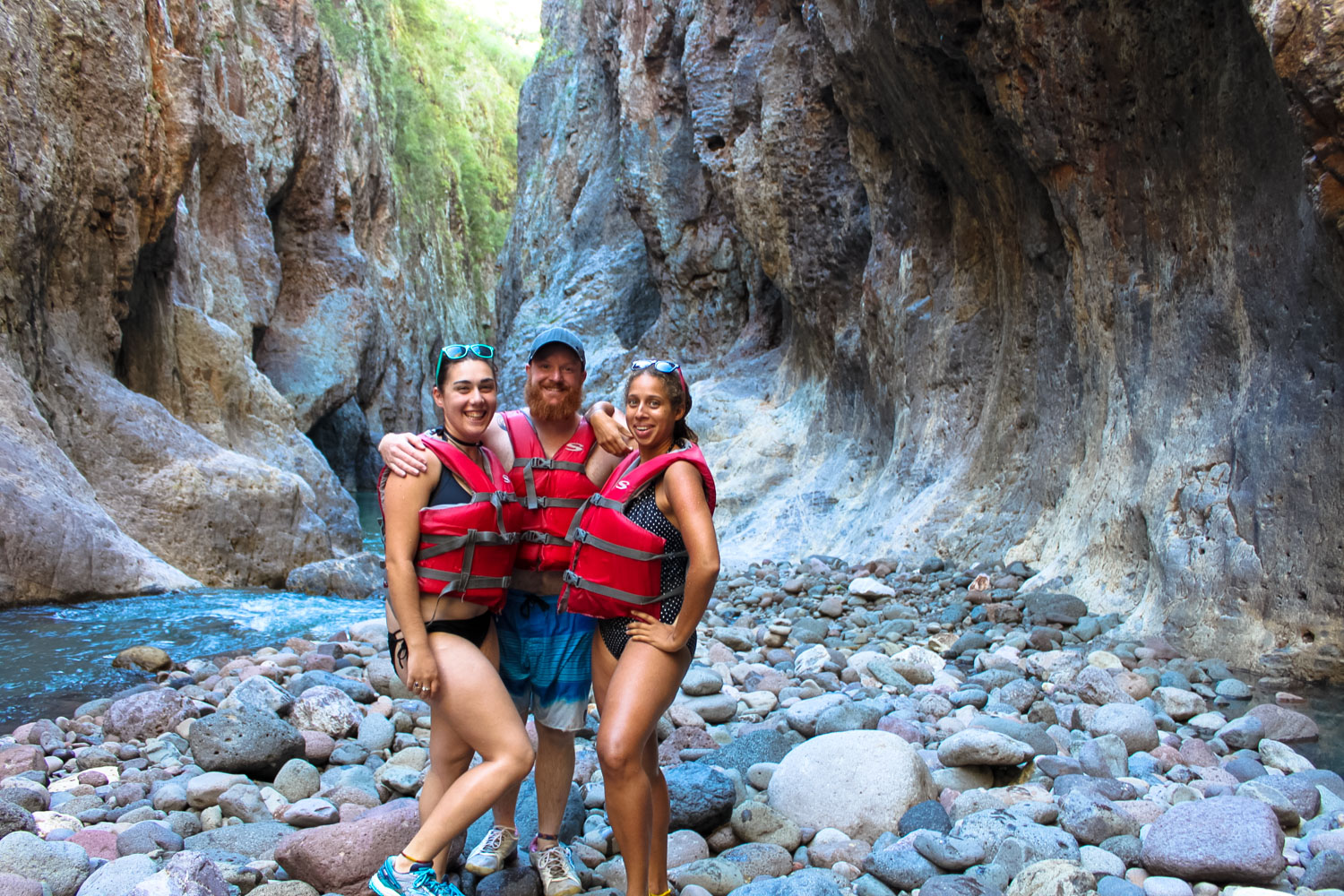
Hiking in Somoto Canyon, Nicaragua
Top Tip: Often it’s cheaper to fly into San Jose, Costa Rica and catch a bus or shuttle across the border. This method is popular enough that there are several private companies set up just to transport traveler between the two countries
Thats it for this week! Make sure to follow me on Facebook and Twitter where I share my favourites more regularly and for a monthly roundup, including exclusive content just for my newsletter subscribers, you can sign up here.
Is Playa del Carmen in Cancun? Find out and plan your perfect beach escape in Mexico with my insightful travel tips.