
Belize travel - First impressions of my time in Belize
After 10 years of travel in Central America, I finally made it to Belize, my elusive last country. Here are my very first impressions after spending a few weeks there.
Belize was the last country on my list in Central America and after 10 years of travelling through the region, I finally made it there.
Known as British Honduras as recently as 1973, Belize is the only English speaking country in Central America and is often a quick stop for people travelling from Mexico to Guatemala.
All I had heard about the place was that it was the most expensive in Central America and that I should visit San Ignacio and Caye Caulker. I knew that it was supposed to be a good spot for snorkelling and diving and full of adventure activities.
So here are my very first impressions after spending a few weeks in the country. I’ll work on some individual posts about each of my favourite things over the next few weeks but this should be a good first taste for now.
My first impressions of Belize

1) Belize Zoo is a must see

This place almost made me cancel the rest of my plans and move in permanently. The Belize Zoo is not really a zoo and the name doesn’t really reflect all the amazing work that they do for native wildlife.
It was started in 1983 to provide a home for a bunch of wild animals that were used to make a documentary about tropical forests. The founder of the zoo quickly realised that its local visitors were unfamiliar with many species of local wildlife and committed to creating a space for wildlife education.
The zoo keeps animals which were orphaned, rescued and born at the zoo, though breeding is not a focus and today the zoo exhibits over 175 animals, representing over 45 native species.
I stayed almost two weeks at the adjoining Tropical Education Centre (or The Belize Zoo Lodge). They offer basic cabañas, fancier houses facing their pond and even dorm style rooms. All meals are served at the lodge and they made me some of the best vegetarian food I had in Belize. You can even do some animal spotting at the lodge where agouti, pacas and even the resident croc are easy to spot and if you’re a birder then they have lots of dedicated walks and an elevated platform for easy spotting.
I’ll write a dedicated post about the zoo and the lodge soon but for now, just know that this is a must visit when you’re in Belize.


2) I’m in two minds about Caye Caulker
I spent just three nights in Caye Caulker and really wanted to stay longer but it wasn’t really for me. For anyone who’s been to the Bay Islands in Honduras or the Corn Islands in Nicaragua then you’ll see that it has a very similar feel.
I arrived on the night of Super Bowl Sunday so my first impression of the island was that it was loud and full of drunk Americans. I could have turned around straight away but decided to give it an extra night.
I grew to like it more in the light of a new day but it still feels very much like less of a real place where people live and more like a dedicated tourist destination where you might go to unwind for a week or two. It has the feel of tiny Playa Del Carmen when I really wanted it to be more like Mazunte, my favourite beach spot in Mexico.
The island is tiny and you can easily walk around it in a couple of hours. Some people rent golf carts and there are also bikes for hire to get around but it’s completely unnecessary. On the main side of the island there aren’t any traditional beaches but if you’re happy to swim off a dock or jump into “the split” that separates the island then you’ll be fine.
I booked in for the famous snorkelling tour around the islands and the reef that includes a visit to Shark Ray Alley, Hol Chan Marine Reserve and a small shipwreck. If you’re lucky and there in the right season you could see manatees along the way, I was not but I did get to hang out with some friendly nurse sharks, sea turtles, rays and loads of tropical fish. This trip was a whole lot of fun but you are often surrounded by boatloads of other tourists at the same time all staring at the one sea turtle.
Caye Caulker is slightly more expensive than the mainland which makes sense given they have to get all their supplies shipped over but it’s possible to eat on the cheap, especially if you like the ubiquitous fry jack.
I probably could have given Caye Caulker more of a chance but it lacks the more flashpacker style accommodation I’m used to and the pricier hotels were out of my budget. Airbnb’s are spread out around the island but a lot of the best ones were booked out well in advance.
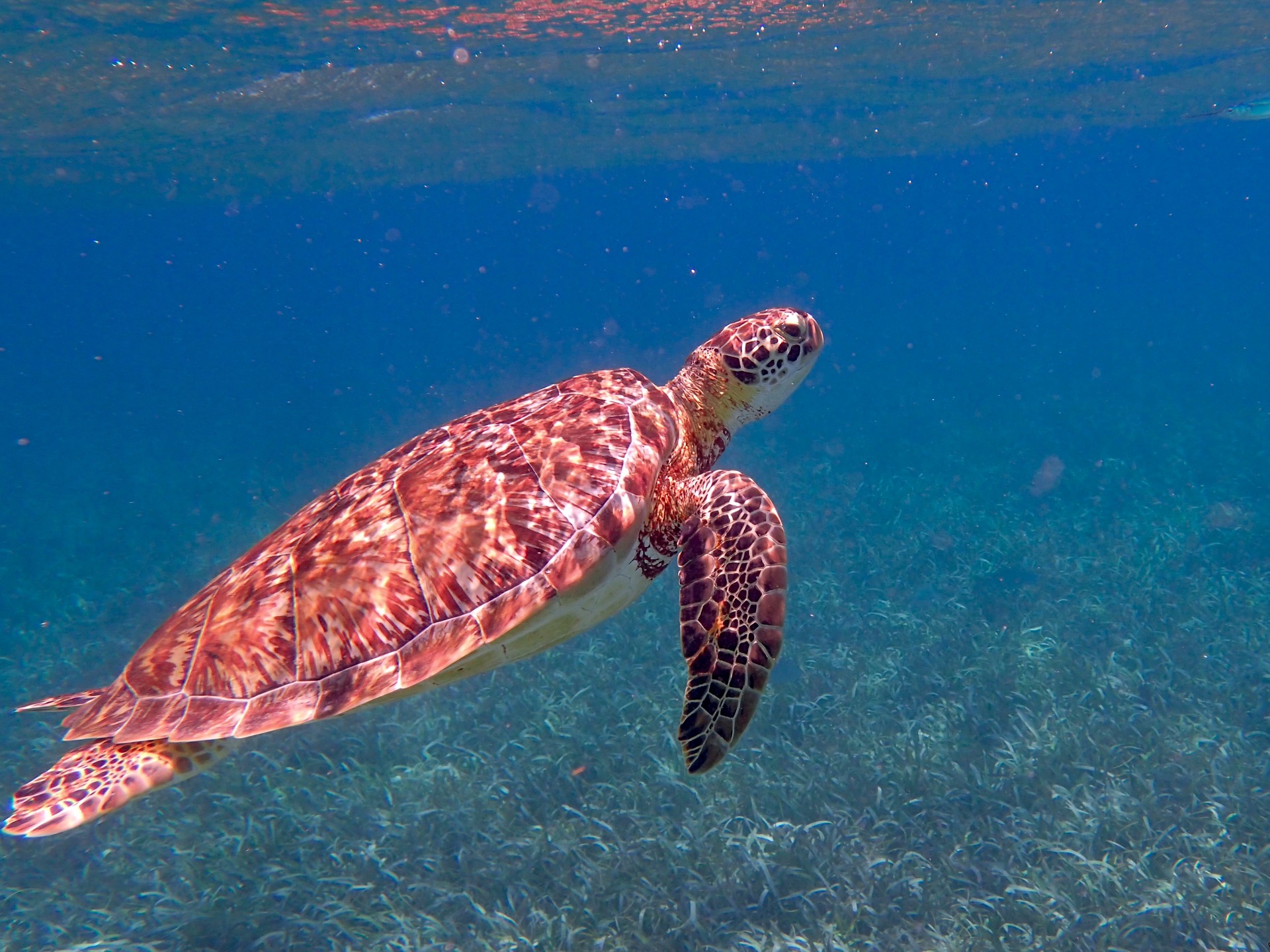

Sunsets at Caye Caulker are pretty special
3) San Ignacio has so much to do!

My legs and shoes after Crystal Cave
You could spend a whole week here and not run out of things to do in San Ignacio. It is very well geared towards tourism but still retains a lot of its authentic small-town feel. I started my trip here and it was a good decision. It gave me a deeper insight into the mixed cultures of Belize and I got to do some cool activities.
One of my favourites was the Crystal Cave day trip which involved a 50-minute hike through tropical forest to the cave entrance, where you scramble down 15 feet into the cavernous entrance. Caves played a very important role in the Maya culture, considered to be a supernatural realm where their ancestors' deities resided.
I got to see the shimmering formations in the cave that give it its name, slide and wriggle my way through tight openings and sometimes just grip onto ledges for my dear life. I’m not going to lie, this way one of the toughest things I’ve done in my life and part way through, I really just wanted to throw my things down, have a tantrum and demand to be airlifted out of there. Or however else an ill-equipped over consumer of brownies and pasta gets out of an underground cavern.
I’m glad I did it though and while I was sore for days afterwards, still kind of am, I think, I highly recommend that you try this or any of the other cave experiences while you’re in Belize.

My next favourite thing was the Green Iguana Conservation Project. Created in 1996 because of the decreasing survival rate of Green Iguanas in Belize caused by overhunting, the owners decided to start a program that would both protect the species and also educate locals and visitors about these very cool reptiles.
The project follows a continuous course of rearing the Iguanas from the egg to juvenile stage and then later sets them free by releasing them into their natural habitat. There are some special long-term guests who can’t be released because of permanent injuries or because they were raised as pets and are now too comfortable with humans.
I got to learn a bunch about them and also had the opportunity to pet and hold some of the more chilled out ones. At first, I was terrified to even reach out and touch them but by the end, I was holding my little friend for over 20 minutes and didn’t want to put him back.


4) Accommodation is geared to the super budget traveller or more high-end visitors
Belize is filled with eco-resorts and jungle lodges and these are supposed to be great, if you can afford it. There aren’t many hostels in the country and if you’re outside of the tourist hotspots you’ll be lucky to find one.
Most towns will always have some basic budget lodging so if your standards are low and you’re happy with a place to rest your head at night then you’ll be fine. I skipped some places, though, because of their lack of quality mid-range or even high-end budget options.
I’m sure as tourism picks up, this will improve but just be warned that if you’re looking for quality budget or mid-range places to stay then you might be disappointed.
5) Eating vegetarian in Belize is relatively easy
I definitely was spoiled by my time at the Tropical Education Centre where they made me all sorts of local-style food with fresh veggies and locally made meat alternatives. When I was travelling around though, I could always find the staple rice and beans, potato salad and plantains and stuffed fry jacks were also a favourite quick snack.
Many tourist towns will have good spots with separate vegetarian sections on a menu or will be happy to make something special for you. Don't forget my #1 tip for eating vegetarian while traveling - when in doubt, try breakfast for lunch.

6) Buses are basic but get you can get where you need to go
If you’re happy taking basic chicken buses around the country then you’ll be fine. Shuttle transfers are pricey so I tried my best to avoid theme especially when it costs no more than $10 to get from one side of the country to the other.
The one issue I did have was there’s no clear timetable or schedule and there are loads of different bus companies servicing each region so you have to rely on often outdated advice online. You could end up waiting up to an hour or more for a bus if you haven’t timed it well and some routes (like the Dangriga to Placencia route) only have one or two buses a day.
If you’re hitting the two main tourists spots of San Ignacio and Caye Caulker then you’re not going to have an issue taking local transport. Buses are as frequent as every half an hour and ferries are hourly during the busiest times.
Once you want to get a little off the beaten track though, you’re at the mercy of the transport Gods. All I’ll say for now is try not to travel on a Sunday when everything slows down even more and don’t just turn up expecting that you will get where you’re going. I relied heavily on the often updated Belize Bus website which is run independently and relies on user submissions for timetable changes.
7) You’ll still get to practice your Spanish
One reason I wasn’t super keen one Belize is that I thought it would interrupt the Spanish immersion that I was getting in the rest of Central America but that was so wrong.
Even though the main language is English, you’ll mostly here a mix of Creole and Spanish as you travel around. The Belizean people are made up of Maya, Kriol, Mestizo, Garifuna, East Indian, Mennonite and Chinese. There are also a large number of expats in areas like the Cayes and San Ignacio.
Sometimes I wasn’t sure which language to start off with but you’re usually fine with English and most people were happy and able to chat in whichever language I chose. The Belizean Creole is very different to what I learnt in Trinidad but if you know you’re creole then you should be able to understand what’s going on.

Overall I will say that I kept trying to compare Belize to its neighbouring countries but you can't really do that here. Belize is really in a class of its own. While it's easy to say I recommend Nicaragua over Guatemala and mainland Honduras is best left to more seasoned travellers (or anyone who's keen!), Belize for me is difficult to rate or describe.
If you love wildlife, nature or adventure activities then Belize would be a great place to visit. It's friendly English speaking residents make it an easy place to navigate and it's definitely worth at least a week of your time.
That’s all for now and I hope you enjoyed a quick taste of what I experienced while I was in Belize. I’d love to hear your thoughts on the country whether you’ve visited or you’d like to go. Let me know in the comments!

Pin for later
<-- -->

How to Get the Yellow Fever Vaccine in Panama
Get step-by-step instructions to help you get the yellow fever vaccine in Panama City. From costs, to how to get there and what to know about the clinic, find out how to navigate the whole process.
Update 12 May 2023: A few readers have written in to update us on the current state of the yellow fever vaccine in Panama. Make sure to read the bottom for the latest updates.
One of my top priorities when I arrived in Panama was to get a yellow fever vaccine in preparation for my upcoming travel to Africa. I heard it was cheap and easy to get there compared to a relatively costly exercise in my home of Brisbane, Australia. The yellow fever vaccine in Australia costs $75 plus a consultation fee of $85. The cost of the yellow fever vaccine in Panama is only $5 (2023 update: this is sadly now $100 for foreigners but still a lot cheaper than many countries) so if you're going to be in the region anyway then you should consider taking advantage of the savings!
This proved to be easier said than done once I actually got there as there is not a lot of information online on where the vaccine is available. Since only select clinics provide it, I also struggled to get much info from locals since in Panama, yellow fever isn't really an issue and you don't need those shots for Panama.
Now that I’ve personally gone through the process, I thought I would put some specific instructions together for anyone who needs to do the same. As with any medical procedure, be sure to consult a medical professional and be up to date with the relevant travel advice for the region in which you are travelling.
If you’re looking for travel health information and advice check out the Bemused Backpacker website. It's run by a nurse and also has an online travel clinic service. Although I’ve not used the service I enjoy reading the articles on travel health.
All you need to know to get the Yellow Fever vaccine in Panama
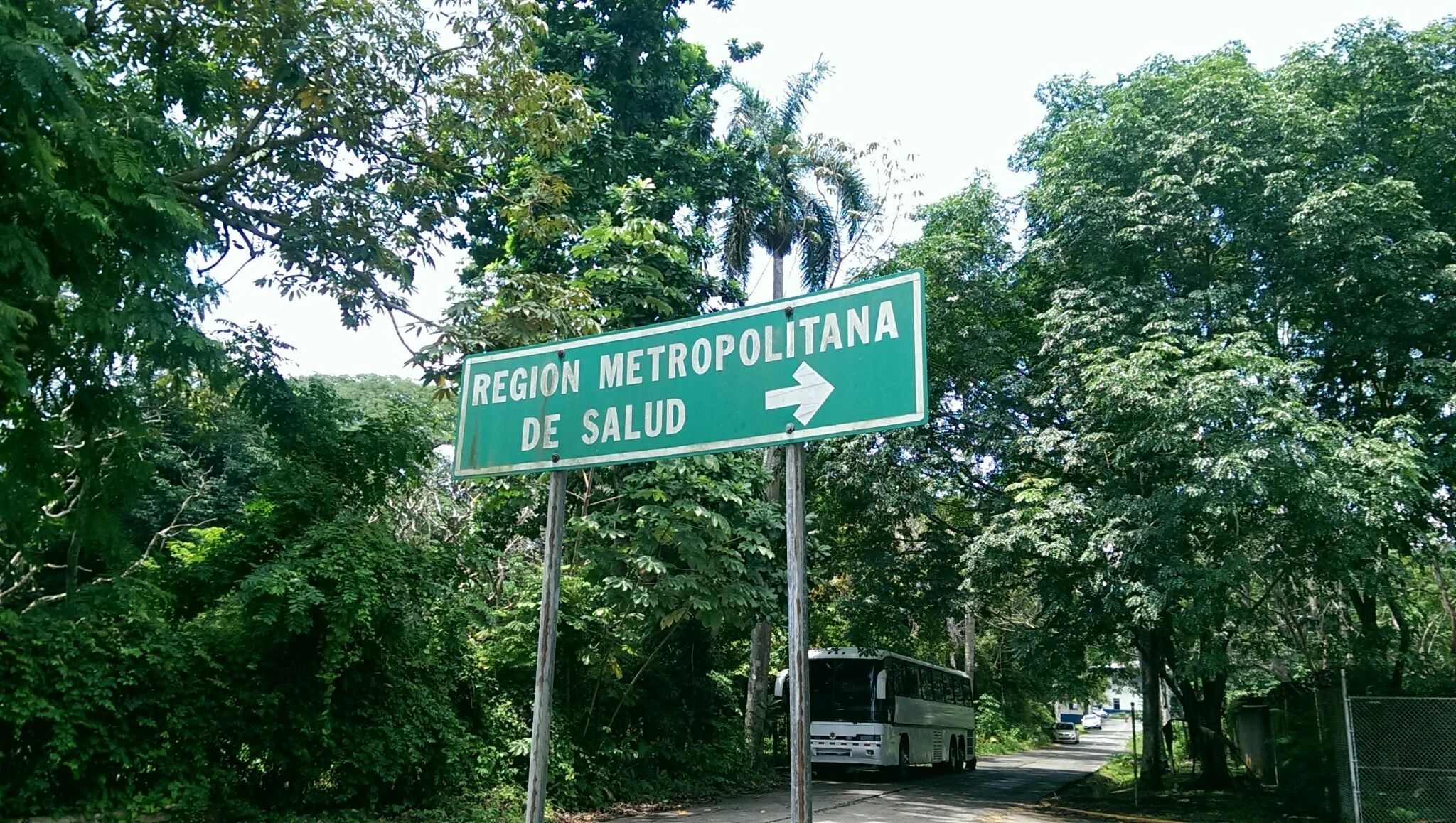
The clinic is called Region Metropolitana de Salud
Cost of vaccine is $100 (or $20 if you’re a resident)
You need to take your passport with you
Opening hours are from 8 am to 3:45 pm
It is closed for lunch between 12 pm and 1 pm
Staff stop taking payments at 2 pm so get there well before
No shorts or singlets allowed in the clinic
Getting there and back
Finding your way to the clinic is easy once you know where it is. You can take a bus, catch a taxi or order an Uber.
The bus is just $0.25 each way, but you will need a MetroBus card. A taxi will cost you $5 each way from Albrook and a bit more from wherever you are staying.If you're willing to get an Uber this will be even easier for you as the address is now in Google Maps so you can just jump into your Uber and sit back and relax.
The address is:
Region Metropolitana de Salud
Los Rios
Detras del SPI

Catching the bus
If you decide you would like to have the adventure of the bus ride and save even more pennies then catching the bus is relatively easy. Just don't do like I did and get off too early!
You can take a bus from Albrook Bus Station and you can take either the Ciudad de Saber route or the Miraflores route. The Ciudad de Saber route is going to be a slightly longer ride on the way to the clinic. I also saw more Miraflores buses leaving the terminal, but you can safely take whichever leaves first.
You can catch either route back and they’ll both be the same distance on the return journey to Albrook.
At Albrook station both routes have their lines located all the way at the end of the terminal, near the Movistar signs. If you get lost or need some help just ask someone in a fluoro green vest.
The stop to look out for is called “Corazon”. I used Google Maps to help me figure out where to get off, but some of the buses have an automatic announcement with each stop. You can also ask the driver to let you know when to get off.
Note: The bus stop to get back should be right across the road. Look out for it when you jump off so you know where you're going on the way back.
The Metrobus website is actually quite helpful and can show you the route that you’ll be taking. It also has general information on getting around the city.
Finding the health centre
Once you get off the bus there should be a street that you can see with a sign for Servicio De Proteccion Institucional or SPI.
Keep heading up that street through a suburban looking area and you will eventually get to the Region Metropolitana de Salud. There should be a couple of signs along the way, so you know you’re heading in the right direction.
There is a guard booth at the entrance and as you walk down the driveway you should see a building on your left and a building a bit further down on your right.

Head to the building on the left first to pay the fee
Head to the building on the left where you can see a window. The entrance is towards the rear of the building. This is where you will show your passport and pay the $5 fee for the vaccine.
Once you’ve paid and gotten your receipt, head to the building that was on your right. Walk into the ground floor area and head to the second door on the left. There are some chairs along the wall at the side, but you should be able to head right in.
This is where you will get your shot. Have your passport ready to hand to the nurses, so they can fill out your yellow fever certification. This process should take no longer than 5 minutes. I got there just after 1 pm and there were only 2 other people who came in after me.
That’s it! Hopefully, this makes it super easy for you to get your yellow fever vaccine in Panama City. Feel free to get in touch if you have any questions. If you decide to try this, please also leave a comment below to let us know how it went and if anything has changed.
Latest updates from recent travelers to Panama
Update 12/08/2022: “Thanks for the information. This is still pretty much accurate. Went there today and got the shot. They don't even want to know where you travel to or if you're traveling anywhere else. As a foreigner, it still costs 100 USD. Arrived there after 1 PM, took me about an hour (they were somewhat busy, where about 15 people there for shots). They do not speak english, FYI.”
Update 23/10/2018: “Hi, I wanted to give you another update as I got vaccinated last week. I really appreciated all of the information you had on your site so I wanted to help with up to day information (although I am sure it will change again, so be prepared for anything!)
The notification that was up regarding specific countries is no longer there, there is a new notice as of March 2018 stating that if you are a foreigner trying to get the vaccine you need to have proof of travel but it can be to any country in the Americas. It is still $100 for foreigners and $20 for residents. There were about 15 of us there first thing in the morning to get the vaccine, but the whole process was quick and well organized.” Carolyn K.
Update 13/02/2018: I received the below advice from a reader on recent changes to the cost and new requirements for travellers:
"I have read your blog post on getting vaccinated in Panama. I went there today and sadly everything changed in the last months. They now charge 20 B for locals and 100 B for foreigners (due to alleged shortages in the vaccine stocks).
Furthermore, they require printed proof of travel (plane or anything else) to one of the countries listed by them (I am enclosing 2 pics I took today at the Region Metropolitana De Salud). The countries listed in black pen (Bahama, Jamaica, Guyana, Nicaragua, Brasil, Nigeria and Honduras) are the only ones officially requiring proof of vaccination according to Panama’s government (I couldn't get any vaccine saying I am going to Sapzurro, Colombia, an area that should require the vaccine).
At this time I was told there is no other clinic offering the yellow fever vaccine in Panama City." Paola B.

List of onward countries officially requiring proof of yellow fever vaccine according to the clinic

New cost of yellow fever vaccine - 20 Balboas for locals and residents; 100 Balboas for foreingers
Read more articles from Panama


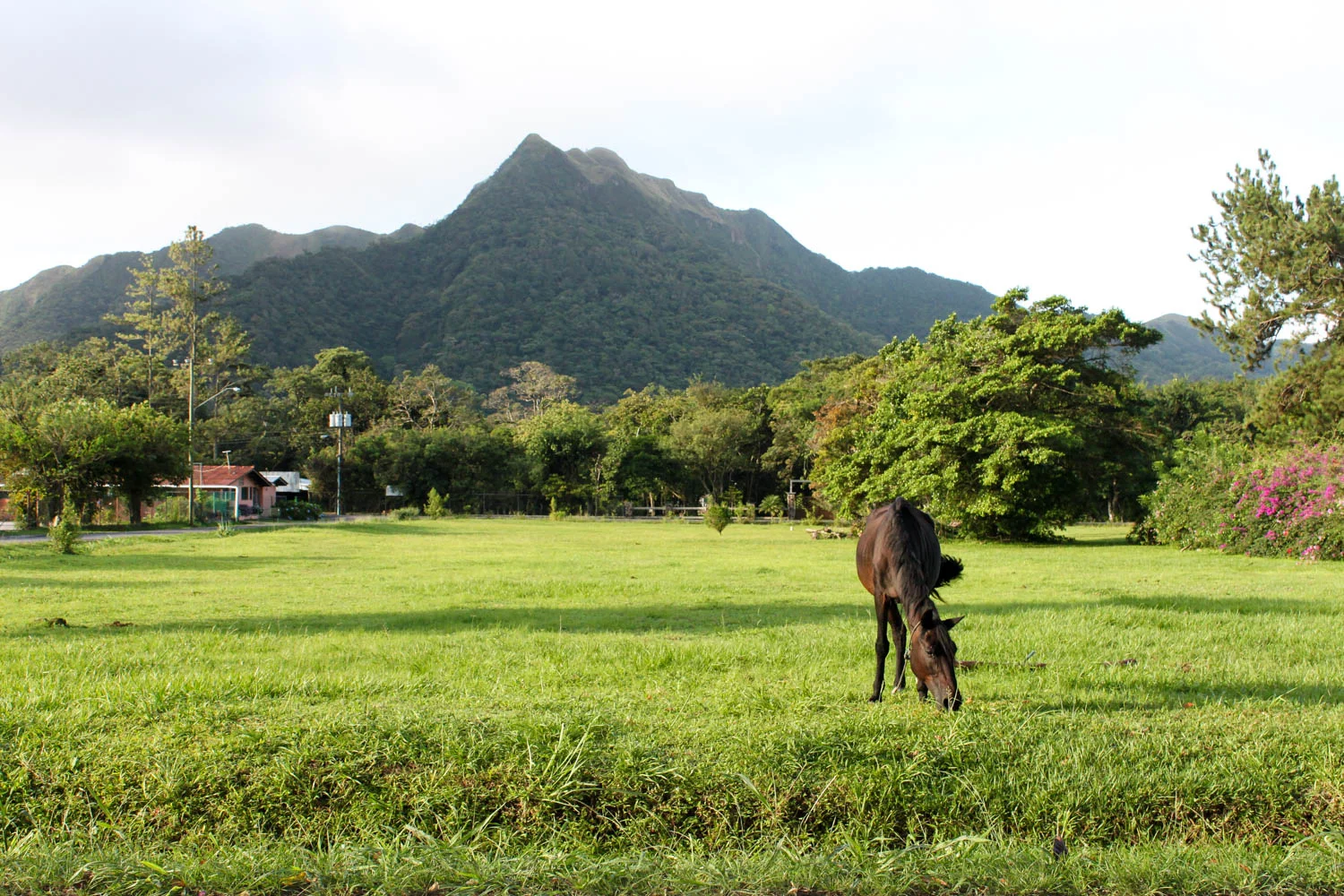

Luxury Trips To Costa Rica
If you’re looking for luxury accommodation with the jungle, beach and volcanoes on your back door, then Costa Rica is a perfect destination. Maybe you’re planning a honeymoon, destination wedding or just need some special time away, a splurge on a trip to Costa Rica will open up the best of Costa Rica luxury homes, villas and resorts. The following guide gives you all the information you need to plan the perfect luxury vacation without the need of a travel agent.
Imagine this: You wake up at 5 am to your alarm for your early morning hike to the Arenal volcano. You’re a little bit cranky, craving coffee and just want to get back into bed instead of attempting your sweaty hike up a mosquito filled, rainforest shrouded volcano. When you open your eyes, however, your view is filled with the volcano you’re about to climb and someone is gently knocking on the door with a cup of freshly brewed coffee that you can already smell and advising that the breakfast you ordered the night before will be ready for you just before you leave. This is just what you can expect when pairing a luxury vacation with an adventure location.
If you’re looking for luxury accommodation with the jungle, beach and volcanoes at your back door, then Costa Rica is a perfect destination. Maybe you’re planning a honeymoon, destination wedding or just need some special time away, a splurge on a trip to Costa Rica will open up the best of Costa Rica luxury homes, villas and resorts. The following guide gives you all the information you need to plan the perfect luxury vacation without the need of a travel agent.
I'm always giving you advice on how to budget for travel and how to find the best deals but what if you just want to have the best possible vacation you can for a week or two? I am not usually lucky enough to experience this type of scenario but on occasion it is so nice to treat myself, and one of my favourite places to do this is in Central America. You get so much luxury for much less than you would back home.

Safety in Costa Rica
If you’ve never visited Costa Rica, then the first thing you’re probably asking is, “Is it safe???” Out of all countries I’ve visited in Central America (and I’ve been to them all), I would consider Costa Rica to be the safest. The country is so centred around tourism and ensuring they have first class services for visitors that you will feel safer than wandering around your own city.
While pick pocketing and thefts of opportunity take place in the bigger cities, like San Jose, violent crime is rare and in all the time I have traveled around the country, I have only been witness to one theft - someone leaving their day pack in the rack above the seats on a local bus. Not a smart move anywhere and if you’re taking private transport, like the many shuttles available, or renting a car, then you will be fine.
Here are some things to avoid to make sure you stay safe:
- Avoid driving after dark. Some roads can surprise you and turn into a rough dirt road when you’re not expecting it.
- Don’t leave your belongings unattended in your rental car.
- Stay away from deserted areas, like the beach, at night.
- Be mindful when visiting the ATM. Stash your money safely and head straight from the ATM back to your hotel.
- Be careful where you swim. Check with your hotel for advice on the safest places to swim. The surf can be rougher than you’re used to at home and accidents can quickly happen even if you’re a strong swimmer.
- Avoid crowded areas and protect yourself against pickpockets.
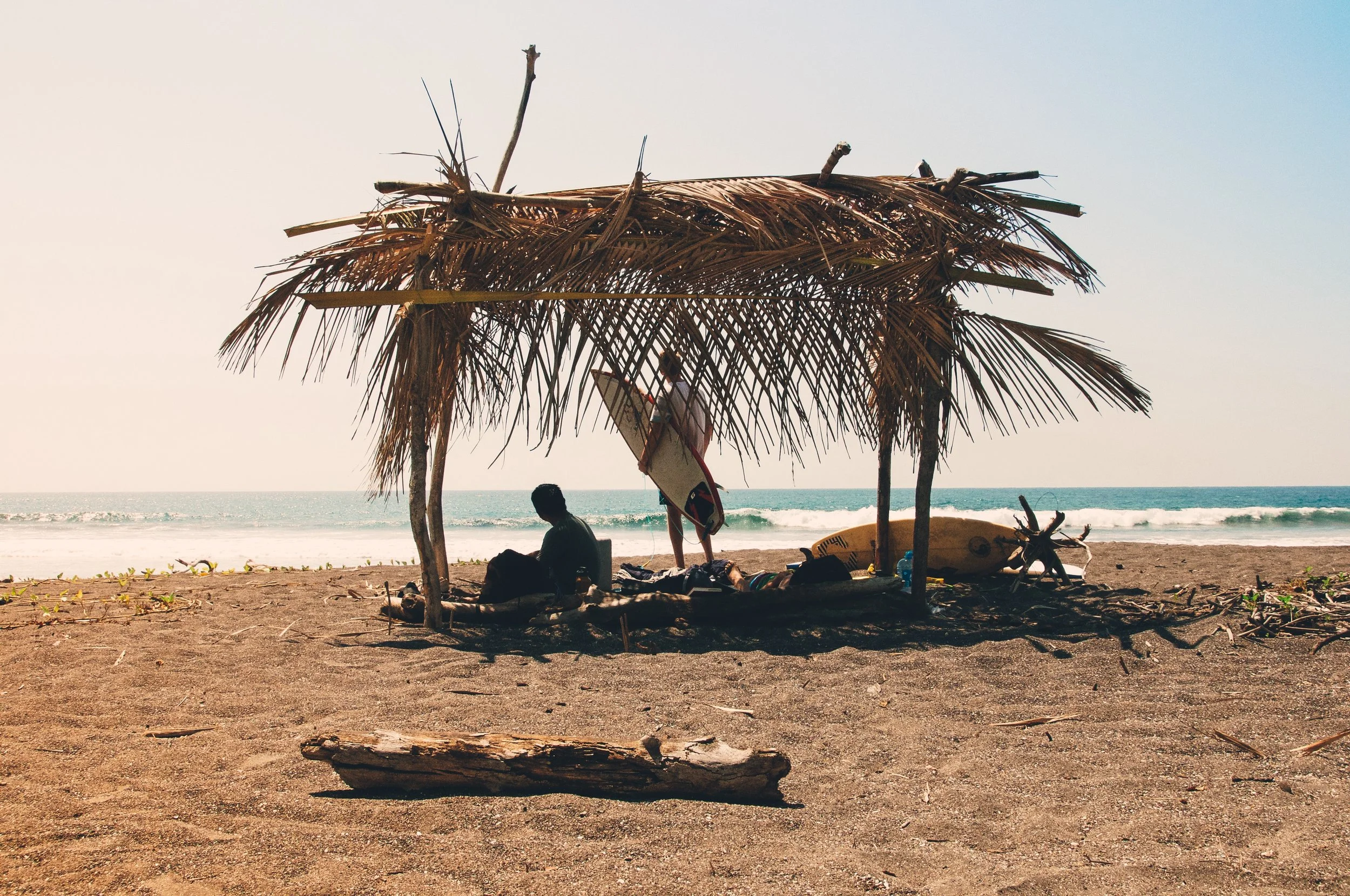
Costa Rica Budget
Costa Rica is a great destination for all budgets. I’ve traveled there as a budget backpacker and also forked out when I needed a more luxury vacation. For those looking for a luxury vacation in Costa Rica you’ll be surprised at how affordable your holiday can still be.
For tours, accommodation and meals all together, a good estimate is $275 - $500 per person per day. This budget will allow you to stay in the best hotels or resorts, private shuttle vans and daily activities like scuba diving and snorkelling trips, private tours and some pampering time.
With this higher end budget you can afford to fly to different destinations around Costa Rica. This is a great option to get to the remote but so worth it, Osa Peninsula.
My Top 7 Costa Rica Activities
These are some of my favourite activities around Costa Rica. You could spend weeks here and still not see everything but if you drill down on what you’re most interested in, then you could definitely fill a one or two week itinerary. Whether you’re into nature, want some adrenaline-fuelled adventure or just want to see a cute sloth up close, Costa Rica really does have everything.
Corcovado National Park and Cano Island

With so may activities available in the Osa Peninsula you could easily spend your whole vacation right here. The highlights, though, are a hike in the Corcovado National Park and a snorkel or dive trip to Cano Island. I could write a while post about the Osa Peninsula (and will soon) but basically expect to be surrounded by so many animals that you will eventually get bored of monkey and sloth spotting and start checking out the other smaller critters crawling around.
On this trip, I saw three different species of monkey, sloths, a giant family of coati (these guys literally surrounded my group and we had to wait for them to pass. Animals get right of way in the jungle!), crocodiles, birds, giant insects and tapirs.
On the way to my snorkelling trip around Cano Island, my boat spotted whales and also had some friendly dolphins play around our boat. During the snorkel I spotted a whole bunch of fish (I never know what they’re called) and turtles! If you’re into wildlife, then trust me and head to the Osa Peninsula. You’ll even get to see animals when you’re back at your hotel. It’s so remote that there really is no boundary to where they go.
White water rafting
There are a few different options for rafting in Costa Rica but my personal favourite is white water rafting on the Pacuare River. A one day trip will test your skills against 52 rapids with the opportunity to spot some unique wildlife along the river. Exploradores is a great company with an excellent safety record that offers single day and multi day rafting trips along the river.
Zip lining
Did you know recreational zip lining was invented in Costa Rica?? Even if you’ve tried it before, zip lining is a must do in Costa Rica and there really is one for everyone. For the timid and first timers, you can try an aerial tram, where you are safely enclosed on all sides. For the adventurous travelers, you can go one step further and try a super man style zip line.
Volcano Hike
Costa Rica is filled with some epic hikes but there’s just something about being able to surmount a volcano that makes me feel all Indiana Jones. One of the best volcano hikes is the Arenal volcano in the La Fortuna area. During the hike you get to walk over old lava flows and through primary rainforest. It’s an often elusive one to see but when you do catch it not snuggled up to the clouds, it’s makes the wait worthwhile.

Swim in a waterfall or lounge in a hot spring
Central America is the land of waterfalls and if you’ve travelled enough through the region, you might find yourself suffering from what I diagnose as “Waterfall Fatigue”. Pick your waterfalls carefully and don’t let this happen to you! One of my favourite waterfalls is also in La Fortuna, the La Fortuna Waterfall.
One of the best things about this waterfall is that it’s accessible so that anyone can view it from the highest viewpoint. You can see the water spouting out from the base of the dormant Chato volcano, fall 70 meters to a tropical pool below. Once you’re had enough of the view and if you’re feeling game, you can take the staircase that’s carved into the hillside and go for a swim.
You can also find thermal hot springs around the Arenal area and if you plan it well enough, your hotel might be built around a hot spring. There honestly was nothing better than relaxing in the evening in a mini pool filled with thermal water from the volcano, cocktail in hand (from the swim-up bar) while catching glimpses of the Arenal volcano with the moon overhead.

Tortuguero canoeing
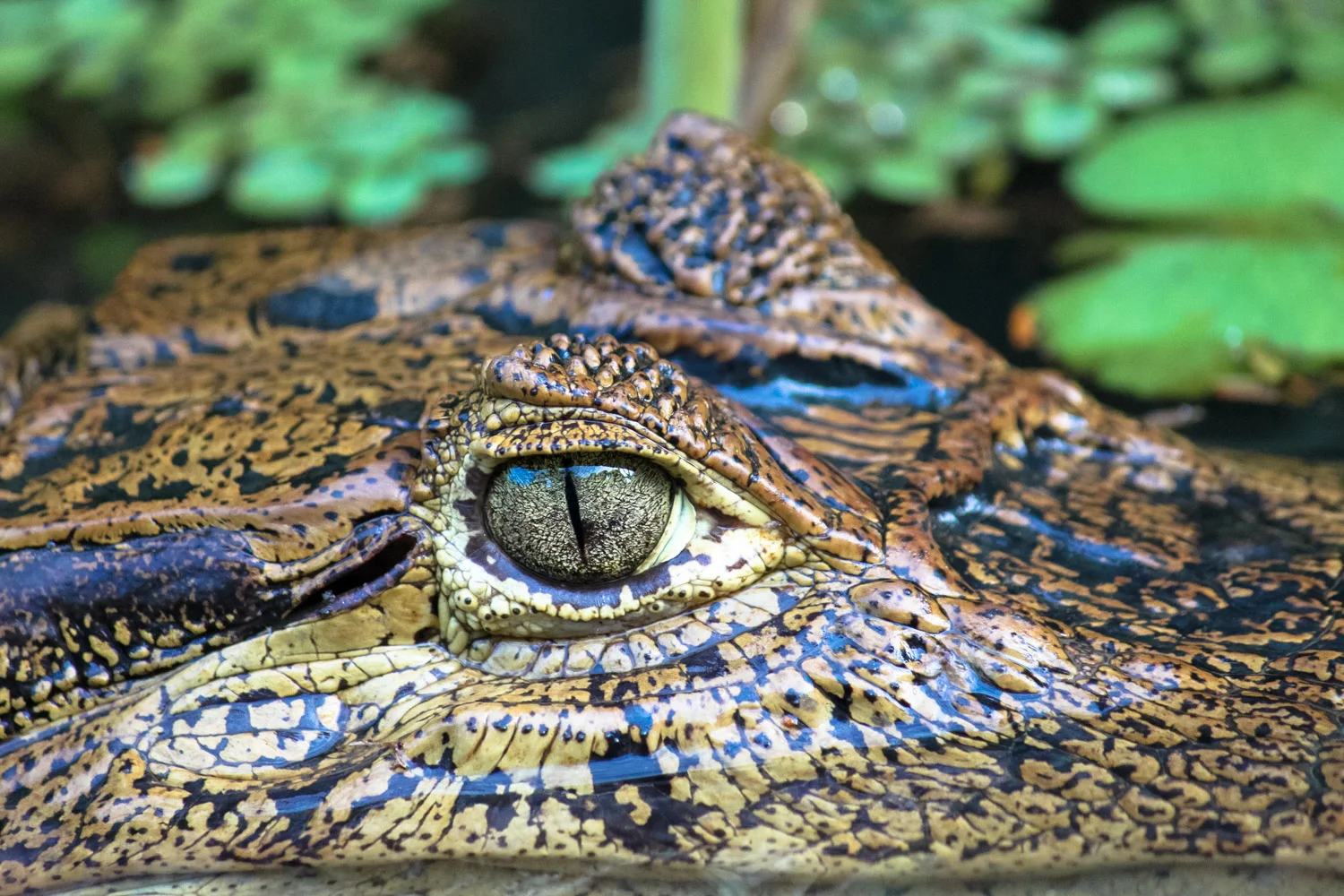
Touring through the canals in the remote Tortuguero is a peaceful opportunity to explore the Tortuguero National Park. I saw the most wildlife on this trip, including getting up close and personal to a timid caiman. As you glide smoothly and quietly through the rivers and narrow channels you will spot lots of birds, frogs, monkeys and huge lizards. I recommend getting in touch with Victor Barrantes from Tortuguero Infocenter for tour packages.
I could go on and on about things to do in Costa Rica but you’ll soon find out that the sky’s the limit here. Costa Rica also has some great yoga and meditation retreats, surfing spots for beginners to learn or the advanced to get a challenge, stand up paddle boarding, horse riding on the beach, spelunking and you get the idea.
Where to Stay
Now the fun part! Where should you stay? Costa Rica has a slew of resorts, villas, hotels and also some more adventurous options that still provide a luxury experience. Here are some of my favourites around the country.
Tabacon Thermal Resort & Spa
The Tabacon is located in the town of La Fortuna where you can find the Arenal volcano and also the La Fortuna waterfall. All rooms have rainforest views and some have views of the volcano but the best part of this resort is that there are 18 hot springs on the property for you to enjoy. Rooms are large with a modern design and the resort prides itself on its eco-friendly approach.
Read the latest reviews on Trip Advisor
Check out the best prices: Hotels.com | Expedia | Booking.com
Ylang Ylang Beach Resort
Ylang Ylang is Montezuma's only resort right on the beach. Think white sand beach and lush gardens surrounding the property with the chance for spotting monkeys in the trees.
Read the latest reviews on Trip Advisor
Check out the best prices: Hotels.com | Expedia | Booking.com
Rio Perdido
A perfect mix between authenticity, nature and luxury, Rio Perdido is in a location like nothing you have seen before. They actually have an adventure playground on their property with wold-class trails for biking, zip lining over their own canyon, a variety of hikes and white water rafting. You could honestly spend your whole vacation right here.
Read the latest reviews on Trip Advisor
Check out the best prices: Hotels.com | Expedia | Booking.com
Waterfall Villas Wellness Retreat
A beautiful Balinese-style paradise in Costa Rica, Waterfall Villas is the perfect place to let your creative energy flow, with special workshops on topics such as Chinese Watercolor Painting, Astrology, Tai Chi, and Feng Shui. Dominical is a great spot to base yourself in Costa Rica because you have easy access to the stunning and remote Osa Peninsula.
Read the latest reviews on Trip Advisor
Check out the best prices: Hotels.com | Expedia | Booking.com
Playa Cativo Lodge
I've saved the best for last. Playa Cativo is so exclusive that you can only access it by private boat. All rooms have stunning ocean views in a natural setting. Not only do you have a private beach to laze around in but you also have gardens (filled with butterflies!), lush pool and a dedicated air-conditioned library. When I think of luxury in Costa Rica, Playa Cativo is the first that comes to mind.
Read the latest reviews on Trip Advisor
Check out the best prices: Hotels.com | Expedia | Booking.com
Disclosure: Please note that some of the links included are affiliate links, and at no additional cost to you, I may earn a commission if you decide to make a purchase.
For more travel inspiration from Central America check out the latest articles below!

A Day Trip To Semuc Champey
If you’re up for a 6 hour bumpy ride into the middle of the Guatemalan jungle then I would suggest staying in Lanquin for 2 or 3 days, relaxing poolside at Zephyr Lodge and doing a day trip to Semuc Champey. The highlight of my time in Lanquin was visiting the Kam’ba cave system during the Semuc Champey day trip and putting on my Indiana Jones hat for a couple of hours. It was so much fun and months later I have not been able to stop talking about.
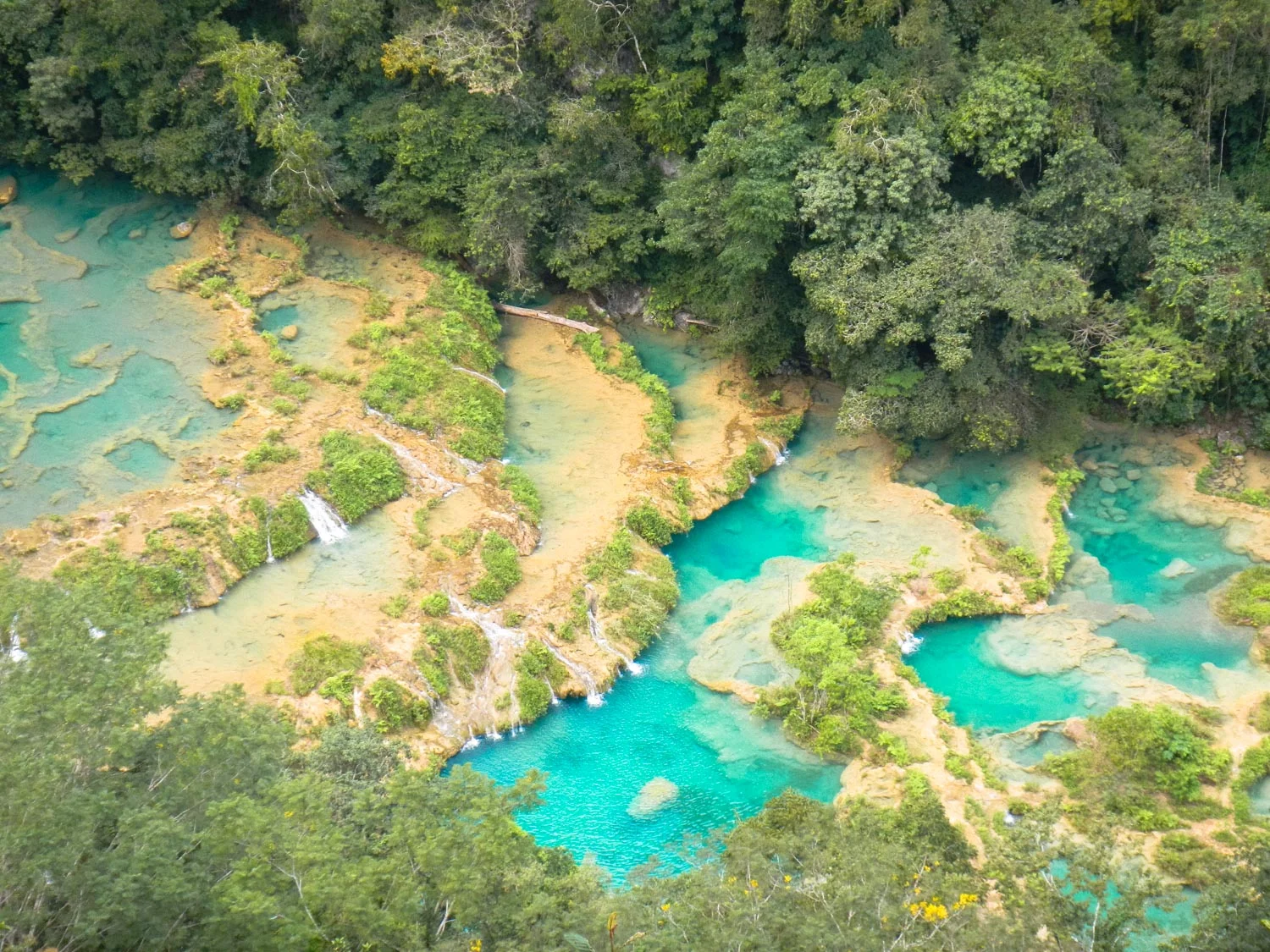
Semuc Champey is not easy to get to. It is out of the way and isolated but that’s part of its appeal. Imagine a jungle landscape with green as far as the eye can see and a beautiful turquoise natural pool in the middle.
If you’re up for a 6 hour bumpy ride into the middle of the Guatemalan jungle then I would suggest staying in Lanquin for 2 or 3 days, relaxing poolside at Zephyr Lodge and doing a day trip to Semuc Champey. I had a lot of fun wondering around the small town itself, hiking to the hill-top church and eating at the local eateries around town.
The highlight of my time in Lanquin was visiting the Kam’ba cave system during the Semuc Champey day trip and putting on my Indiana Jones hat for a couple of hours. It was so much fun and months later I have not been able to stop talking about.
Book your own local guide for your Semuc Champey tour here and read on for advice on how to get the most out of your trip and some Semuc Champey safety tips.

Semuc Champey Day Trip
All of the hotels and hostels in the area will offer a tour to Semuc Champey. It’s really your reason for visiting Lanquin and if you have the time, I recommend this as part of any Central American itinerary. Besides the main attraction of Semuc Champey, there are several other side activities that get to do on a day trip.
Cuevas de Kam'ba
At the time of my visit Zephyr Lodge had stopped offering the cave portion of the tour due to safety and theft concerns so a group of us just booked a complete tour through another hostel. Feel free to ask around but prices were all kind of similar.
One of the funnest things I have ever done in my travels was exploring the Kam'ba Caves at Semuc Chmpey and I’m so glad I took the gamble against my hostel’s warnings. It really isn’t the safest attraction and you are in the middle of the jungle in Guatemala so if you decide to do this trip then I suggest you walk and swim slowly and take your time when doing some more of the riskier activities. Also when walking through some of the darker section, keep a look out for sudden drops from the roof. Watch your head, there are no helmets on this tour!
Once you enter the caves, you are given a candle to light your way. No modern flashlights here! At the entrance the guides will decorate you with war paint fresh from the walls of the cave so it’s a good idea to be nice so you don’t end up with a moustache! Our guide joked it was bat poop but I chose to pretend it was something else.

I was quickly submerged in the cold cave water as we started the two-hour trek into the cave system. This wasn’t my favourite part as I don’t like the cold but I soon forgot about my discomfort when we got to our first adventure. Climbing a wood and rope ladder contraption that looked as old as the caves, one-handed, while trying to keep the candle away in the other hand.
There were a few spots where I actually had to swim through the cave when I couldn’t touch the bottom but luckily there was usually a rope to guide us along. These parts where I was fully submerged is where I got the majority of my bumps and scrapes from the stalagmites poking out from the bottom.
For the extra adventurous, there was an opportunity to scale up a rock face and dive into a deep pool below. I tried my best but I couldn’t get my little legs up there to even attempt the jump. I had also had more than my fair share of Guatemalan tostadas by then so I wasn’t in the best shape.
Halfway through I got to try the most challenging thing I had done in weeks, climbing up a mini waterfall by rope. With my candle down my bikini bottoms for safe keeping I had to scale a small cliff with water rushing into my face while looking out for the best foot holds. This was super fun and super scary. If this is too much for you, there is a slightly less challenging rope ladder that you can climb off to the side to help you get up away from the waterfall.
Towards the end of the trek you get to slide down a natural waterslide through a waterfall into a dark cavern. One of the guides stayed at the top to show you where to slide and one was down below to make sure you landed safely.
The cave tour was honestly worth the 6-hour ride to get to Semuc Champey on its own and its something I would do again in a heartbeat. My friend and I kept talking about how much fun we were having and that we wished we could stay longer. You don’t get much more fun and adventurous than this.

River tubing, bridge jumps and a rope swing
Once you’re out of the cave it’s time to relax. You can look forward to floating gently down the Cahabón River with a beer in your hand and a huge grin on your face. But first I was invited to try out the rope swing into the river. This one hurts if you don't land perfectly straight! Tuck your legs in while you’re swinging and make sure to let go at the end as it won’t be pretty.
Once we had floated all the way down to the rickety old bridge and had climbed out, we were invited to do one last jump - off the 10-metre high bridge into the river below. I had had enough adventure for one day and lunch was calling my name so I just watched the brave souls jump in and then struggle to swim back to shore in the current. What an exhausting morning!

Semuc Champey
After lunch, we walked across the bridge and entered the park of Semuc Champey. At this point you can just head straight to the main attraction and just relax or you can opt to do the one hour long hike to get to the view point so you can see the whole effect of these beautiful natural pools. Hiking through the jungle covered in war paint and a bikini is one thing I never imagined I would do but there I was, living the dream!
It’s a muddy hike up and very steep but once you’re up there it’s really quite breathtaking. Once you’re down you can pack away anything you don’t want to get lost in the lockers provided and can finally jump into the pools!
Semuc Champey consists of a natural 300 metre long limestone bridge, under which passes the Cahabón River. Atop the bridge is a series of stepped, turquoise pools that are perfect for exploring. My guide took us to some of the more impressive parts of the pools including showing us where we could safely jump from and the hidden mini caves including one that you needed to swim underwater to get to.
Semuc Champey is really beautiful and my photos don’t do the pools any justice. If you’re in Guatemala I really hope you don’t miss this trip.


Where to stay
I stayed at Zephyr Lodge. Zephyr is a great place to stay in Lanquin but does have its downsides. If you have the budget, their private rooms are great and include your own balcony overlooking the jungle. The dorms are hit and miss. Comfortable beds but the dorms located near the bar are noisy at night until the party dies down. The shared showers have their own individual view of the jungle which is kind of cool as do some of the toilets. Everything is very clean and well maintained.
The infinity pool is really the attraction here. The pool has a stunning backdrop and a swim up bar. There’s a large sun deck for perfect days relaxing by the pool with a strong drink as well as a hot tub with very restrictive opening hours. Overall I recommend Zephyr Lodge. It’s a good place to stay for a couple of days, you can relax or party and have a good place to rest your head after a long day at Semuc Champey.
You could consider staying at a hotel or hostel close to Semuc Champey. There are a few that sounded really nice and it means you can visit Semuc Champey more than once or for longer than we did on the tour. One friend recommended Utopia.
Check out TripAdvisor for some more options.
Never stayed in a hostel before? Read my posts on what to expect and your hostel packing essentials.

Other points
A good option is to use this as a stop over point between Tikal and Antigua.
Most travel agencies and hostels offer a shared shuttle service to Lanquin from Flores, Antigua or Lake Atitlan. Once you’re here an onward shuttle is just as easy to find. From memory, shuttles were a bit more expensive at Zephyr so if you’re feeling up to it you could walk into town and book something from another hostel or agency.
You don’t necessarily need a guide to just visit Semuc Champey. You can arrange a ride in town or try to hitch along the main road. Entry fee to the site is approx USD $6.
Stay safe by sticking to groups, not venturing off the path too far and be mindful of where your putting your feet and head in the caves.
You can pre-book a local guide for your Semuc Champey tour through Get Your Guide.
What do you think? Are Semuc Champey and the Kam'Ba caves worth the trip? Let me know in the comments below!
You Might Also Like

Indian's Nose - Lake Atitlan
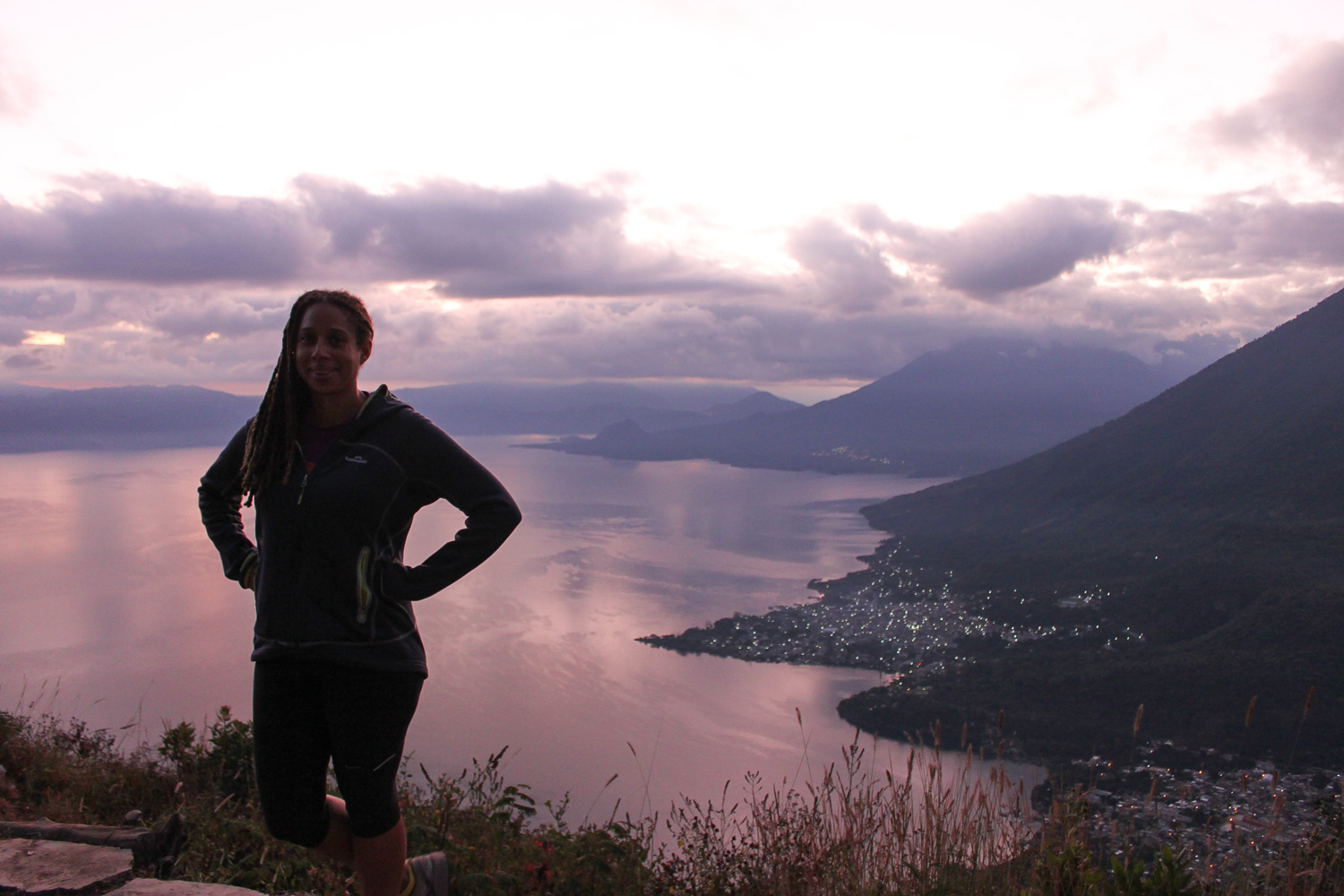
The Indian’s Nose viewpoint sits at at 2,863 meters looking over the pueblos of San Pedro, Santa Clara and San Marcos. Its name comes from the fact the profile of the mountain looks like a sleeping Indian with the viewpoint as its nose. The hike is 1.5 to 2 hours of a very steep climb. Definietly worth it though!
While visiting San Pedro for a few days I found out about a moderate hike to see the sunrise over the lake. San Pedro is one of the larger towns located on Lake Atitlan and is known as a party town. This doesn’t stop the travel agencies from selling volcano treks to the nearby volcano and the shorter but steeper hike to Indian’s Nose.
The Indian’s Nose viewpoint sits at at 2,863 meters looking over the pueblos of San Pedro, Santa Clara and San Marcos. Its name comes from the fact the profile of the mountain looks like a sleeping Indian with the viewpoint as its nose. The hike is 1.5 to 2 hours of a very steep climb.
While I was doing my research on how to get there and whether I should do guide or no guide, I found out about an expat called Matt Purvis who is a geologist and runs specialist tours up to the lookout and around the area. Matt has a B.S.c. in Geology and an M.S.c. in The Science of Natural Hazards and the selling point of his tour is that you can learn all about how the area was formed and the unique history that makes up the region.

You can do this hike at any time of the day but the most rewarding time is early in the morning so you can see the sunrise. Worthy goal but we did have to get up at 3:30 am. I was more than happy to head to bed early to get some sleep but unfortunately we were staying in a bit of a party hostel. Picture me brushing my teeth in my pyjamas at 8 pm in the sink that is next to the bar declining offers for “just one more drink!"
I managed to convince one of my new travel friends, Laura, to do the hike with me but had some trouble waking her up the next morning. Why can’t everyone be a morning person like me?
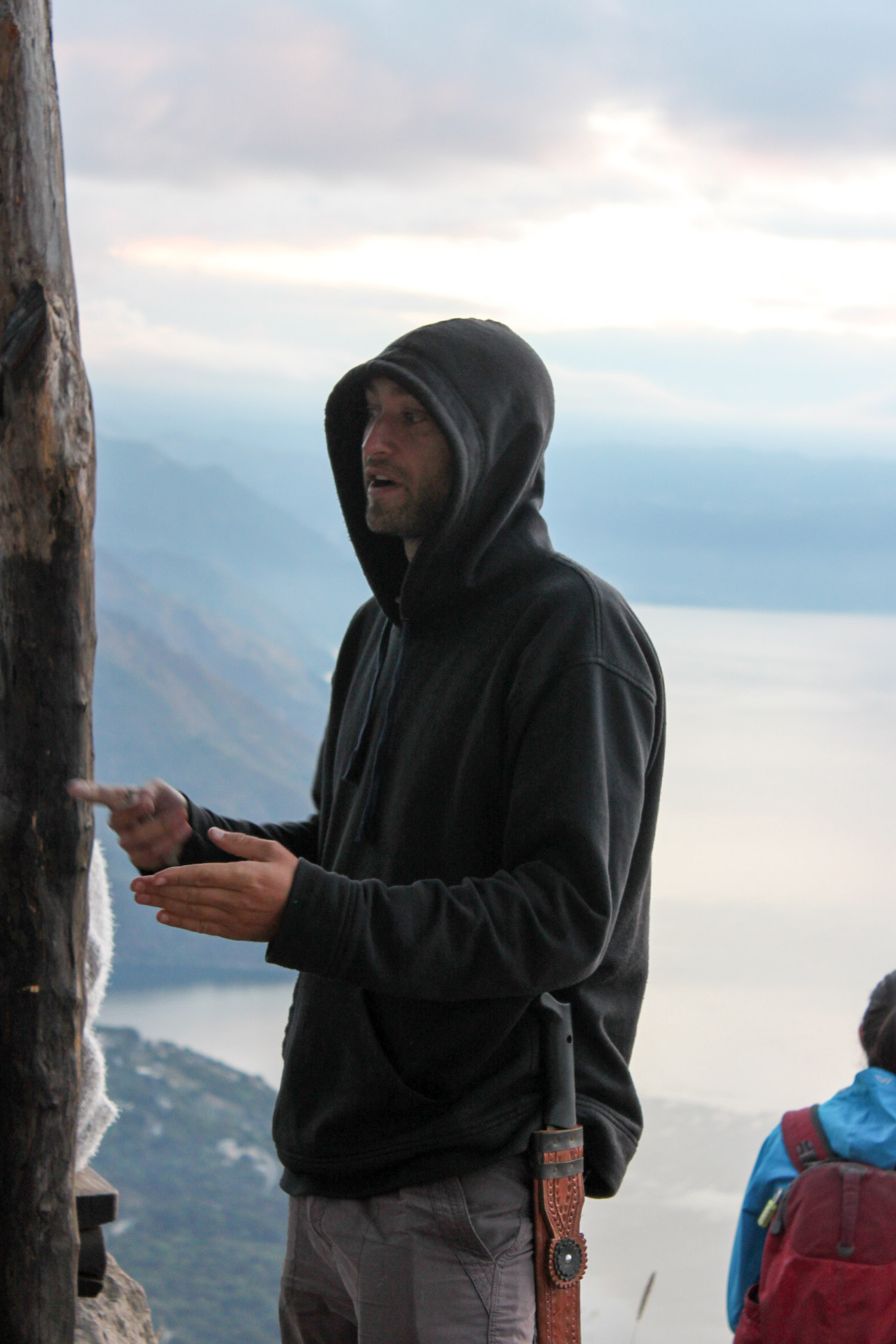
Our guide, Matt, was full of energy when he arrived, while a few of the group looked worse for wear, myself included. I had woken up feeling dreadful and wasn’t sure my stomach was going to survive the hike. I didn't know if whatever was going on in there wanted to go up or down and I think it hadn’t made its mind up yet.
The worst part was while they were feeling ill because they had stayed up partying all night, I was genuinely unwell. I didn’t want to be lumped into the hungover category! To avoid this I was determined to get up that mountain and not make a word of complaint on the hike up.

Once we had the whole group together we headed to the chicken bus stop up the steep hill in San Pedro. Challenge #1 completed!
Challenge #2 was the chicken bus ride to the trailhead and after a few close calls, I managed to keep my small breakfast down.
The group gathered at the trailhead where Matt and his two local guides handed out flashlights. These were absolutely necessary because the trail is completely dark and quite slippery in some points.
We set off on some relatively flat terrain while navigating through the back of the town until we hit the start of the steepest hike I’ve ever done. For about an hour I climbed up the side of the mountain while simultaneously holding down my breakfast and praying that it wasn’t going to try to come out in a hurry through the other end.
I struggled to make it all the way to the top, determined to not look like a whingey baby and even tough I was one of the last people up there I was pleased to see the top. Matt and his guides has built a fire to help warm us up while we waited for the sun rise but after getting a few whiffs of the smoke I promptly threw up off the side and into the poor bushes.
The good news was I felt completely fine after that, I just wish it had happened earlier! I also got to experience the sunrise without feeling awful.

Success!
Once we had some coffee and a light breakfast and soaked in as much of the view as we could handle, Matt gathered the group together to go through his mini geology lesson.
From Indian’s Nose you can spot the 8 volcanoes of the region. Matt explained how they came to stand in a line and how Lake Atitlán was formed. He spent about 20 minutes going through the basics of volcano formation and the unique history of the region complete with diagrams and makeshift drawings in the dirt.

Lake Atitlan fills the Atitlan caldera, a huge hole in the ground caused by a massive volcanic eruption 85,000 years ago. The eruption has been named the Los Chocoyos event after the birds that now burrow nest holes into the extensive deposits.
To help bring the size of Los Chocoyos into perspective compare it with the eruption of some modern day volcanoes. When Mt. St. Helens in the US blew up in 1980, one cubic kilometre (1km3) of rock, lava and ash shot from the volcano. This seems small compared with the 1991 eruption of Mt. Pinatubo in the Philippines, which ejected around 10 km3 of magma, the largest in living memory.
These modern eruptions are dwarfed, however, by Los Chocoyos 85,000 years ago. A total of 270km3 of volcanic debris was thrown out of the caldera, covering Guatemala with ash and rock.
Ash from the Atitlan caldera can be found in the rock strata as far north as Florida and as far South as Panama and most of Central America would have experienced a darkening of the skies as the ash rose into the atmosphere. Crazy interesting right?

After his talk, we headed back down the mountain but via different path so we could experience a different viewpoint. We got to walk through some local maize fields and coffee plantations where one of the local guides also taught us about local medicinal practices and the interesting division of land. The parents divide the land up amongst their children and the children continue the tradition. What was once a large plot of land has now become many smaller plots.
I highly recommend hiking Indian’s Nose when you’re in the area and if you have the opportunity go through Matt! Hiking is so much more fun when you get to learn something new and unique to the area that you’re in.
“Matt Purvis
geotravelguatemala@gmail.com
+502 3168 8625”

What to take
- Definitely take a flashlight. Your guide might offer one or if you have a head torch, even better. It gets really dark on that trail.
- Wear some good shoes. Hiking shoes if you have them but anything enclosed is best. It can be slippery even just from the dew at that time in the morning so no flip flops.
- Wear layers. If you’re doing the sunrise hike then it will start off cold but that see hike will have you warmed up before you know it.
- A poncho in case of rain.
- Enough water, at least 1 litre.
- Some food for the top
- Have you ever had a tough hike that you almost couldn't finish?

You Might Also Like

Tulum Ruins, Mexico
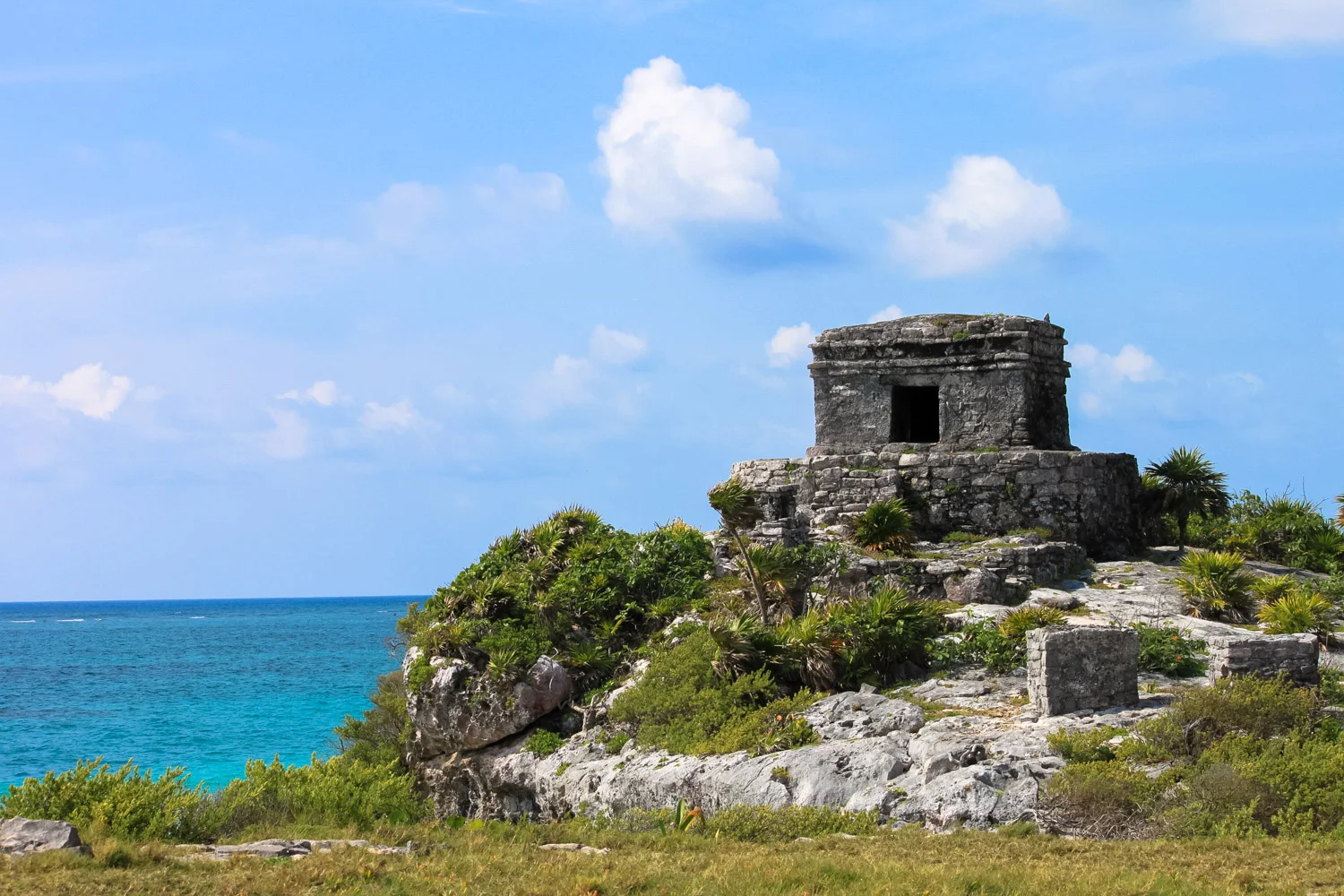
Tulum is located on Mexico's Caribbean Coast just south of Playa Del Carmen. It can be considered the "green resort" town because you can still find many luxury resorts and stylish beach clubs but there's also a growing number of eco style hotels and beach cabins available.
Right outside of town there is a small set of Mayan ruins known for its picture perfect setting on the beach. The Tulum Ruins are the third most-visited archaeological site in Mexico, after Teotihuacan and Chichen Itza.
Tulum is located on Mexico's Caribbean Coast just south of Playa Del Carmen. It can be considered the "green resort" town because you can still find many luxury resorts and stylish beach clubs but there's also a growing number of eco style hotels and beach cabins available.
Right outside of town there is a small set of Mayan ruins known for its picture perfect setting on the beach. The Tulum Ruins are the third most-visited archaeological site in Mexico, after Teotihuacan and Chichen Itza.





You Might Also Like
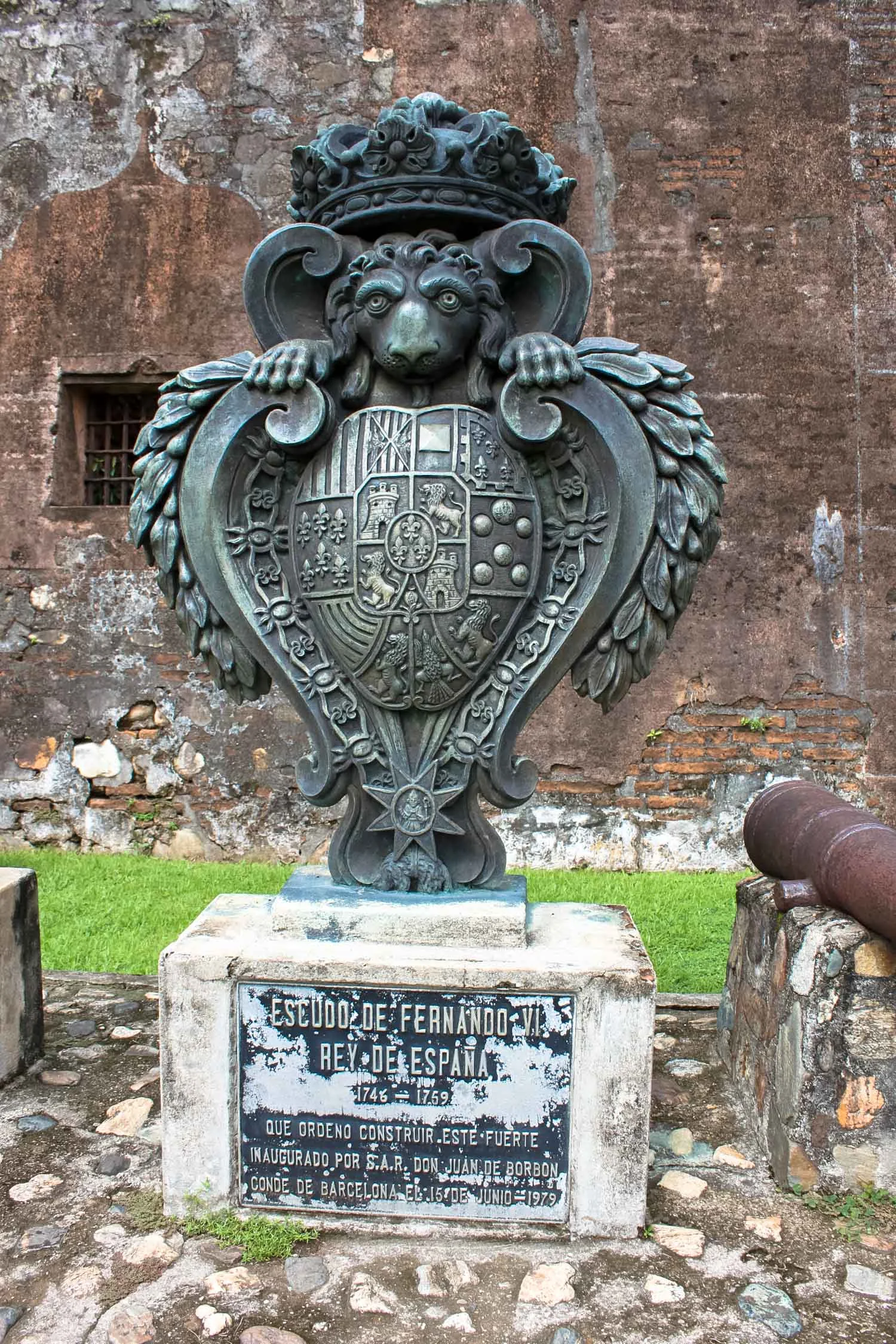
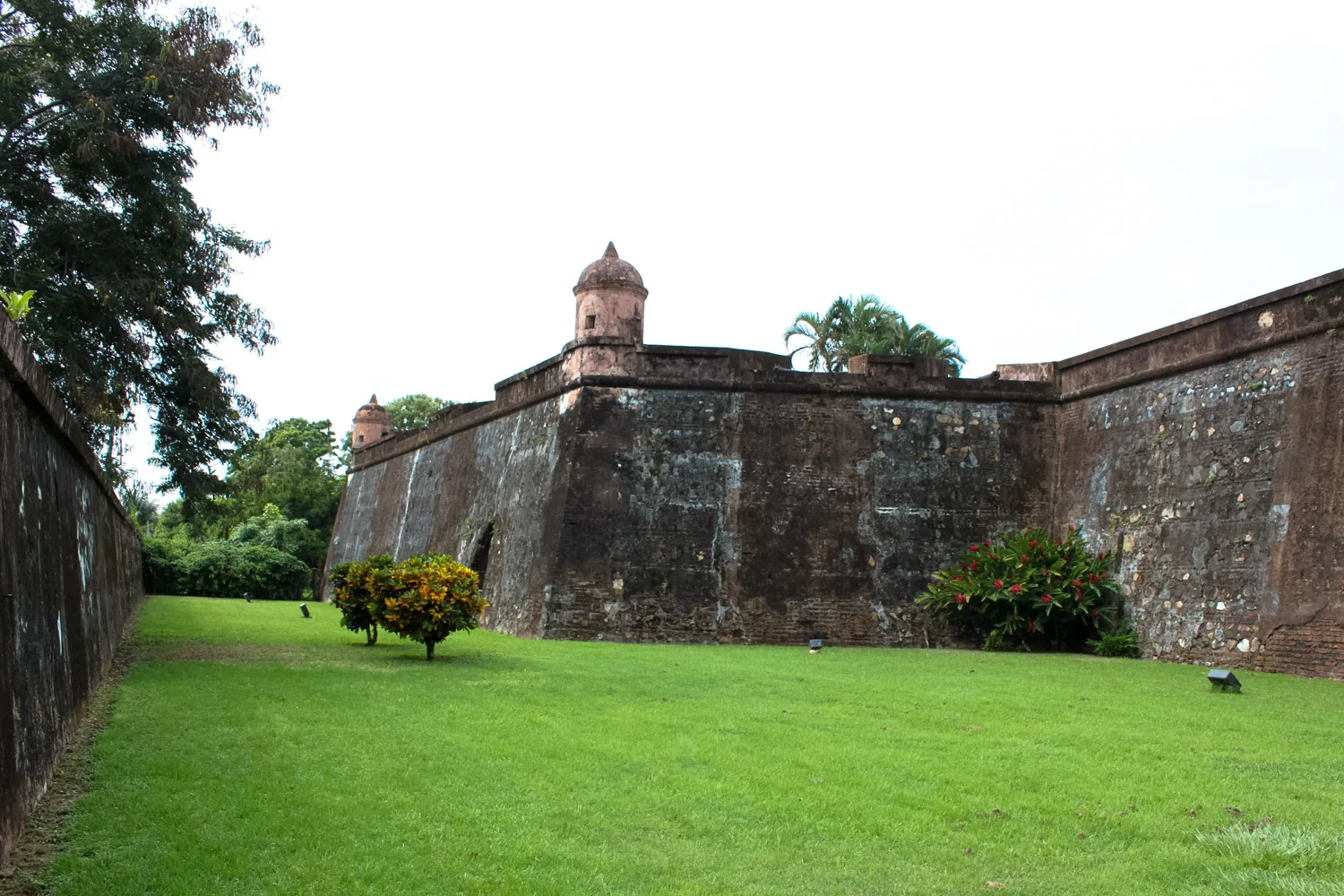
San Fernando Fort, Omoa
Omoa, Honduras is small town on the Caribbean Coast, a short trip from San Pedro Sula. Omoa used to be the main Caribbean port of Honduras until the mid 19th century. Now it is a very laid back beach town where you can be one of the only tourists in sight. As you can see, I had the whole place to myself!
One of the main reasons to visit is to see the historical 18th century San Fernando Fort. It's also a great stop over on the way to or from the Guatemala Border.
Omoa, Honduras is small town on the Caribbean Coast, a short trip from San Pedro Sula.
Omoa used to be the main Caribbean port of Honduras until the mid 19th century. Now it is a very laid back beach town where you can be one of the only tourists in sight. As you can see, I had the whole place to myself!
One of the main reasons to visit is to see the historical 18th century San Fernando Fort. It's also a great stop over on the way to or from the Guatemala Border. Full post to come!


Sea shells were used to build the walls

A hole left by the impact from a canon ball


You Might Also Like

Tikal - A Photo Essay
A gallery of images from Tikal, one of the Mayan Cities in Guatemala dated over 1000 years ago during the Classic Period. I was lucky enough to spot monkeys and also witness the sunset from one of the tallest pyramids.
A gallery of images from Tikal, one of the Mayan Cities in Guatemala dated over 1000 years ago during the Classic Period. I was lucky enough to spot monkeys and also witness the sunset from one of the tallest pyramids.
See if you can spot a famous shot from a Star Wars movie and let me know in the comments!


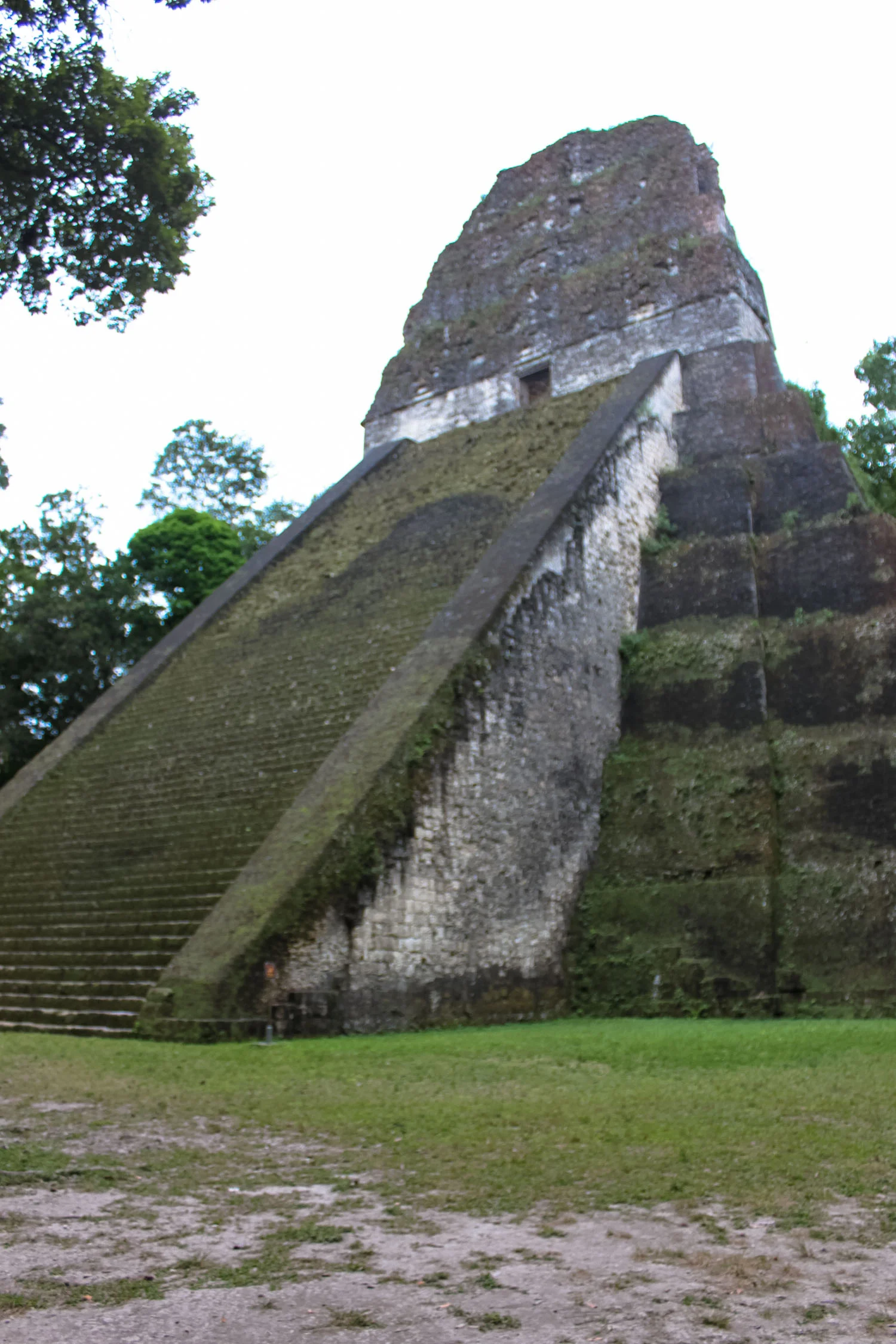
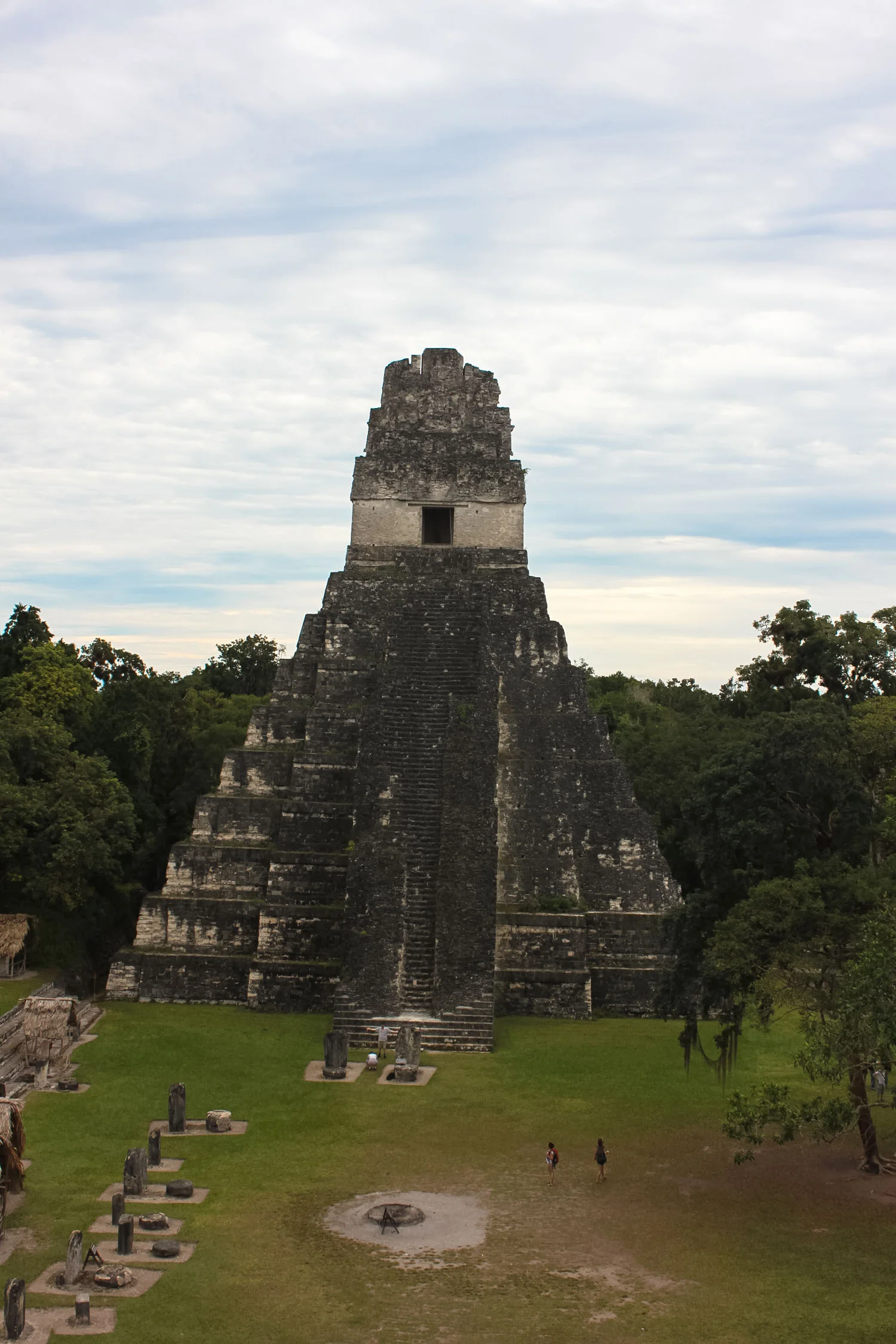
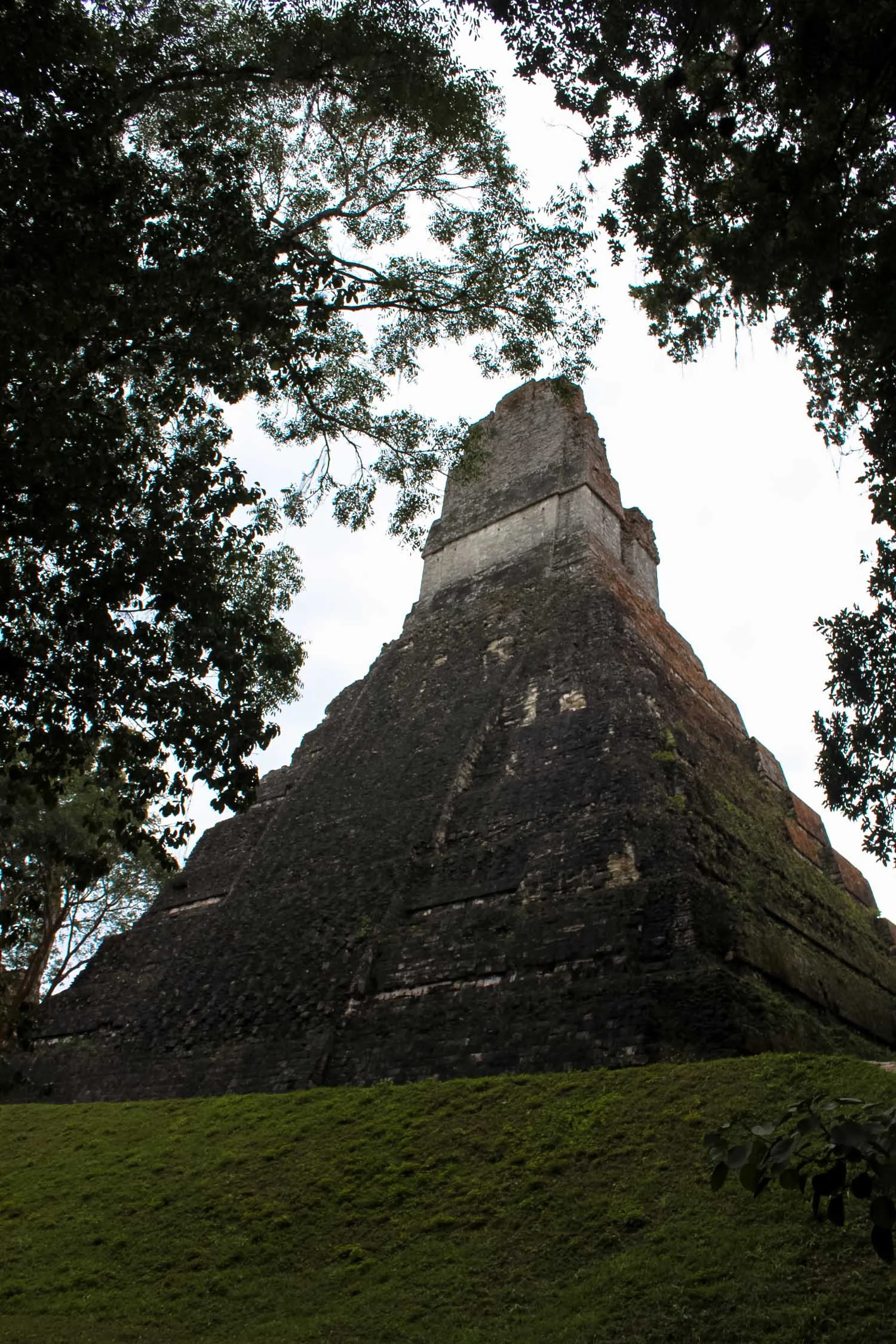


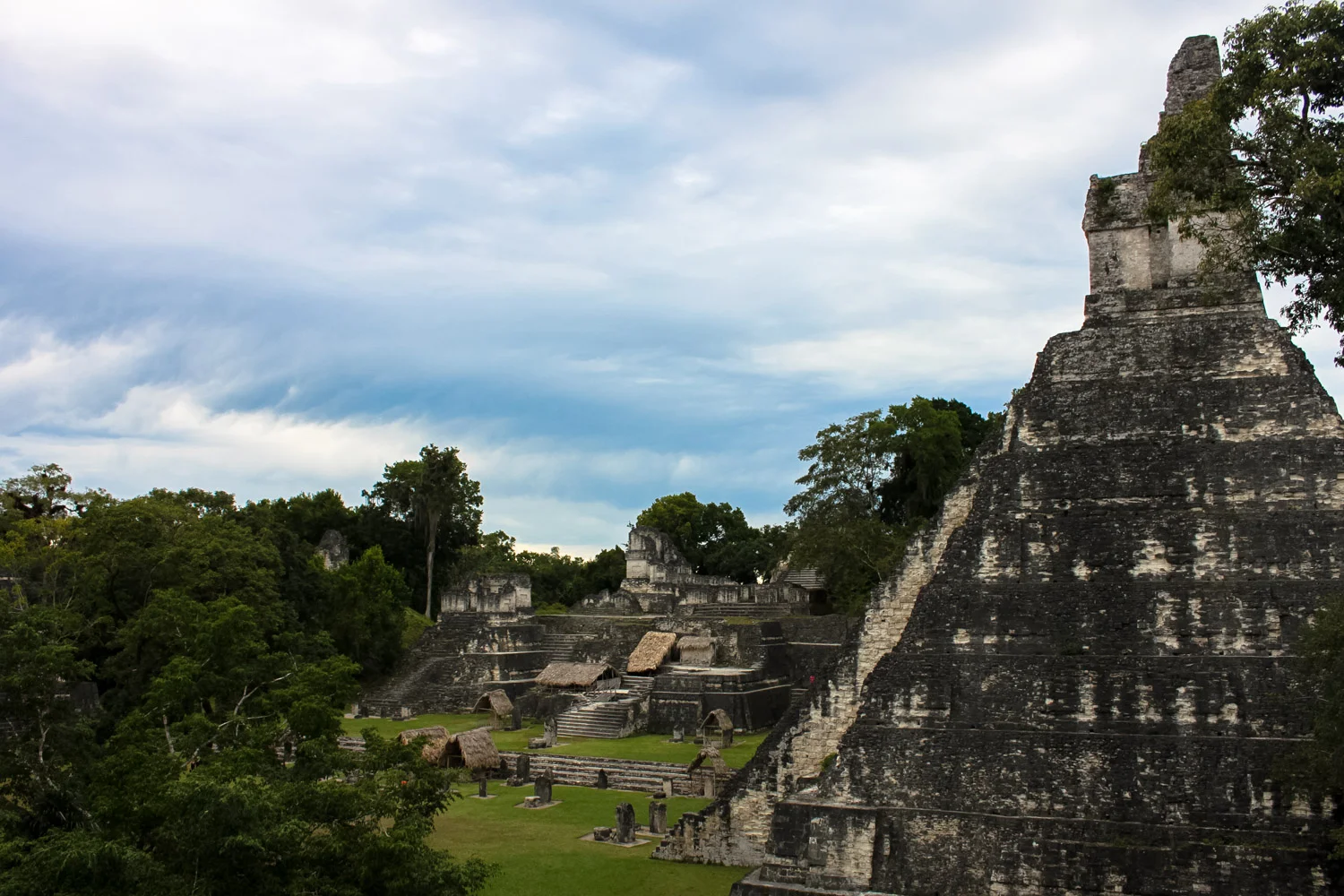


This post is part of my Top 30 in Central America and Mexico. You can also check out some more of my favourite sites and activities in Guatemala here.
You Might Also Like

Laguna Bacalar - The Lagoon of 7 Colours
The town of Bacalar and Laguna Bacalar itself are popular amongst budget travelers and backpackers but due to its remote location and importantly, the distance from Cancun Airport, it’s one of the least touristy places you can visit this close to the Caribbean Coast of Mexico.
I visited Bacalar on a two week trip with my family with a goal to show them what I love about Mexico away from the margaritas and novelty sombreros of the Mexican Riviera. Although there’s nothing wrong with those things, I really wanted to show them another side of Mexico.
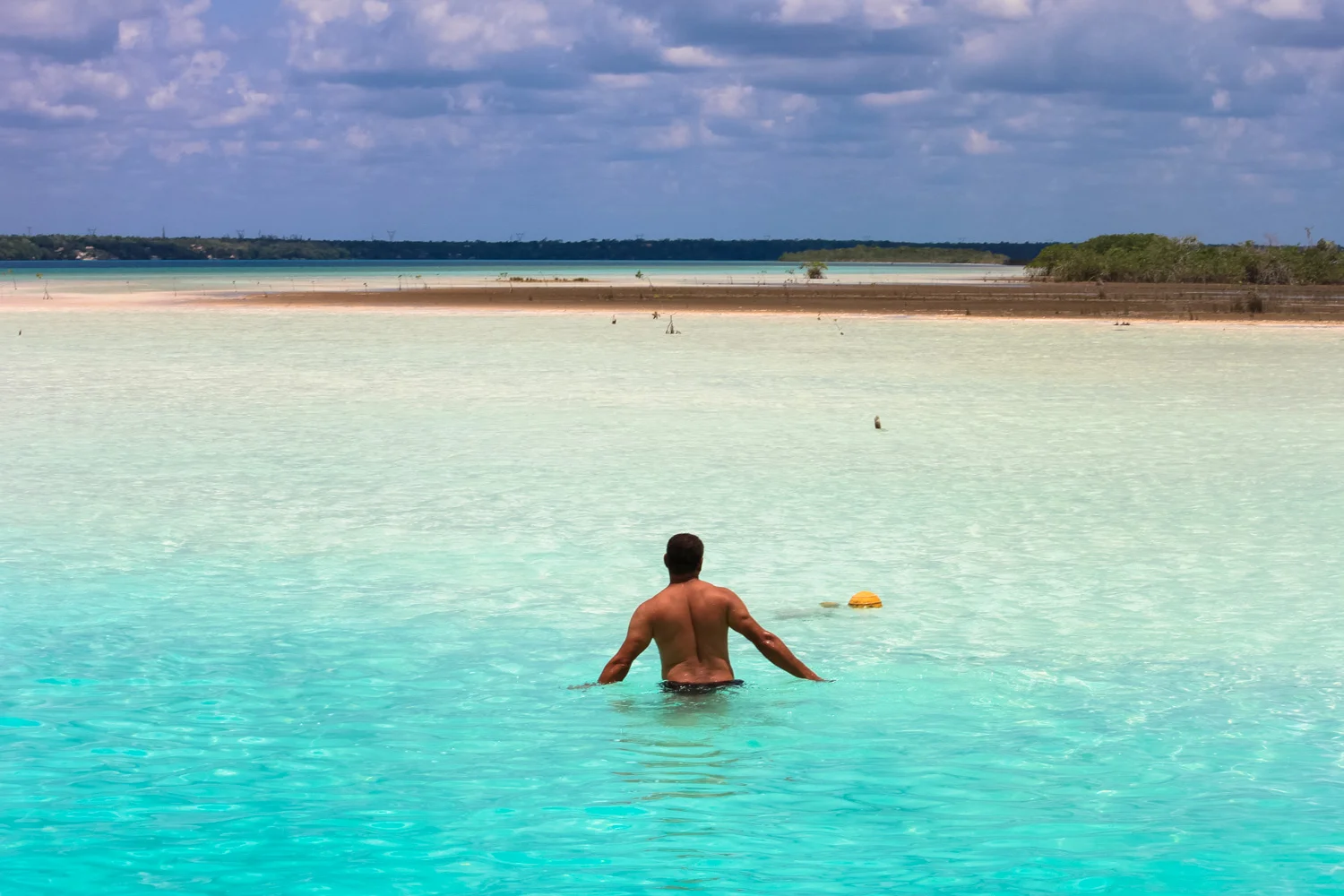
The town of Bacalar and Laguna Bacalar itself are popular amongst budget travelers and backpackers but due to its remote location and importantly, the distance from Cancun Airport, it’s one of the least touristy places you can visit this close to the Caribbean Coast of Mexico.
Gaspar Pacheco founded the town in 1545 as Salamanca de Bacalar, derived from the Mayan words ‘Bak Halal’, meaning ‘place surrounded by reeds.'
I visited Bacalar on a two week trip with my family with a goal to show them what I love about Mexico away from the margaritas and novelty sombreros of the Mexican Riviera, and the extremely cultural but sometimes chaotic neighbourhoods of Mexico City. Although there’s nothing wrong with those things, I really wanted to show them another side of Mexico.
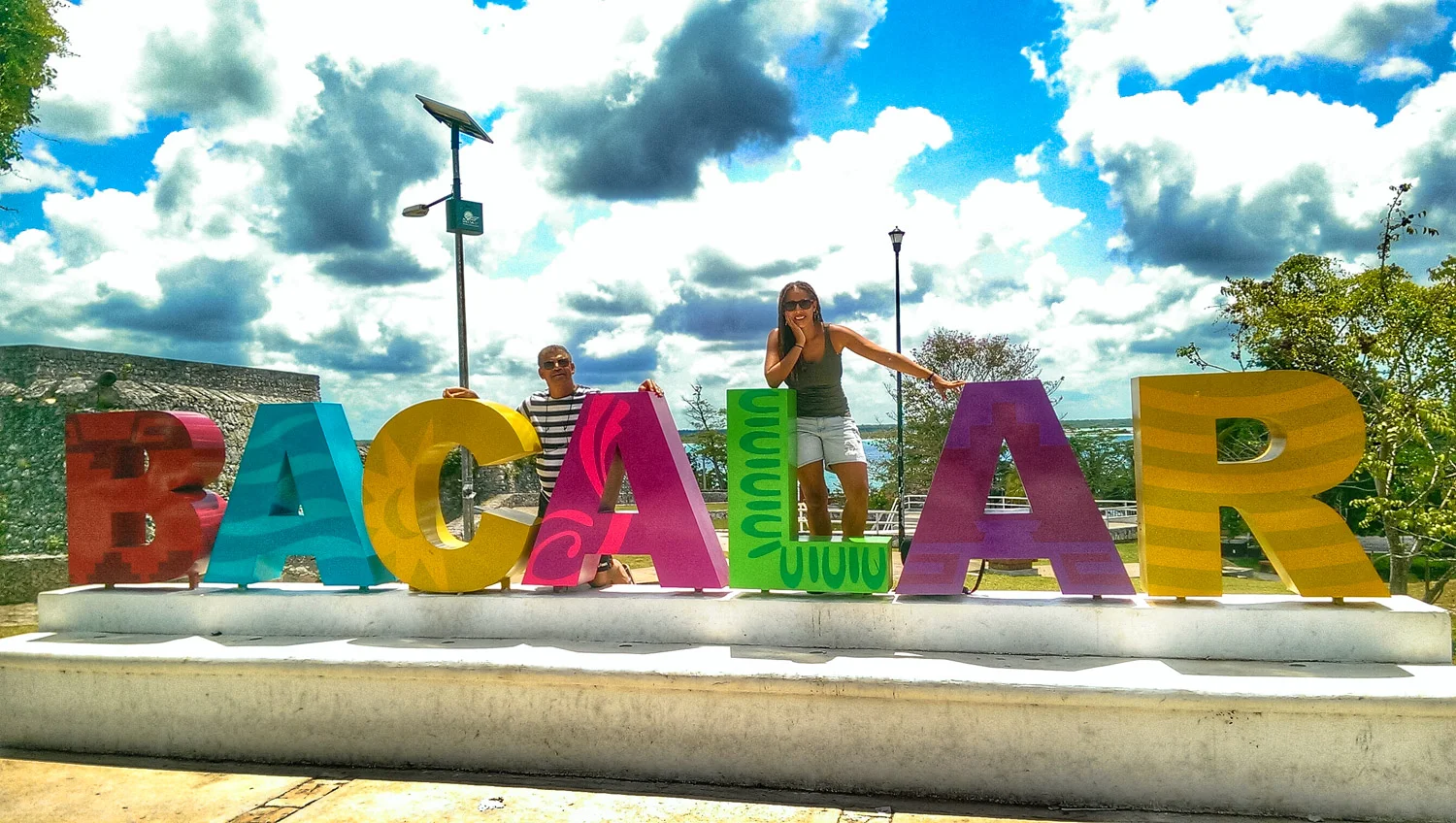
Fun with dad and the Bacalar sign
After a three hour drive from Tulum to Bacalar, we arrived in Bacalar and were immediately greeted by the sight if the lagoon. Laguna Bacalar is called the Lagoon of 7 Colours because of the distinct blue colours that are visible throughout the lake. The water clarity is also very impressive partly due to its white limestone bottom.
The lagoon measures 43 km long and 2 km at its widest point. It is also the second largest body of freshwater in Mexico, after Lago de Chapala in Jalisco and Michoacán.
There are several restaurants and bars located on the lakefront where you can have a meal or just a drink and sit lakeside or relax on the adjacent docks. There is one public dock that is free to access and is actually a lot of fun as well.
The lake is quite shallow at the shore except where there are cenotes. This makes it great for smaller children to get in and snorkel. Just be careful when jumping in!
You can rent a variety of equipment to get out into the water, including kayaks and sailboats but the best activity is a half day tour that gets you to all the different sites on the lagoon.
Lagoon tours
There are a few tour operators in town, some private and some that work as part of a cooperative. As you explore the town you will see signs everywhere advertising lake tours so you will have your pick of operators.
Lake tours are available next to the public dock that last for two hours and cost about $280 pesos.
After doing some research and because I was with my parents, I really wanted the best day out possible so we decided to go with the more expensive tour offered by Amir AdvenTours. The tour is in English and Spanish, goes for 3.5 hours and costs $526 pesos.
After meeting the guide and boat we crossed the Channel of the Pirates to take in the coastline from the water. From here you can see the Fort and all get a better sense of the 7 colours you can see throughout the lake.
We stopped in the channel for an explanation of the history of the lagoon and a quick swim in the warm waters. Amir then took the group for a walk through the sulfur infused muddy shallows for a full body mud mask followed by a fun race through the mud that really hugged your feet and if you were’t careful you could end up face first in the muddy water.
While we scrubbed the mud off Amir prepared a feast of tropical fruits including banana, watermelon, mango and the sweetest pineapple I’ve ever had.
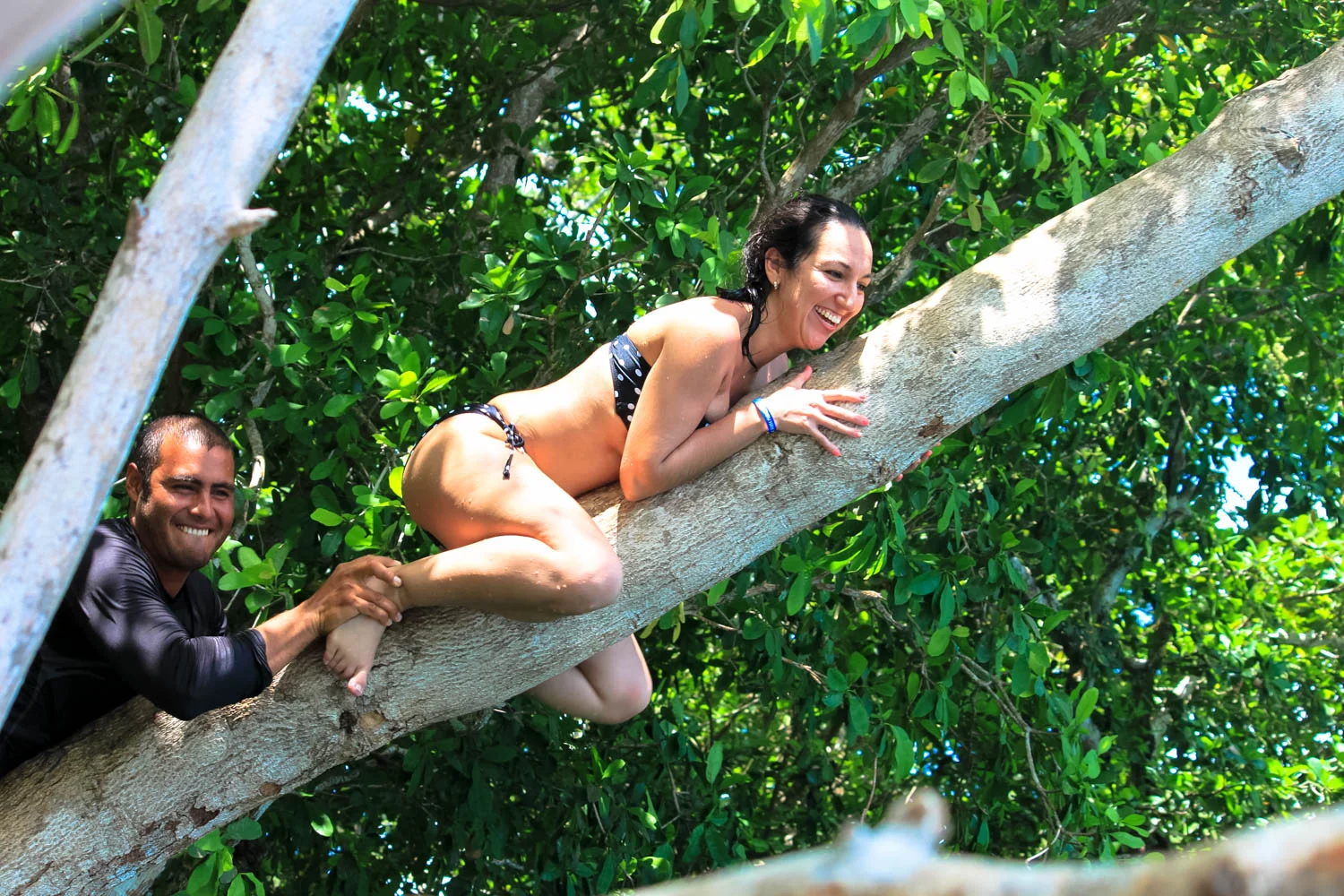
Amir even helped push us up the tree!
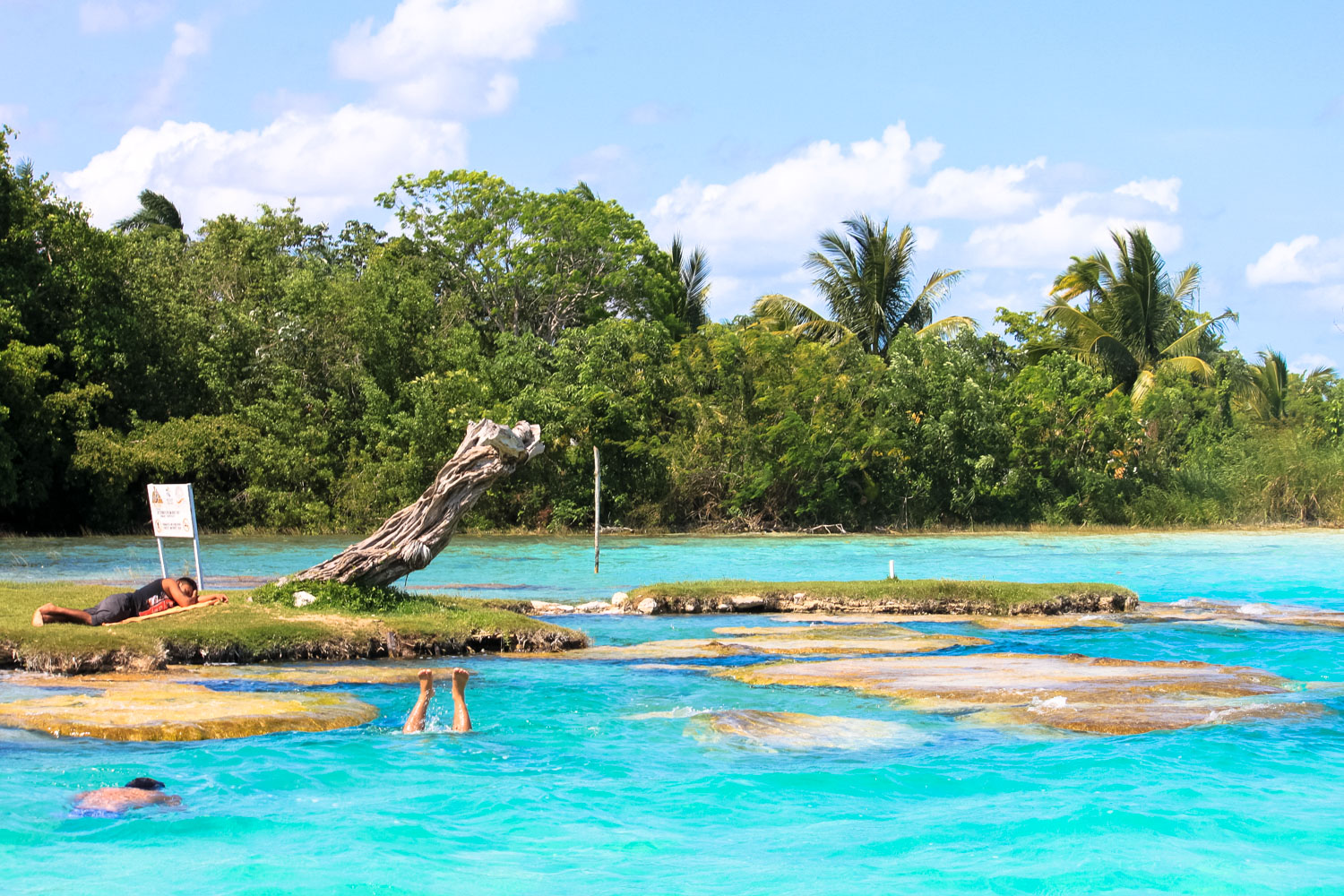
Hanging out at the stromatolites
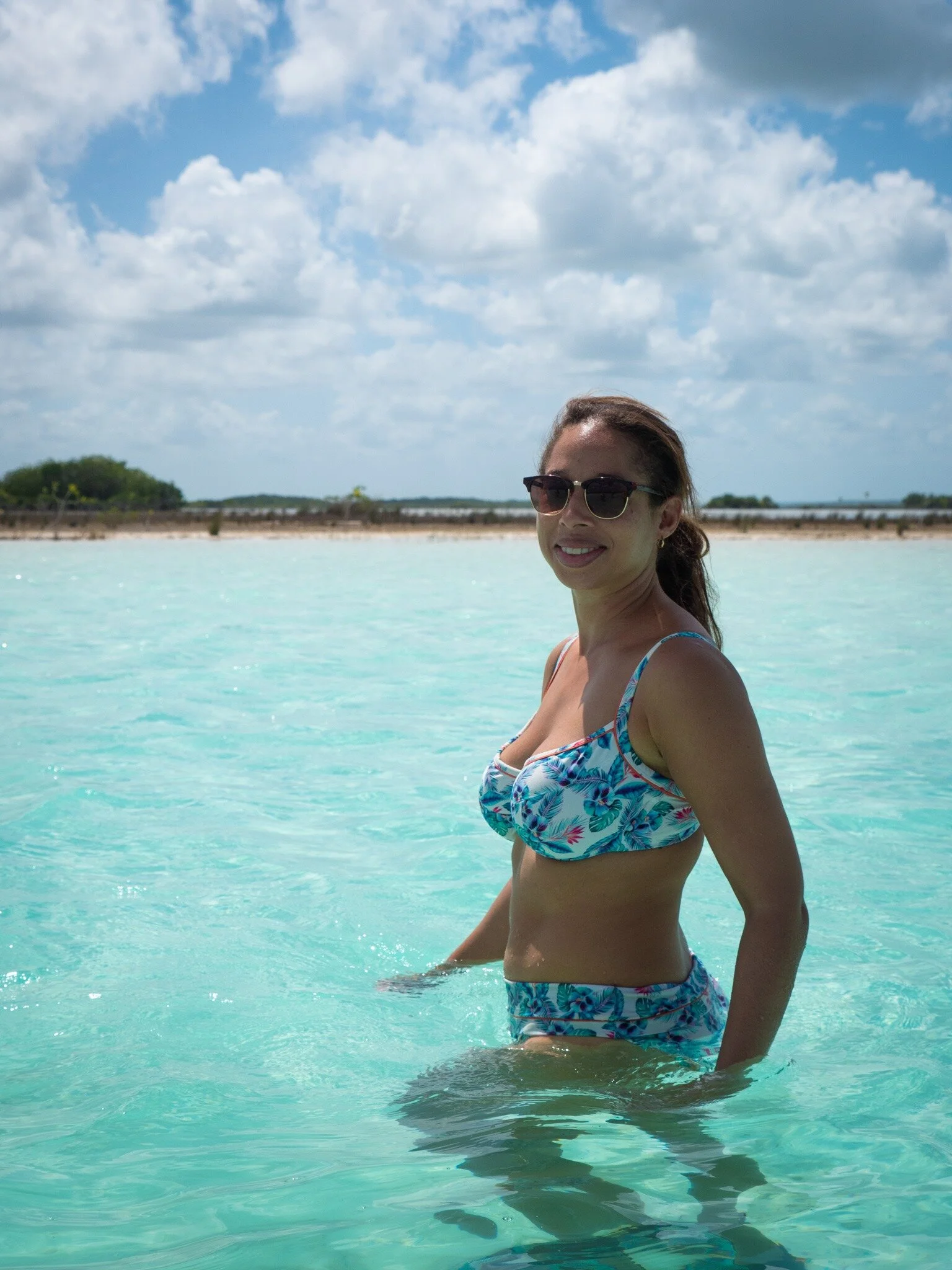
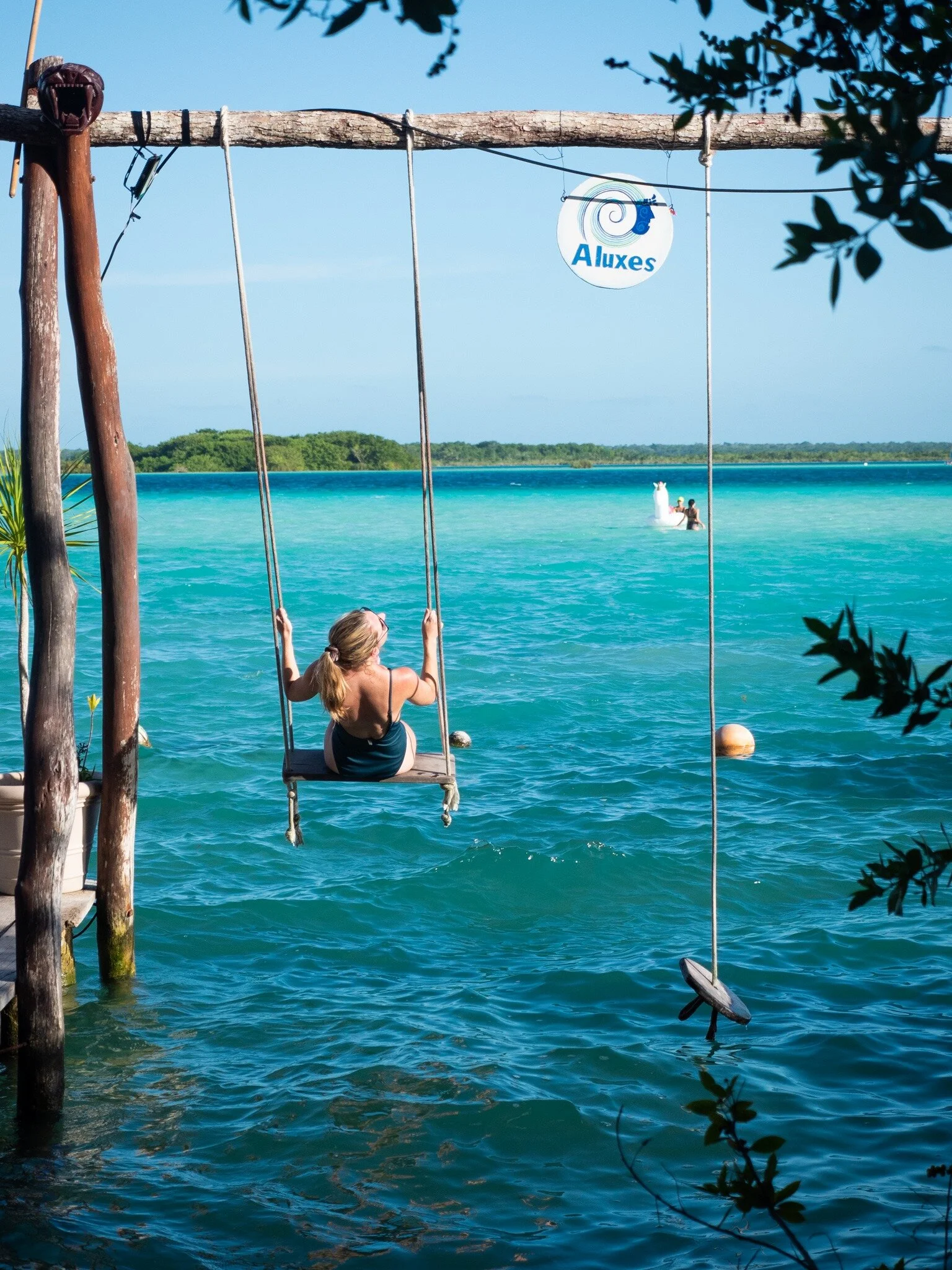
After the snack stop we visited the “Black Cenote” which is an open cenote with a depth of about 85 meters where we got to snorkel. For the brave, Amir showed us how to do a dive after climbing the branches of a tree.
Then we visited the “Cenote Esmeralda” with a depth of 45 meters and finally the “Cenote Cocalitos” where you can see stromatolites that are known as living stones and are considered as the oldest form of life in the planet.
Finally, we visited the Island of Birds for one more swim and snorkel.
The tour includes snorkeling equipment, life jackets, fruit, snacks and drinks. There was a good balance of information and fun water activities and by the end of the tour we were pretty exhausted. I highly recommend this tour!
The Fort of San Felipe
The Fort of San Felipe Bacalar is another major attraction in this area, because in its walls, pillars and ramparts there are still traces of past battles. The fort was built in 1729 with the main purpose of preventing the attacks suffered by the population from the pirates. Interestingly the fort was also used to monitor and repell traffickers of dyewood, a highly valued precious wood back then.
During the Caste War, the Fort was used by the Spanish as a point of defense against Maya who fought to win back the village, won the war but left the fort in ruins.
Today, the Fort of San Felipe Bacalar has become a local history museum. The collection in the museum includes pieces of pre-Hispanic history, Colonial history, drawings, historic plans, beautiful murals, multimedia devices and even the skeleton of a genuine pirate of the Caribbean.

Getting in and out
Bacalar is a great stopover in between the Yucatan and Belize. If you’re coming from Cancun it is a five hour drive or three hours from Tulum. There are regular ADO bus services if you’re not driving.
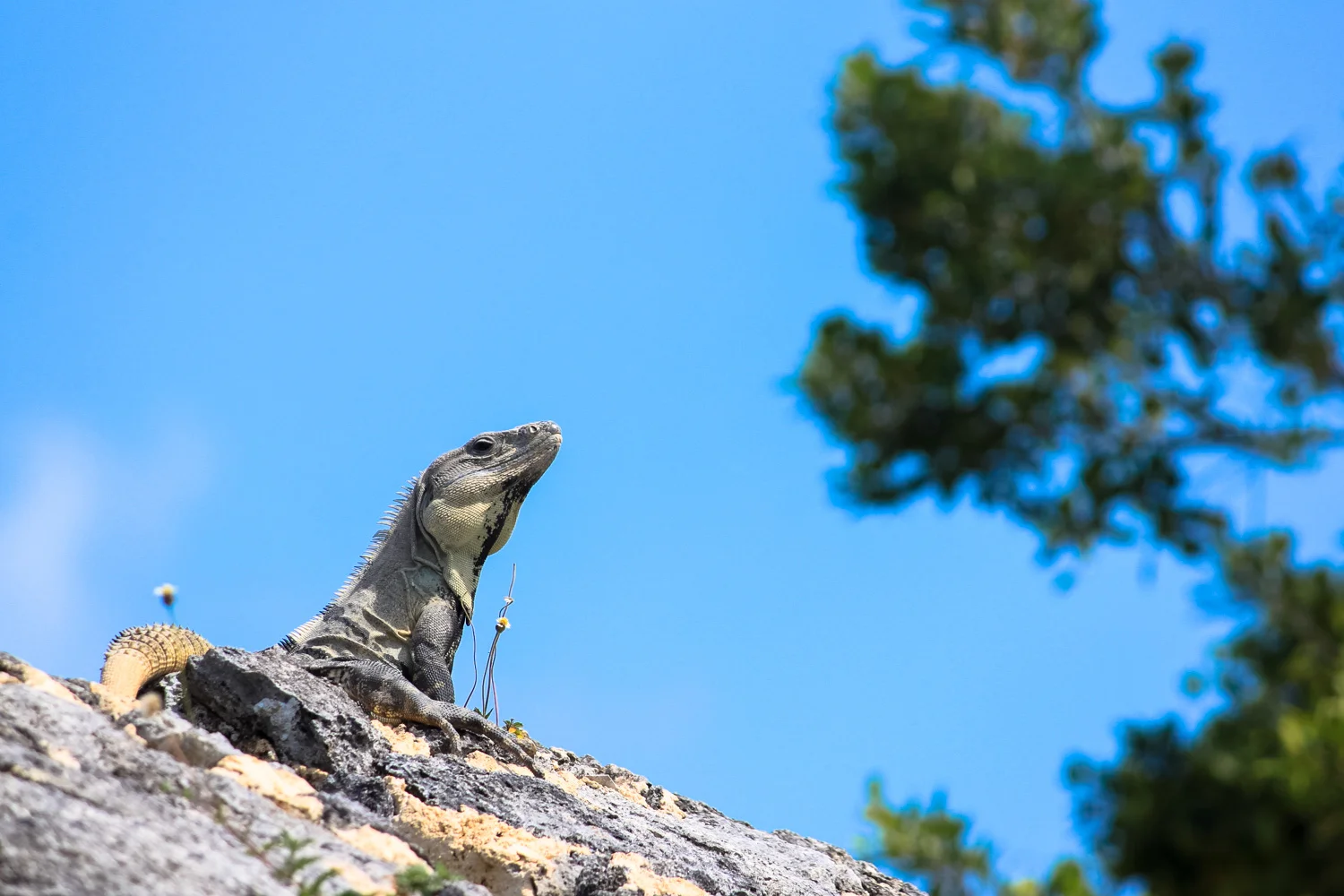

With it’s clear, warm waters and tranquil town, Bacalar is a great place to visit if you want to relax while taking in the stunning views the lagoon. These never got old and while relaxing on a dock with a good book, you could really waste a day or three away.
This post is part of my Top 30 in Central America and Mexico. You can also check out some more of my favourite sites and activities in Mexico here.

Have you made it to Bacalar? Any other recommendations for the region that I missed out? Let me know in the comments below!
You Might Also Like

Somoto Canyon
The Somoto Canyon is one of oldest rock formations in Central America and has become one of the main attractions of Northern Nicaragua. The canyon is located fifteen minutes west of the city of Somoto and is also called "the structure" or “Namancambre” by locals.

The Somoto Canyon is one of oldest rock formations in Central America and has become one of the main attractions of Northern Nicaragua. The canyon is located fifteen minutes west of the city of Somoto and is also called "the structure" or “Namancambre” by locals.
The canyon walls run for five miles where the waters from the Comali River (from Honduras) and Tapacali River join to form the extensive Coco River. The cliffs have a height between 120 and 150 meters. In the narrowest area, they are situated just five meters away from each other. Between the small holes of the rock you can spot orchids, bromeliads and cactus.
The canyon was “discovered” by geologists in 2004 and since then tourism has ramped up in this tiny almost-border town and the Nicaraguan Government has wisely made it a Protected Area.

The Somoto Canyon tour
Somoto Canyon Tours is the only independent guiding group operating sustainable tourism out of the village of Sonis in the neighbourhood of the canyon. Somoto Canyon Tours started in 2008 to develop an enterprise to assist those who live within a few kilometres of the new attraction.
You can choose a trip of a variety of lengths depending on how much of the canyon you wish to see and how adventurous you’re feeling. I did the circular route of 6 hours covering 15 kilometres. It includes hiking, sightseeing, rock scrambling, wading, floating, swimming, boating, and jumps in both Rio Tapacali and Rio Camali.
You can also swim and do a small jump in the natural swimming pool below the confluence of the Tapacali and Comali rivers that form the headwaters of the Rio Coco, the longest river in Central America. I also got to check out the fruit bat caves that are only accessible on this trip which was a special treat.


Keep in mind that the water can get quite cold especially towards the end of the tour as the canyon narrows and less sun gets in. You should be able to warm up on the boat ride and walk back. I am a giant baby when it comes to the cold and I swore I would get hyperthermia in the last 10 minutes while floating downstream but I managed to survive until I got back into the sun and defrosted in our short hike back to the cabins.
I was asked if I was happy to have a new guide lead the small group of my two friends and myself. He didn’t speak much English but I speak Spanish and my friends were happy to be translated to. As with all the guides through Somoto Canyon Tours, he was a local guide and quite young, early twenties maybe. Even though he was young, he was very serious about making sure that everything went well and that we had fun on our trip. Too serious sometimes but we had a lots of fun trying to get him out of his shell!


The first Somoto Canyon jump
Free jumping
The highlight of the trip for me was the opportunity to jump from heights up to 20 metres. This is one for the very brave or experienced. I only attempted the 15 metre jump and I was terrified but was super proud of myself when I landed with minimal ouchies. Ladies, cross your arms over your boobs when attempting the higher jumps, just saying. At that height anything sticking out will get a big smack when you hit the water. Listen to the guide’s instructions and make sure to jump as straight as possible.
The best part about the guided tour is that the guide chooses jumps that get progressively higher. You start with a jump at the beginning of the tour of 2 metres. By the time you get to the end of the tour you have the choice to attempt the big 20 metre jump or a 15 metre jump. There's also a 5 metre option for those who haven’t worked up the courage yet. My biggest piece of advice for anything like this is to just decide to do it and jump in straight away. Don’t let your brain catch up to your feet!

Eeeeeep!
What to bring
You should only need a bottle of water, your camera and sun-cream. You’ll be in and out of the water so make sure to keep applying. Your guide will carry a waterproof bag in which you can place your items and where he’ll store snacks and lunch. You will be fully submerged in the water at some points so unless it’s in the bag it will get wet! Somoto Canyon Tours also provide river shoes which you can use if you do not wish to get your own wet.
Everyone gets a life jacket which is really important for safety reasons but also great to lay back and enjoy whit water floating when in the deeper downstream regions.
The accommodation
If you opt to stay the night you will be welcomed into Henry’s family homestead. There’s a farmyard full of animals to keep you company (and wake you up in the morning!) and you’re welcome to take part in the daily activities of the busy homestead.
There are cabins to sleep in that include private rooms and a dormitory with an adjacent toilet block. The accommodation is basic and there is only cold water in the showers but it is super clean and adequate for a night.
The family also offer a selection of traditional meals that include vegetarian options and you can preorder breakfast if you’re catching an early bus in the morning. I definitely recommend both the tour and staying a night here.
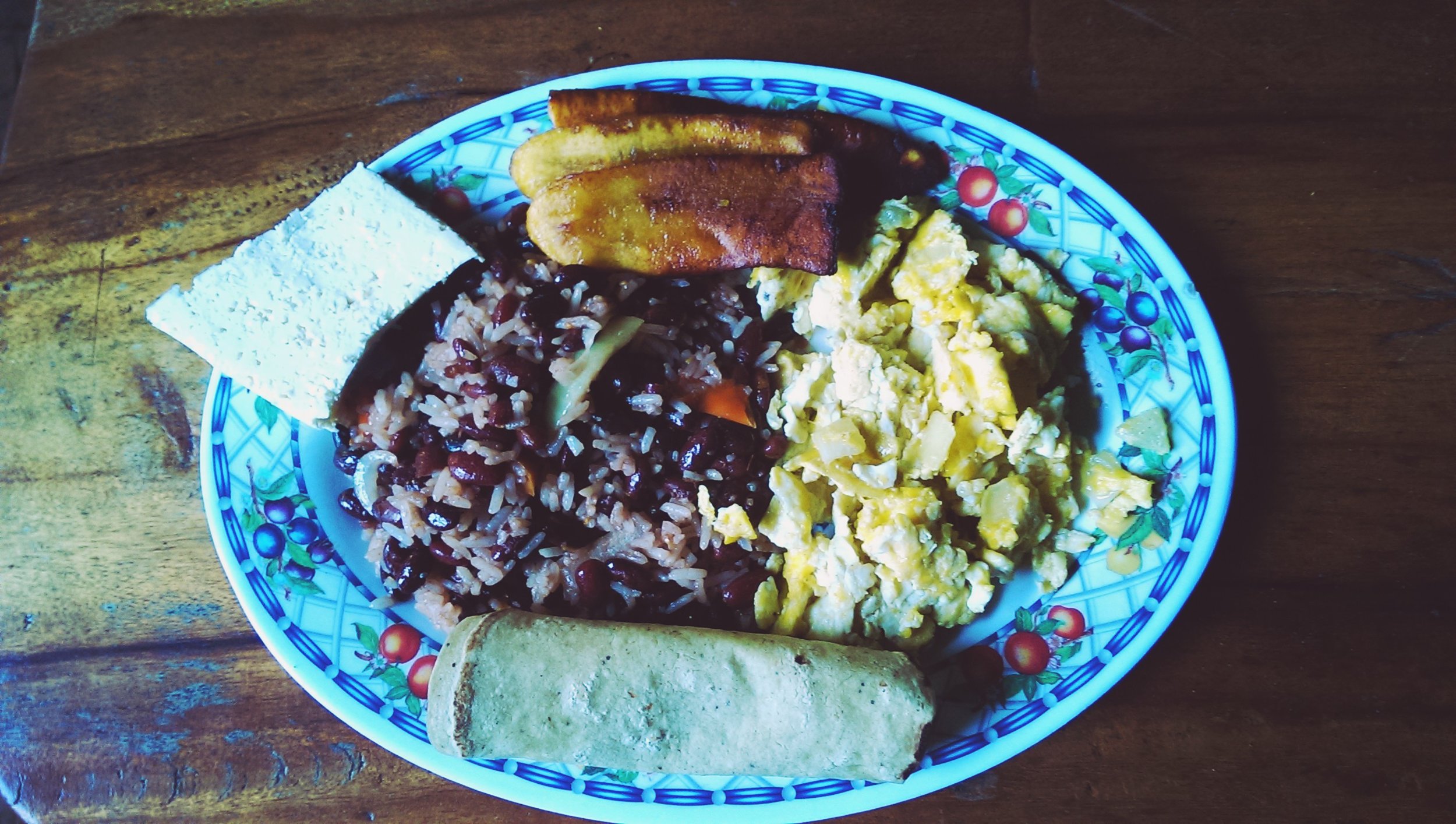
The "typico" served on the homestead - A Typical Nicaraguan Breakfast
Getting there and away
It’s fairly easy to get to Somoto by public transportation as long as you keep in mind that this IS the edge of Nicaragua. You won’t find many tourists here and it is one of the more remote tourist destinations. Along the way, I highly suggest visiting Esteli for a night so you can stop in to one of the cigar factories. You can set off to Somoto early in the morning, do a canyon tour and be on your way by early afternoon.
If you’re coming from Managua, you can take a bus to Somoto from the Mayoreo Market. These buses aren’t that frequent so I suggest catching any bus going to Esteli where buses leave hourly to Somoto.
You will get picked up from the bus station if you’re taking a tour with one of the tour companies but if you’re planning to go solo then you can take a chicken bus to El Espino (border with Honduras) and ask to be dropped off at the entrance to the community of Sonis. From there you will have an 8 kilometre walk to the trail head so be prepared!
If you’re the adventurous sort you can use this opportunity to continue on to the border of Honduras where you can head north to the centre of Honduras and possibly Lago de Yojoa or head east to the border of El Salvador. I did the former and it was a pretty easy transition. Connections were frequent and with a basic level of Spanish you should be able to find your way to any of the bigger cities.
You can also do the reverse by catching a border bound bus from Choluteca in Honduras.


My very serious guide
Somoto is a real treat in Nicaragua. By visiting and participating in a tour you are directly helping the local community and you also get to experience a different side of Nicaragua. I had a great time getting to know our very serious guide and the people in the small village community of Sonis. If you’re in Nicaragua and have a two days free then Somoto is a worthwhile stop and also a great border crossing option if you’re heading to El Salvador or Honduras.
This post is part of my Top 30 in Central America and Mexico. You can also check out some more of my favourite sites and activities in Nicaragua here.

Have you visited Somoto? Got anything else to add? Or been anywhere similar that I should check out? Let me know in the comments!
You Might Also Like

Top 15 Places to Visit in Central America and Mexico
Central America is a treasure trove of breathtaking destinations waiting to be explored. From ancient ruins to pristine beaches, this diverse region offers something for every traveler. Join me as I unveil the top 15 must-visit places in Central America, guiding you to unforgettable experiences in this enchanting part of the world.
My heart really does belong to Latin America as I keep coming back to it year after year. When all my friends were exploring Bali and Thailand and doing gap years in the UK and Europe, I was hiking the Inca Trail and venturing into the Peruvian and Bolivian jungles, scuba diving in Colombia and pretending to salsa in Cuba. For the last 12 years, I have been learning Spanish and exploring all of the different cultures throughout this special region.
I've also seen it develop as more of a tourist region. Costa Rica is now the eco-playground of Americans and Cuba is open for business! Columbia is the "must-visit" country on the gringo trail where before it was only visited by the brave few who ignored the media reports about guerilla warfare. Central America and Mexico are easy to tackle on a shorter trip by breaking it up or you could do a quick tour in three months. Six months will give you a decent amount of time to really go with the flow and see where fate may take you.
You can use this round-up to help give you some inspiration on where to go and what to see. If you have any questions or want help planning a trip then don't hesitate to contact me. I'm a solo travel expert and have spent a total of three years over my lifetime in this region. I hope you enjoy this virtual trip through the best of Mexico and Central America!
1) Somoto Canyon

The Somoto Canyon is one of oldest rock formations in Central America and has become one of the main attractions of Northern Nicaragua. The canyon is located fifteen minutes west of the city of Somoto and is also called "the structure" or “Namancambre” by locals.
The canyon walls run for five miles where the waters from the Comali River (from Honduras) and Tapacali River join to form the extensive Coco River. The cliffs have a height between 120 and 150 meters. In the narrowest area, they are situated just five meters away from each other.
2) Boquete

Boquete is a charming little mountain town that has captured the imagination of expats and tourists alike. It’s located in the province of Chiriqui about 60 kilometres from the border of Costa Rica. When you’ve been suffering in the heat in the rest of Panama, you might enjoy spending some time cooling off in Boquete as it situated 1,200 metres above sea level.
I really enjoyed my time here and suggest a stay of at least two or three days. Read on to discover some of the activities and sights available including coffee farm tours, rafting, hiking, rock climbing and hot srings.
3) Quirigua

The ruins at Quirigua are smaller than some of the better known ruins in the region, like Copan in Honduras and Tikal in Guatemala but still worth at least a couple of hours as stop over if you’re heading between the Rio Dulce/ Livingston area and Antigua or Guatemala City.
I enjoyed taking my time to walk through the site and explore on my own. Also if you’re lucky you might get to witness a traditional ceremony taking place!
I would highly recommend these ruins since they were the only ones that allowed me to see temples and stelae up close and without 100 people milling about. You really get a sense of the place and imagine what it was like a thousand years ago when you can pretend that you're the only person there.
4) Corn Islands

The Corn Islands in Nicaragua are a special place to visit. There are no cars or motorbikes on Little Corn and besides the main "street" which is more of a path, there are no paved roads. When wandering around the island you can easily spot the local wildlife including a resident pig.
There's no electricity from 5am to 2pm which really forces you to get up early and out of your hot cabins!
You can also walk around the whole island in less than two hours and I did this a couple times with some snorkel gear. Even though there is really great diving here, snorkelling is also full of fishy adventure. There are 8 main snorkel spots around the island that are accessible from shore and just past this beach is where I saw my first spotted eagle ray! Read more -->
5) Mazunte

Of all the beaches I’ve been to on the Pacific coast, Mazunte is definitely my favourite. During the day there are huge pelicans diving for fish and beautiful hummingbirds flitting around. Everyone seems to respect the peace and there is rarely any loud music blaring, at the most you might hear the strains of a guitar or drumming.
Here you can do yoga every morning for as little as 50 pesos. You can sleep in a swinging bed looking out into the coast for 90 pesos ($3.80). You can eat like you’re in Europe or indulge in local Mexican fare. You can do nothing at all and still end the day with a contented sigh and a stupid grin on your face because you’re just so happy to be there.
6) Laguna de Apoyo

Apoyo Lake is a crater lake said to be the result of Volcano Apoyo imploding on itself over 20,000 years ago. It is 48 square kilometres and the deepest point has been measured at 200 metres. If you imagine the big cone that would have been left behind by the volcano you can get a good idea of the shape of the lake.
After attempting a volcano hike in Central America this was a perfect place to come and relax while still admiring the nearby Mombacho volcano in the background.
7) Bacalar

The town of Bacalar and Laguna Bacalar itself are popular amongst budget travelers and backpackers but due to its remote location and importantly, the distance from Cancun Airport, it’s one of the least touristy places you can visit this close to the Caribbean Coast of Mexico.
I visited Bacalar on a two week trip with my family with a goal to show them what I love about Mexico away from the margaritas and novelty sombreros of the Mexican Riviera. Although there’s nothing wrong with those things, I really wanted to show them another side of Mexico.
8) Tikal

A gallery of images from Tikal, one of the Mayan Cities in Guatemala dated over 1,000 years ago during the Classic Period. I was lucky enough to spot monkeys and also witness the sunset from one of the tallest pyramids.
See if you can spot a famous shot from a Star Wars movie!
9) Omoa

Omoa, Honduras is small town on the Caribbean Coast, a short trip from San Pedro Sula. Omoa used to be the main Caribbean port of Honduras until the mid 19th century. Now it is a very laid back beach town where you can be one of the only tourists in sight. As you can see, I had the whole place to myself!
One of the main reasons to visit is to see the historical 18th century San Fernando Fort. It's also a great stop over on the way to or from the Guatemala Border.
10) Livingston

When I first walked off the boat in Livingston I was greeted with Garifuna music and I really felt like I’d found somewhere I could explore for a few days. It’s a small town but there are several places to explore, including some great food options. The best part for me was just wandering around town, chatting to the local people and experiencing life in this very different part of Guatemala.
One of the best ways to spend half a day in Livingston is to visit the Siete Altares site. When you get there you don’t need a guide so you take your time to walk to the waterfall and then have a picnic or just bathe in the cool pool below. There is also a jump off the falls that you can attempt if you’re not too afraid of climbing up there.
11) Tulum

Tulum is located on Mexico's Caribbean Coast just south of Playa Del Carmen. It can be considered the "green resort" town because you can still find many luxury resorts and stylish beach clubs but there's also a growing number of eco style hotels and beach cabins available.
Right outside of town there is a small set of Mayan ruins known for its picture perfect setting on the beach. The Tulum Ruins are the third most-visited archaeological site in Mexico, after Teotihuacan and Chichen Itza.
12) Lake Atitlan

The Indian’s Nose viewpoint sits at at 2,863 meters looking over the pueblos of San Pedro, Santa Clara and San Marcos. Its name comes from the fact the profile of the mountain looks like a sleeping Indian with the viewpoint as its nose. The hike is 1.5 to 2 hours of a very steep climb.
13) El Valle de Anton

El Valle is a beautiful little mountain town located in the largest inhabited volcano crater in the world. Once you’ve explored the Panama Canal in Panama City and you’re ready to see what else the country has to offer, El Valle is an easy day trip or possible next stop on a larger Panama itinerary.
It enjoys a lovely spring climate all year round. I spent hours wandering the streets of the town enjoying being surrounded by the amazing views and greenery, feeling very safe and at peace.
14) Osa Peninsula

The Osa is everything I wanted Costa Rica to be. Still relatively untouched by mass tourism, remote, and easy to find real grassroots local experiences. The Osa Peninsula offers a variety of experiences including wildlife spotting, water sports, and cultural activities that allow you to see the heart of the area.
15) Semuc Champey

If you’re up for a 6 hour bumpy ride into the middle of the Guatemalan jungle then I would suggest staying in Lanquin for 2 or 3 days, relaxing poolside at Zephyr Lodge and doing a day trip to Semuc Champey. The highlight of my time in Lanquin was visiting the Kam’ba cave system during the Semuc Champey day trip and putting on my Indiana Jones hat for a couple of hours. It was so much fun and months later I have not been able to stop talking about.
What are your favourites places to visit in Central America? Is there anything that should definitely be on the list? Let me know in the comments and check back in tomorrow for the next spot!
You might also like

Wandering Wednesday
If you’re like 99% of the population then you probably have a day job and if you’re anything like me, by Wednesday you’re ready to chuck it all in and head for the hills. Forget the kids, who cares about the mortgage, let's move to the Caribbean!
Wandering Wednesday is my gift to you on this, the humpiest of all days, where you can take 20 minutes out of your day and read all the best travel stories the internet has to offer.
If you’re like 99% of the population then you probably have a day job and if you’re anything like me, by Wednesday you’re ready to chuck it all in and head for the hills. Forget the kids, who cares about the mortgage, let's move to the Caribbean!
Wandering Wednesday is my gift to you on this, the humpiest of all days, where you can take 20 minutes out of your day and read all the best travel stories the internet has to offer.
Best travel video
I’ve been following this guy for a while and he posts very regularly, a few times a week at least. This video features his encounter with bears in Whistler, Canada.
Around the web
33 Airline Posters From Flying’s Golden Age
A collection of different airline posters from a different era. Kind of bizarre.
See adorable Swedish towns in this day trip from Stockholm
Visit two very cute little towns in this one day trip from Stockholm
http://aglobewelltravelled.com/2016/08/09/sigtuna-uppsala-day-trip-from-stockholm/
The Best Travel Underwear for Light Packers
All you’ve ever wanted to know about travel undies! Never wanted to know anything about travel undies? That's ok! It's on the internet anyway.
http://www.cheapestdestinationsblog.com/2016/08/09/travel-underwear-reviews/
Fogo Island: The Day I Was Adopted By A Canadian Island
Get ready for some stunning photography and an interesting story about this small island off the northeast coast of Newfoundland.
http://landlopers.com/2016/08/09/fogo-island
Expecting the unexpected as a hostel volunteer
One of my favourite blogs focused on making your way around the world by working in each location. This post is on volunteering in a hostel.
http://www.the-working-traveller.com/expecting-the-unexpected-as-a-hostel-volunteer/
Tofu Traveler’s Top Post
This week the post on my stay in the party hostel, Naked Tiger, totally blew up. If you haven’t read it yet, check it out here: http://www.tofutraveler.com/blog/staying-in-a-party-hostel-and-sunday-funday
I cover what’s it’s like to stay in a party hostel and attend the biggest event on the Central American backpacker calendar - Sunday Funday.
Travel App of the Week - Duolingo

This is a popular app amongst travelers to help with learning the basics of a new language. There's a fun game factor that helps keep you going back to the app and lessons are designed in bite sized chunks to help you manage your time around it. You learn by reading, listening and even speaking!
There are loads of languages available to learn as well as a variety of courses available for non-English speakers. I’d recommend starting off as soon as you’ve planned your trip and you can continue while you’re traveling as well, as most of the lessons are available offline.
Check out my list of my must have travel apps for traveling - http://www.tofutraveler.com/blog/must-download-travel-apps
Location of the week - Nicargaua
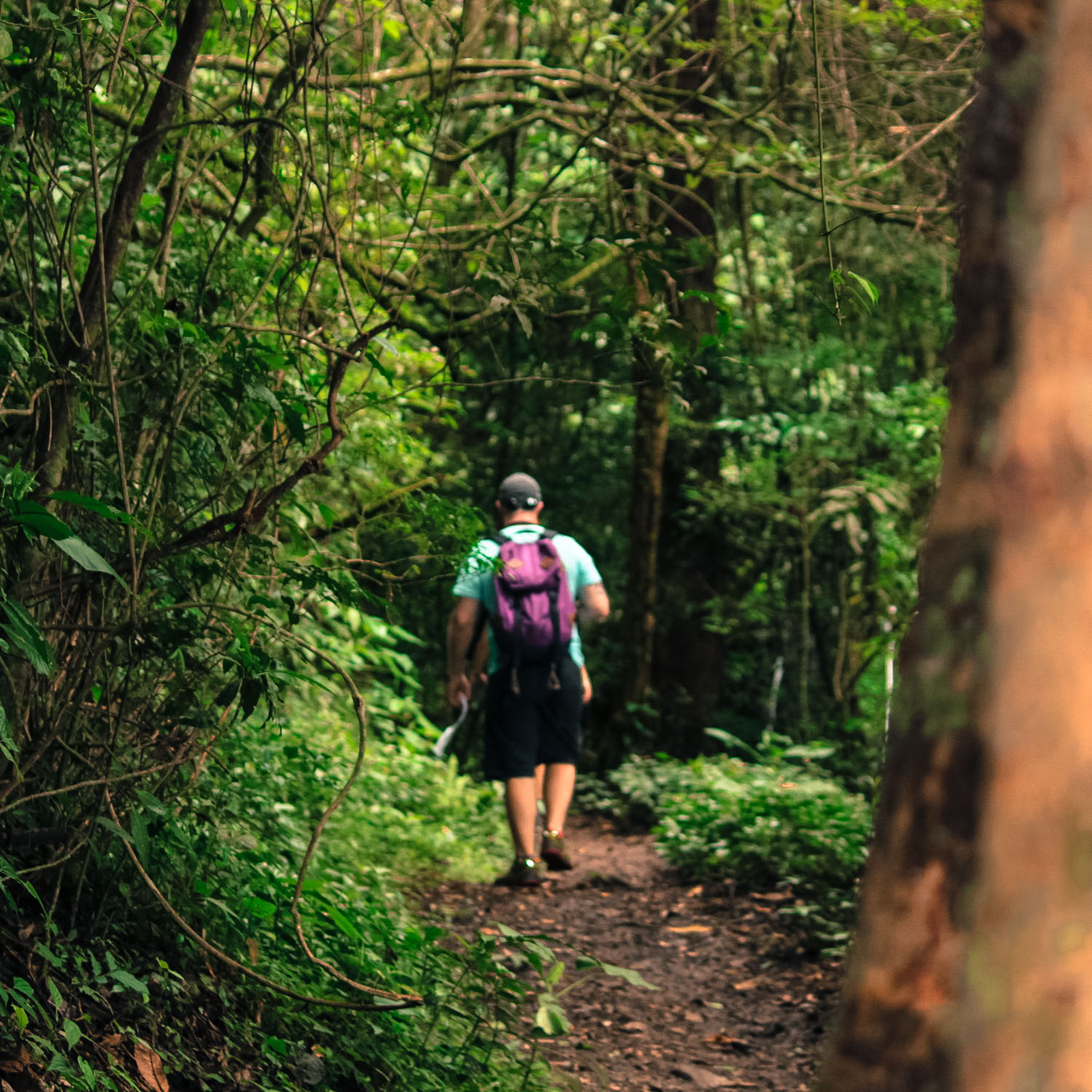
hiking in selva negra, nicaragua

I’ve been focusing a lot on Nicaragua on my blog this month as I really believe it’s the best budget option in Central America while still getting all the benefits of the great wildlife like sloths and monkeys as well as jungle, river, mountain, beach and urban experiences galore.
Check out this cool video from some fellow travelers on what you can expect on a trip to Nicaragua.

The Corn Islands, Nicaragua
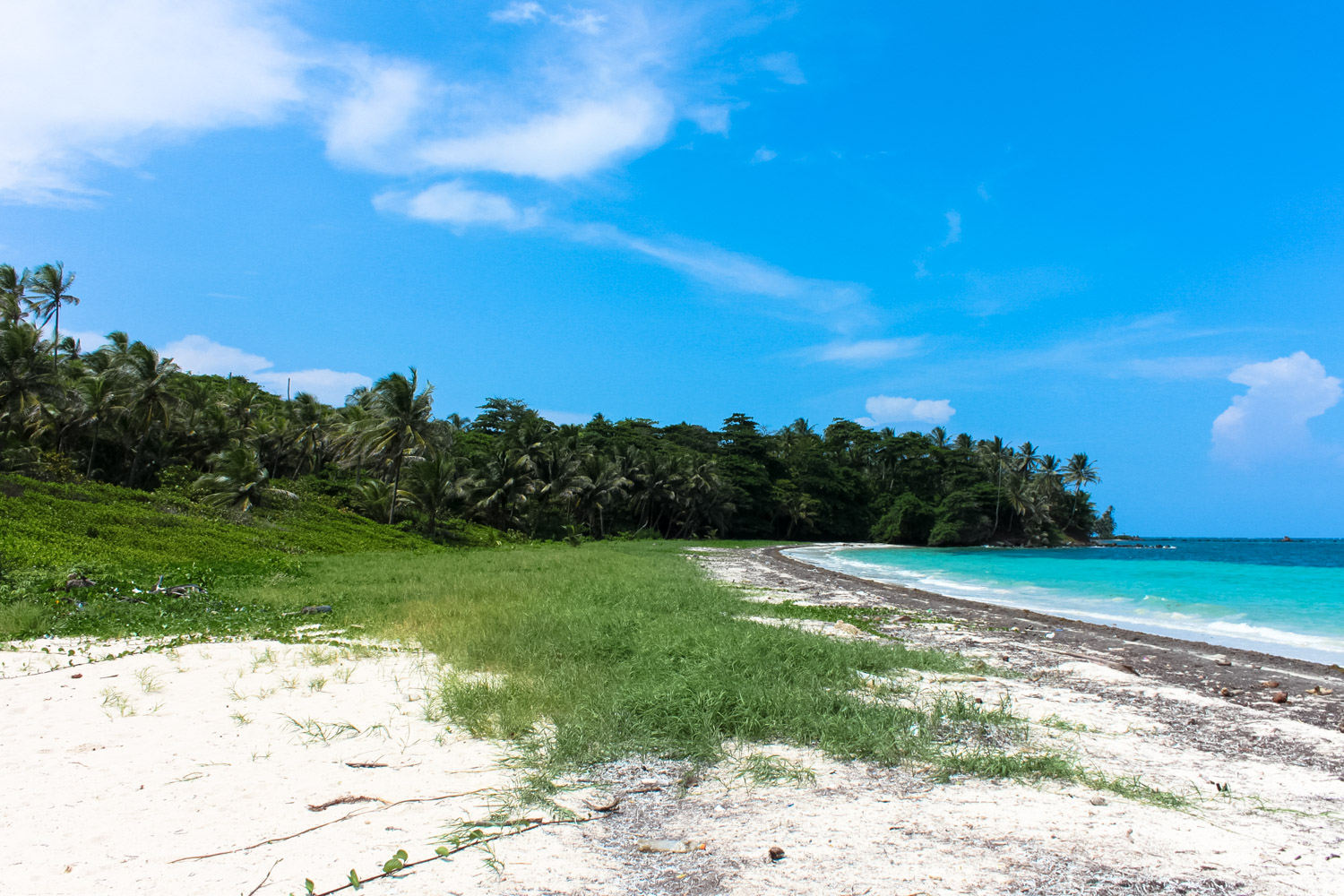

Tobacco leaves drying for cigars
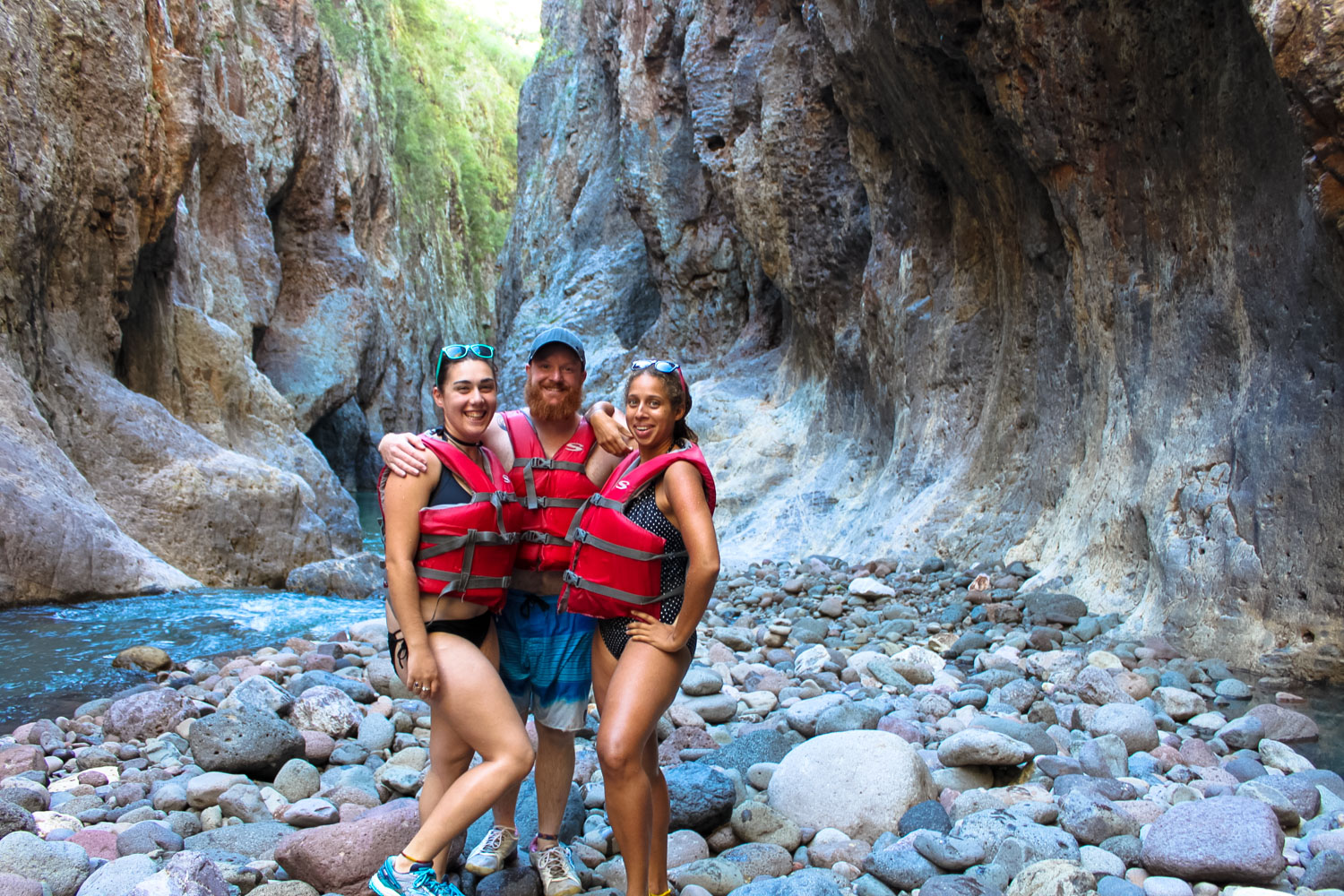
Hiking in Somoto Canyon, Nicaragua
Top Tip: Often it’s cheaper to fly into San Jose, Costa Rica and catch a bus or shuttle across the border. This method is popular enough that there are several private companies set up just to transport traveler between the two countries
Thats it for this week! Make sure to follow me on Facebook and Twitter where I share my favourites more regularly and for a monthly roundup, including exclusive content just for my newsletter subscribers, you can sign up here.
Enjoy the rest of the week everyone and please share with me in the comments anything that you’ve uncovered from the internet. I need some inspiration too!

Laguna De Apoyo - The Resort For Budget Travelers
Laguna de Apoyo is a crater lake said to be the result of Volcano Apoyo imploding on itself over 20,000 years ago. It is 48 square kilometres and the deepest point has been measured at 200 metres. It gets deep very quickly but is naturally warm and filled with volcano mineraly goodness. Like many beaches in Central America, the lake has a black sand beach.
While in Nicaragua I was desperate for a break from traveling for a few days. Long term traveling can take its toll if you try to pack too much in and at that stage I was feeling like I needed a holiday. I was indulging in some touristy pleasures in Granada when I learnt about a cool hostel that was supposedly like a resort for budget travelers at a small lake nearby. The dorms also had the best view of any dorm around the world! I booked myself onto the next shuttle.
You can go for the just the day or stay overnight. Once you arrive, there will be a staff member with a clip board to check you in. My group was separated into day trippers and over nighters and were led to the check in area. The hostel is very well run and I was checked in and shown to my bed within half an hour which is pretty great considering there was a lot of people waiting to check in.
I also noticed some travellers who had stayed the night and were hoping to book for longer! I did the same as soon as I saw the view and knew this was where I needed to be.
You’re given a token with an animal on it and this is what you use when ordering anything so they know what tab to put it on. The hostel is completely cash free until you check out! Which could be a good thing or a bad thing depending on how many $2 cocktails you clock up.

Rooms
Once I was taken down to the dorm I understood why it was so popular. I had heard that the view from the dorm was better than any other room and it was actually quite stunning. The dorm consisted of about 10 bunk beds and where the fourth wall should have been, there is just a large roller cage. This is great for keeping the room cool and also afforded spectacular views out to the lake. Dorms are just $10 a night!
There are also private rooms that are still quite affordable if you’re not into dorm life and everyone has access to all the resort facilities. A single room with shared bath is only $15 and you can get a double room with private bathroom for $32 a night.
If you’re traveling with a group they even have quadruple rooms! Check out their rates page for more information.
Day trips
The resort offers a day trip option which is great if you don’t have a lot of time but still want to experience lake life in Nicaragua. Day trippers can access all the facilities from 9 am to 5 pm at the cost of $7 per person. They also get free tea and coffee all day as well as access to restrooms and change rooms.
Eating and drinking
There are two spots where you can order and eat, upstairs near the check-in area has a great view of the lake and is more chilled out. A good spot for reading a book or getting lost in the view. The second and main area for eating is located right on the lake front. This is a more social spot where you can order your $2 mojito and take it right into the lake with you. No one’s judging here!

There’s a wood fire pizza oven and they do pizza nights a couple times a week. The pizza is actual some of the best I had while in Nicaragua so definitely give it a try while you’re visiting.
The menu is available to view online so check out all the awesome options. Meals range from typical Nicaraguan fare to more western treats, like my favourite the Blue Cheese and Walnut Linguine. Drool!
If you have any special dietary requirements you can confirm them with the staff before you arrive. Vegetarians and celiacs should be pretty comfortable here as I stayed 5 nights and didn’t feel like I was lacking variety.
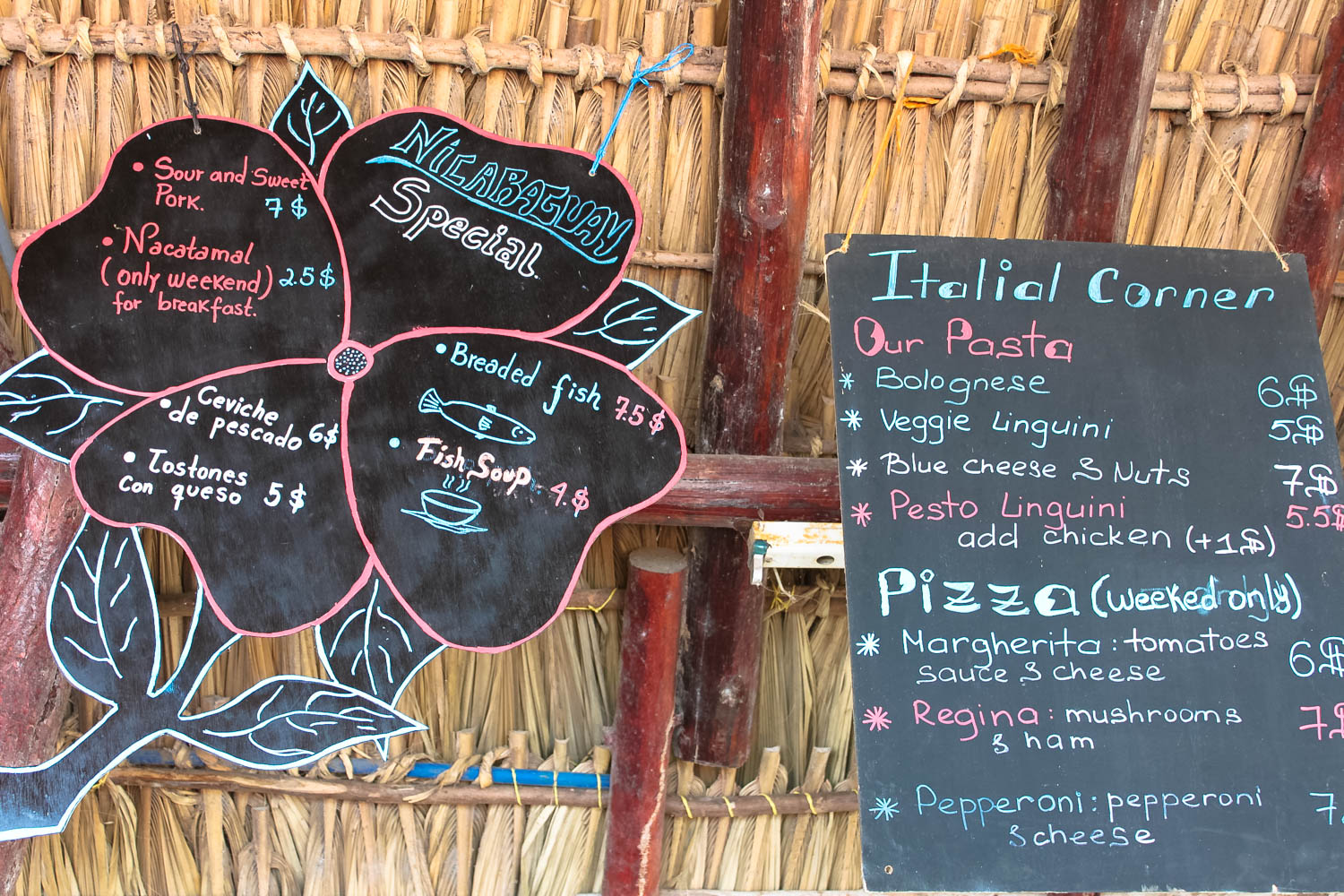

Laguna de Apoyo
Apoyo Lake is a crater lake said to be the result of Volcano Apoyo imploding on itself over 20,000 years ago. It is 48 square kilometres and the deepest point has been measured at 200 metres. If you imagine the big cone that would have been left behind by the volcano you can get a good idea of the shape of the lake.
It gets deep very quickly but is naturally warm and filled with volcano mineraly goodness. Like many beaches in Central America, the lake has a black sand beach. This takes a little getting used to if you've never experienced it before.

Facilities
One of the best parts of Hostel Paradiso is their expansive grounds. It’s basically set into a slope (due to crater like shape described above) so there are lots of levels and lots of stairs. It’s worth taking 15 minutes to just explore the area to see what’s available. I mentioned to some friends that I was going to read my book on a hammock and they didn’t even know there was a hammock area!
There’s loads of water sports and other games available to occupy your time if you ever get bored of just lounging. These include: kayaks, stand up paddleboards, beach volleyball, beach badminton, pool, ping-pong, or traditional French boules.
There’s a chill out cabana with hammocks, couches and bean bags with a tv and dvd player. Great for rainy days!


There is a floating dock on the lake that you can swim to or grab one of the tires and float there in your own time. My top tip is grab a book or your kindle, wrap it in plastic bad or even better a zip lock bag and take it out to the deck. There is really nothing better than floating along on the dock with a good book.
I also enjoyed some night swims out to the floating dock with my new friends. Hanging out, sharing stories and laughing by moonlight in Apoyo is one of my most treasured travel memories.
There is wifi available but mostly on the very top level and sometimes in the reception area. Be prepared to be a bit off the grid, though, as the signal can be weak and cut out a couple of times while I was there. They’ve advertised recently that they have since doubled their bandwidth so you may be surprised!
The staff are super helpful and friendly. If you have any issues they were always happy to help. Especially the restaurant staff. They created a fun environment for all the guests.
I had a couple of friends who did the Spanish classes on offer and they really enjoyed it. The classes are in a cute little garden area on the property with lovely lake views so you still feel like you’re in paradise while doing your lessons
You can do single lessons or Paradiso offers a package deal if you want to stay for a few days and do lessons as well.


The lake and area
The best part of this hostel is the lake. It would be very easy to spend days lounging in a beach chair or floating along in an inner tube. The big surprise for me was that this is THE warmest lakes I have ever been in.
If you want to get out and explore the area there’s some great birdwatching and also monkey spotting. There are over 200 bird species that you can try to spot in Apoyo including 65 migratory species. Feel like getting out of bed early? Head out of the resort and to the right and you can certainly hear, if not see, the local howler monkeys.
There are also white-headed capuchins in the area, although, you would be very lucky to see those! On the Paradiso property I saw my first anteater in the wild so you should certainly keep your eyes open for all the wildlife that’s around.
There are several hikes to small towns in the area including Santa Catarina which has a flower and handicraft market and a stunning lookout where you can see the lake and Mombacho volcano.

Getting there and away
Paradiso has a shuttle that picks up traveler from different spots around Granada. It is $6 for a round trip and leaves around 10 am and 3pm every day, returning by 4 pm.
You can also catch a local bus heading to Masaya and ask to be let off at the entrance to Laguna de Apoyo. These buses leave from Granada every 10 minutes. The bus drops you at the entrance of the small town so you can either catch a taxi (100 cordobas aprox.) or walk for about an hour. Hitchhiking is also an option and you’ll see the locals doing it.
If there’s a couple of you, consider getting a taxi. You should be able to negotiate a fare for about $15 one way.

The important stuff
Paradiso Hostel
Email: paradisolaguna@hotmail.com
Phone: Mov: (505) 81874542 Claro: (505) 25203571
Skype: hostel.paradiso
Apoyo Tips
Make sure to book in advance
Bring enough cash with you for your whole stay
Try the tipico for breakfast - so good!
Meals range from $3.50 to $10
There are smoothies on the menu and you can add a shot of rum for $1 >.<
If you’re traveling during the off season (September and October) they have discounted rates for longer stays
Try to get up for at least one sunrise, they're amazing over the lake
Have you ever found a budget resort like this in the world? I'd love to visit more! Let me know in the comments below.

You Might Also Like

That Time When I Stayed In A Party Hostel And Went To Sunday Funday
I like to have a good time but I also love to be in bed by 10pm. Usually. I had been hearing about Sunday Funday since Panama City and knew it was a pretty big deal. While staying at a backpacker resort in Laguna de Apoyo, Nicaragua, I met a lovely lady who invited me to her 30th birthday party that was happening in San Juan Del Sur. It was to be on a Friday night, followed by a weekend of festivities with the big event on Sunday at Sunday Funday.
I like to have a good time but I also love to be in bed by 10pm. Usually.
I had been hearing about Sunday Funday since Panama City and knew it was a pretty big deal. While staying at a backpacker resort in Laguna de Apoyo, Nicaragua, I met a lovely lady, Claire, who invited me to her 30th birthday party that was happening in San Juan Del Sur. It was to be on a Friday night, followed by a weekend of festivities with the big event on Sunday at Sunday Funday.
I happened to meet up with a couple that I had first met also at Laguna De Apoyo, Nate and Alex, and we started travelling around Nicaragua together The week leading up to the birthday weekend we ended up in Isla Ometepe, a volcanic island in the middle of a large lake. We opted to stay in an eco-style hostel outside of town and after a few days of being at one with ourselves we decided to give Sunday Funday a try. How bad it could it possibly be?
My Alaskan besties, Nate and Alex
Traveling from Ometepe to San Juan Del Sur involves getting the ferry across to Rivas, catching a taxi to the main bus station and then a chicken bus to San Juan Del Sur. Once we got to Rivas we had already had a long morning and were more susceptible to the suggestions of the taxi driver to pay him to take us all the way to our hostel in San Juan. On arrival to the centre of town though, he said he wasn’t willing to take us all the way up to our hostel and would only drop us in town, unless we paid him more money of course. We thought it was just another ploy from an entrepreneurial cabbie but it turns out that our chosen hostel is actually located at the top of a pretty steep hill and the road up was all gravel.
I remembered that the hostel had a free shuttle from town so we wandered around trying to figure out where to meet it. Luckily we spotted some people we had met in Apoyo and then Ometepe who were also going to the party. This happens so much when you’re backpacking and is even more prominent in Central America as it’s such a small region and everyone is sharing the best places to go and the best hostels to stay in.
Pre drinks!
They were having some drinks in a little bar and were going to catch the next shuttle as well so we settled in for our first drinking session in San Juan Del Sur! Turns out the shuttle is a pickup truck so we climbed into the back and headed up the steep windy road to our new home for the weekend. The Sensible Susan in me thought this was not really the safest way to transport a bunch of tipsy backpackers but these are the sorts of situations you get to experience when you’re backpacking and sometimes I have to remind myself to just embrace the good times and appreciate it for what it is. Looking back, some of my best experiences on this trip have been in the back of a pickup truck, watching the world go past and interacting with locals on their way to and from work.
The birthday party
Arriving at the hostel was a bit of a shock. We were not in Nicargaua anymore, Toto. The party had well and truly begun and there was a lot of people already dressed in flouro and leopard leotards, including several brave men. Oh, I forgot to mention that this was an 80’s workout themed party! Very important information so you can understand my outfit below.

Our 80's workout outfits
We weren’t prepared enough to have fun 80’s outfits with us but Clare and her friends had thought ahead and raided a few op shops before getting to San Juan del Sur. Yes, there are op shops in Central America. After checking in to the hostel and receiving our complimentary welcome drink we rummaged through a pile of questionable outfits and eventually picked out some of the semi-ok options that were left.
The three of us quickly settled in to the dorm room and our beds, got dressed and then head downstairs to join in the fun. As Claire has spent the previous two weekends at the hostel just getting ready for her birthday party by way of drinking as much as possible, she was pretty much Naked Tiger family and the guys at Naked Tiger had pulled out all the stops for her. There was only 80’s music, lots of little surprises throughout the night and a huge birthday cake that they helped Clare’s best friend organise.
It was a super huge night and I quickly became comfortable with my residence in a party hostel. These people were just like me! Only drunker. And even though I was drinking more than I usually would, I felt very safe and in control at Naked Tiger. The staff were pretty much functional alcoholics, required as they were, to drink from the first thing in the morning and make sure the party was always on at the hostel.
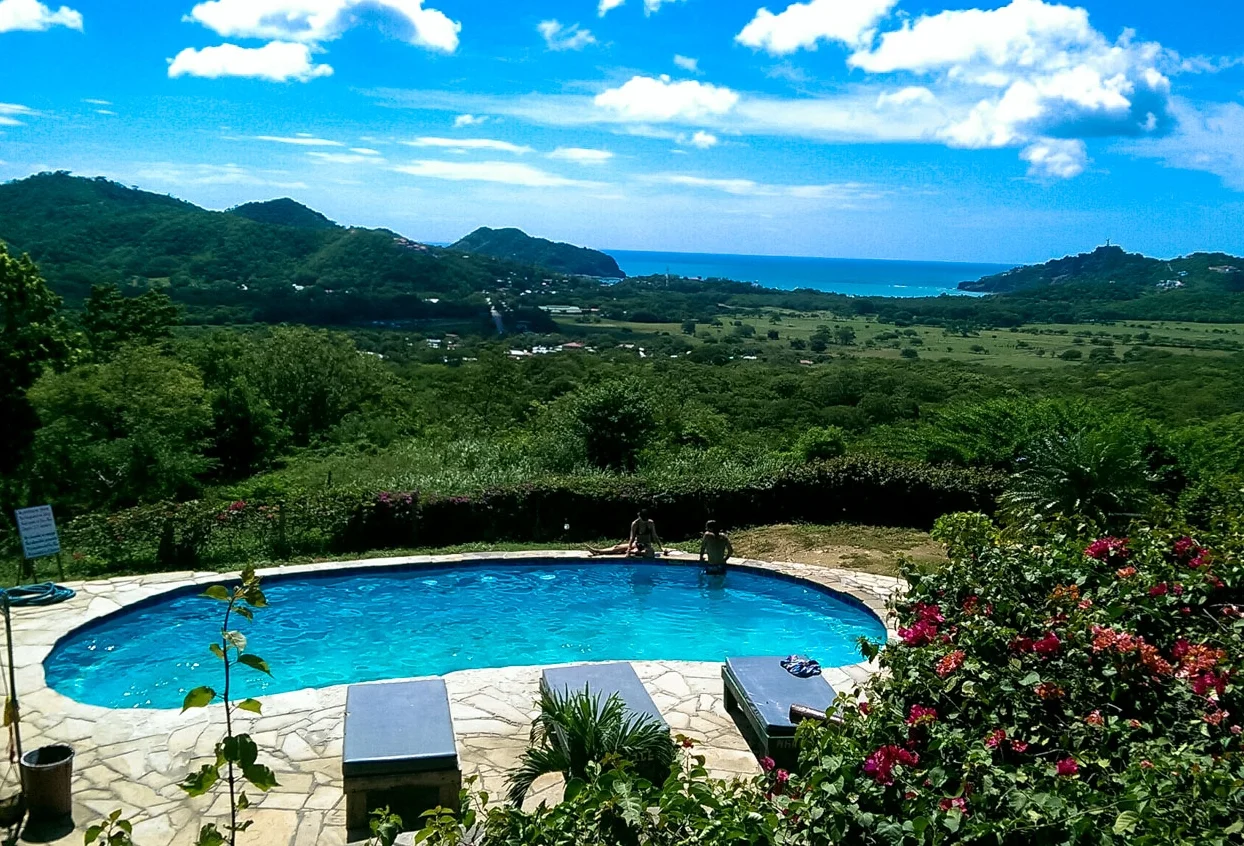
The Naked Tiger Hostel
The hostel itself is amazing. It’s basically a huge mansion located at the top of a hill with amazing views and a huge pool area. It’s seriously one of the nicest places I’ve ever stayed in and it only cost $12.50 a night. The hostel has in-house food service so you can order breakfast, lunch and dinner there along with the always open bar. There are several places to hang out, including a large balcony upstairs, the pool deck and indoor seating areas.
As I was settling into bed on my first night in the partiest of all party hostel, I also got to experience what seemed to be a regular event at the hostel, a guest throwing up in bed. Not to get too graphic, I will say that this person was on the top bunk and luckily the person on the bottom bunk hadn’t made it to bed yet. Very lucky. I got one of the staff from downstairs who came up, grabbed the mattress and just put it outside on the deck. He said the cleaners would take care of it in the morning and that was it. Another day, another vomit covered mattress. Poor cleaners! The spewer was nice enough to tip the cleaners in the morning but I’m pretty sure he wasn’t their favourite person for the rest of the weekend.
Getting Iced
One activity that was rampant throughout the whole weekend was getting “Iced”. This basically involves one person, let’s call them the “Icer”, hiding a bottle of Smirnoff Ice in a spot that the Icee would stumble upon it. This could be under your pillow, in your backpack or in the shower. Once you’ve found the Smirnoff Ice, it’s up to the Icee to drink the whole drink in one go. Besides the fact that Smirnoff Ice’s are disgustingly sweet, your bottle may also have warmed up significantly by the time you discover it. Now imagine being hungover and discovering one of these bottles at nine in the morning after a big night of drinking. Truly awful.
Me after getting Smirnoff iced for the second time in one morning!
Detoxing on Saturday and exploring the town
The next day after a late breakfast in the hostel, Nate, Alex and I decided to head into town to check it out and get away from the alcoholic influences of the staff and threat of getting Iced. San Juan del Sur is a pretty small town and it’s as touristy as I’ve seen in Central America. There are burger joints galore and loads of expat-run clothing stores with short shorts, tiny two-pieces and a backpacker favourite – flip flops, or thongs as we call them in Australia.
That’s not a bad thing really, as I don’t think anyone is coming to San Juan for cultural experiences, unless that cultural experience is the ancient rite of getting smashed, taking loads of drugs and then stuffing your face with chilli cheese fries the next day. You know, like the ancient Mayans did.
San Juan is a great place to relax into the comforts that a thriving expat community bring to town. I even found an amazing gelato place that needs to be experienced. It's called Superfrutto and is next to Hotel Estrella.
The beaches aren’t great in town, they're fine but if you head a little bit outside of town you’ll find pretty, deserted beaches to relax in and some beaches with great conditions for surfing. Besides the beach, drinking and eating, there isn’t a lot more in terms of entertainment so make sure you bring a good book if you’re going to be hanging out for a while. Naked Tiger had a great movie lounge set up, with a projector and loads of DVDs, along with a variety of games, a book exchange and of course the beautiful pool area to just lay around in.
Getting ready for Sunday Funday
On the morning of Sunday Funday, the official reps of the event show up bearing wristbands, official shirts and glitter! Once you’ve paid for the event, you can choose your favourite shirt design and then head to the decoration station. This was one of my favourite parts of the day! What begins as a calculated effort to carefully design your Sunday Funday body art masterpiece ends up with everyone drawing crazy designs on everyone else and glitter going everywhere. You will definitely find specks of glitter weeks down the track, perhaps as you’re traveling in a small river boat on your way to a remote jungle village, and will think back fondly on a crazy weekend.
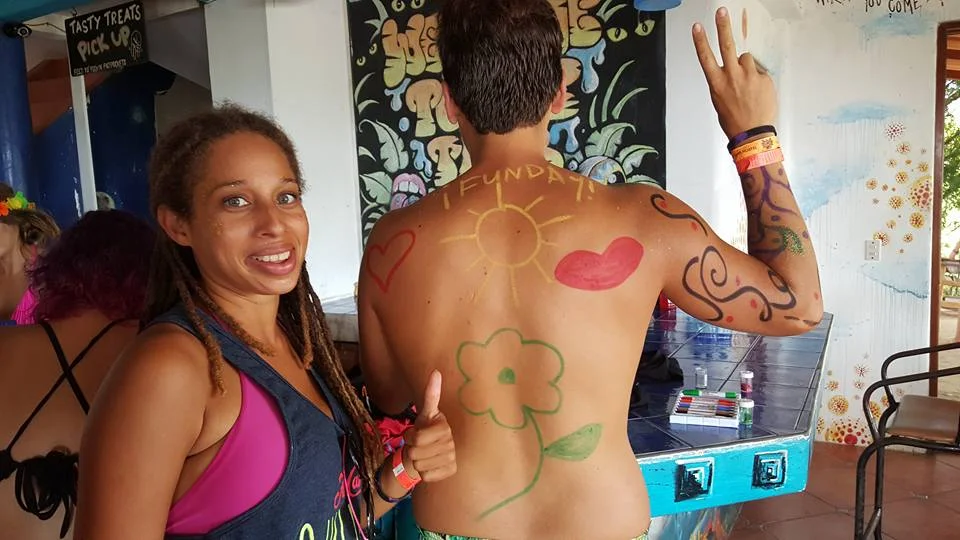
An artist I am not...
Heading to the first party
The first pool party is located in small resort closer to town. There will be pickup transportation from the other two hostels to get there at different intervals. Once there you will be greeted by a row of bouncers who will check your bags to make sure you aren’t trying to bring anything too crazy into the party and mostly to make sure you’re not smuggling in drinks. Be prepared for your first shot as you walk in!
This pool is located right on the beach so there’s a great view of the surf. It was at this pool party where one unfortunate guy dived into the pool and hit his head. You know how something happens at a party and the people who most want to help are usually the drunkest and least able to actually help? Well imagine dozens of people who see this incident and start to fuss over this poor guy. Utter chaos! Luckily the organisers are obviously used to this situation and were quick to respond. Getting the drunkeys out of the way and tending to the poor guy who kept insisting he was fine and ready to party on while having blood spurting into his eyes from his head wound and streaming down his face.
This pool party was the best for dancing. The DJ was awesome and there was a dedicated dance floor right next to the pool. I felt like I had already had a great time several hours in but there was still a lot of fun to be had and two more pool parties yet to go!

Second hostel
The second stop in the travelling pool party was Naked Tiger. It was a good opportunity for some chill out time in the dorms, as only hostel guests were allowed in the upstairs section and you could consider indulging in some of the free alcohol that you might have hidden up there to avoid spending too much on the expensive Sunday Funday drinks. They also plan this as the second hostel so you can view the amazing sunset from the highest point in town. This was my favourite spot and definitely had the best atmosphere as I felt by then most people had reached that sweet spot of buzzed but not too drunk.
By this stage everyone had caught up and there was a lot of people to talk to. Even a socially awkward anti-socialite person like me managed to find some very fun and interesting people to talk to. I learnt that a lot of people travel to San Juan del Sur and Nicaragua just for Sunday Funday. There were a lot of people outside of the traditional hostel crowd you would usually get to meet. When going through my phone the next day I had a lot of Facebook friends that I couldn’t remember meeting and Whatsapp numbers that were just entered as: “N” or “blonde guy”.
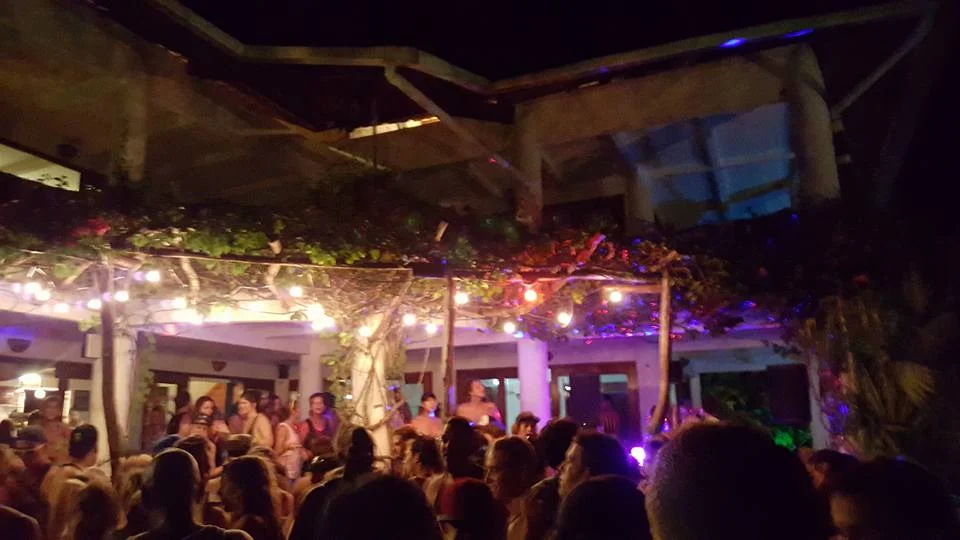
Sunday Funday Shenanigans
Third stop
At this point it was getting quite late so some of us were considering just staying at Naked Tiger instead of heading to the last hostel, which is back in the centre of town. We eventually decided that we had to see it through and ended up at the last point – Pacha Mama Hostel. This hostel had more of a plunge pool rather than the bigger pools we had during the day but at this stage no one was really into swimming. There was more dancing and a lot more debauchery as the stayers were in the mood to party all night long.
After a couple of hours I decided to head back to the hostel with the next pick-up as they were less regular the later it got. On the way I met some fun people who were staying at the hostel behind us, Casa De Olas. This was also supposed to be a really cool place to stay and they have some little rooms located at the back of the property that’s worth checking out. I ended up hanging out with some guys at their little cabin and chatting until the early morning while swinging in thier hammock. Oh, how I love hammocks.
When I made it back to the Naked Tiger there were still a lot of people up and hanging out but the party was definitely more toned down. I got to bed by about 3 am and considered myself lucky. I met some people the next morning who had been out the whole night and even met the poor guy who had hit his head at the first party. He was not a happy chappy and didn’t enjoy everyone asking him about his accident. Poor guy. There were also a few people passed out in some unfortunate places and unfortunate positions.
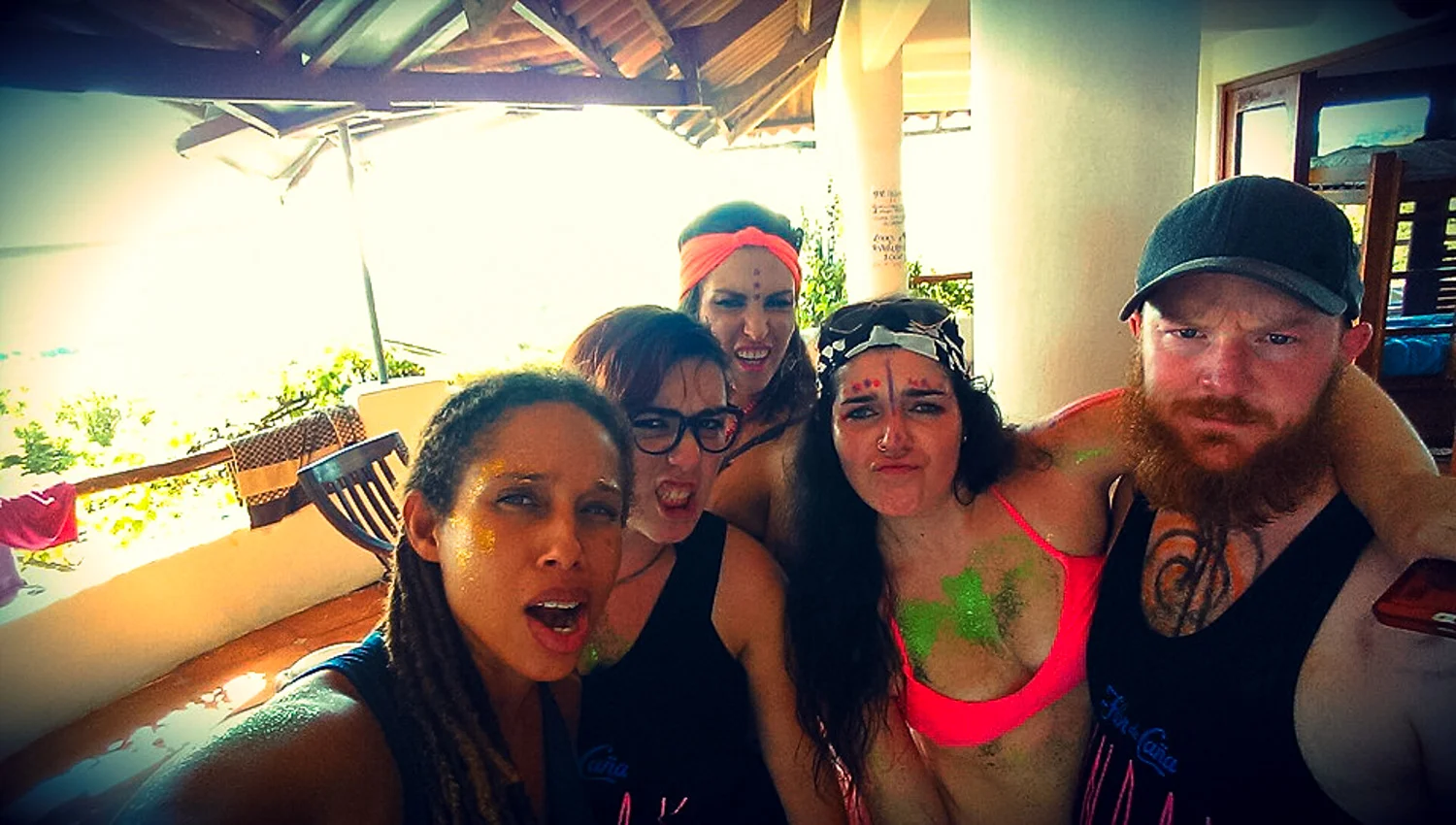
So much glitter!
The morning after
I was ready to just escape and head back to Granada the next day but for those who are keen to stay and sleep it off, Naked Tiger offers a special deal for your fourth night free. Just consider how much you will actually save as you will have to have all your meals at the hostel unless you take the free shuttle into town of course. This might not even be an option though for anyone nursing a hangover.
I said a quick goodbye to my travel friends who had been with me for three weeks by that stage and Alex gave me a present and a big hug which almost made me cry. I jumped into the back of the shuttle, backpack and all, and tried to forget about some of the stupid things I had said and done that weekend. As I drove down that steep rough gravel driveway for the last time I thought about how party hostels aren’t all bad and how alcohol can actual help stimulate conversations for an introverted person like me.
That weekend is still one of my most treasured travel memories. Naked Tiger is actually a very lush hostel and if it wasn’t for the fear of constantly getting Iced I would have enjoyed a longer stay there.
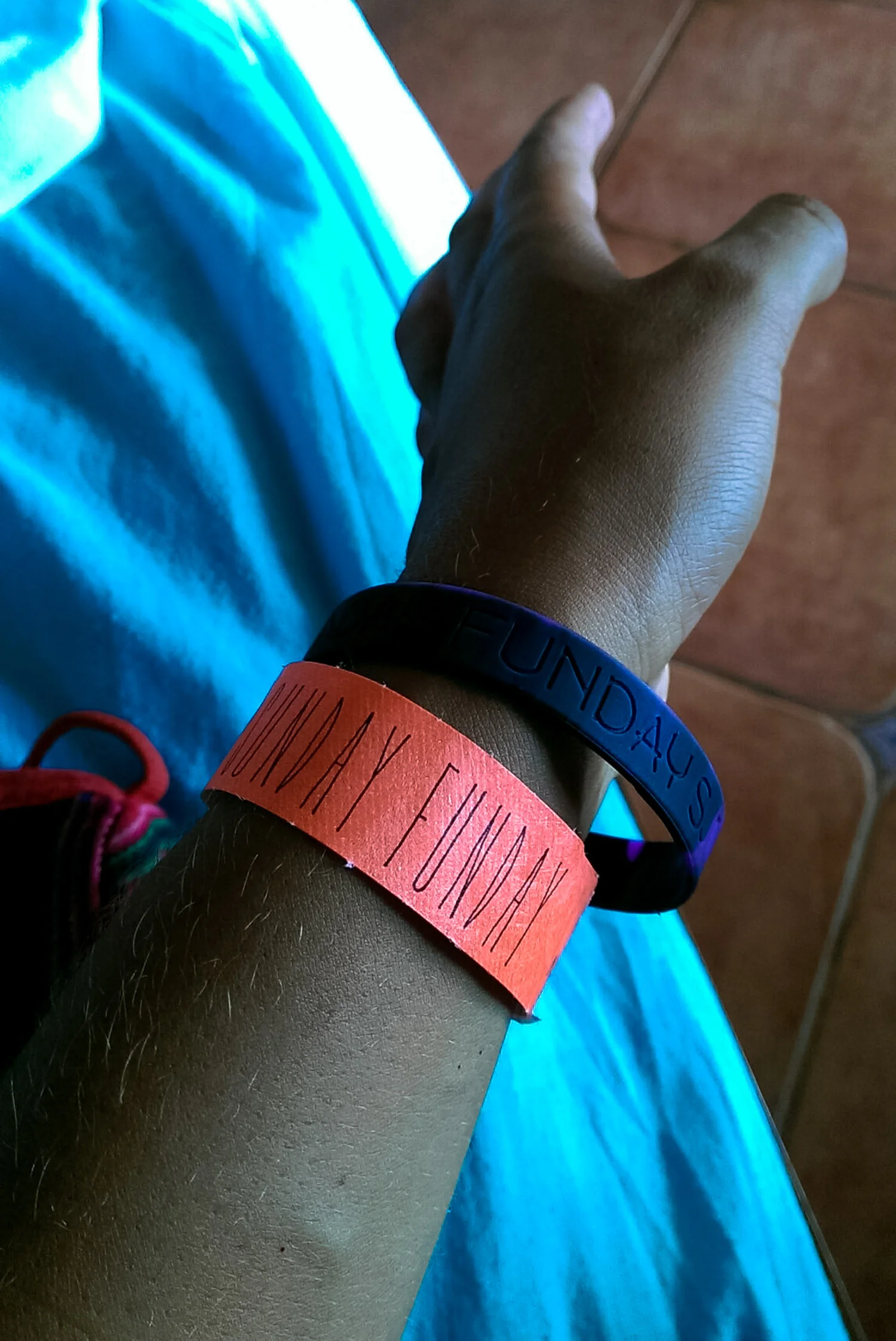
Should you go to Sunday Funday?
I do not go looking for a party. Usually I like nice quiet chats in a cool bar somewhere with a small group of people. Sunday Funday was never on my "must do list" for Central America and it certainly isn't for everyone. When I ask myself if I would do it again, though, my answer is always yes! I had a great time at Naked Tiger and Sunday Funday and even though it can be viewed as hedonistic and a huge spend in an otherwise cheap country, it's also one of the craziest times I've ever had.
I danced, I chatted, I drank, I did other things that I won't mention and I had an amazing day. I would recommend you at least give it a try and if you hate it, then you've only lost $15. Chances are you'll love the experience and look back on it as one of the craziest pool parties you've ever been to.
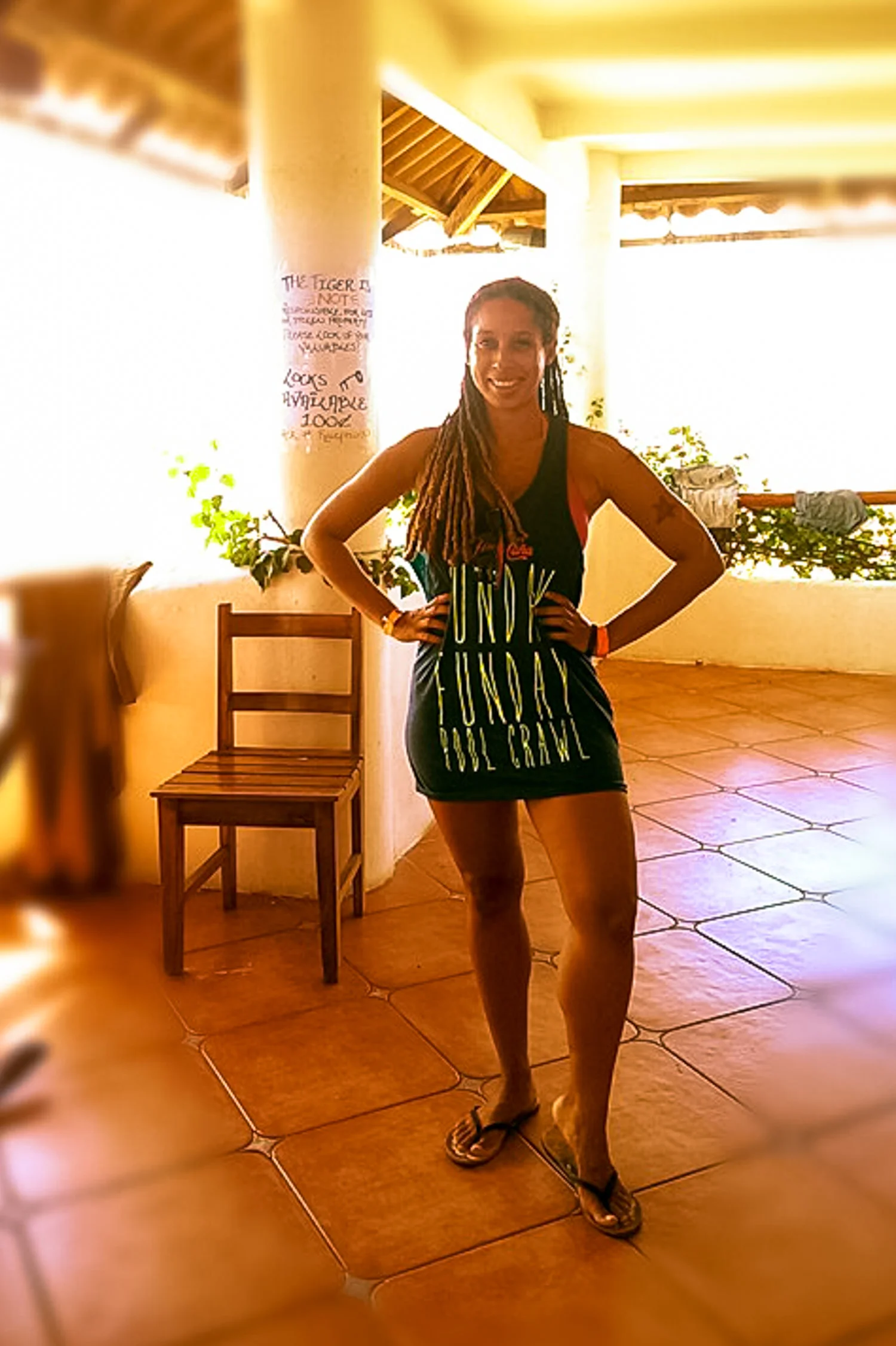
Sunday Funday Tips
- Sunday Funday is on every Sunday!
- If you stay at the Naked Tiger or Pacha Mama hostels you get half price entry
- The event staff come to the Naked Tiger hostel the morning of the event at about 9:30 to organise payment and hand out wrist bands and shirts which saves you from having to go into town
- The event officially starts at 2 pm
- No need to bring a bag and definitely best to leave any valuables at your hostel. Just bring as much cash as you think you’ll need for drinks
- Definitely don’t bring your phone, unless it’s waterproof. There were a few people who were thrown into the pool!
- There's a BBQ at the second stop, Naked Tiger, with veggie options. Don't forget to eat!
- Although it’s a pool party, I wouldn’t actually recommend swimming in any of the pools. They get pretty gross...
- Have fun and don't think about it too much. It's a party!
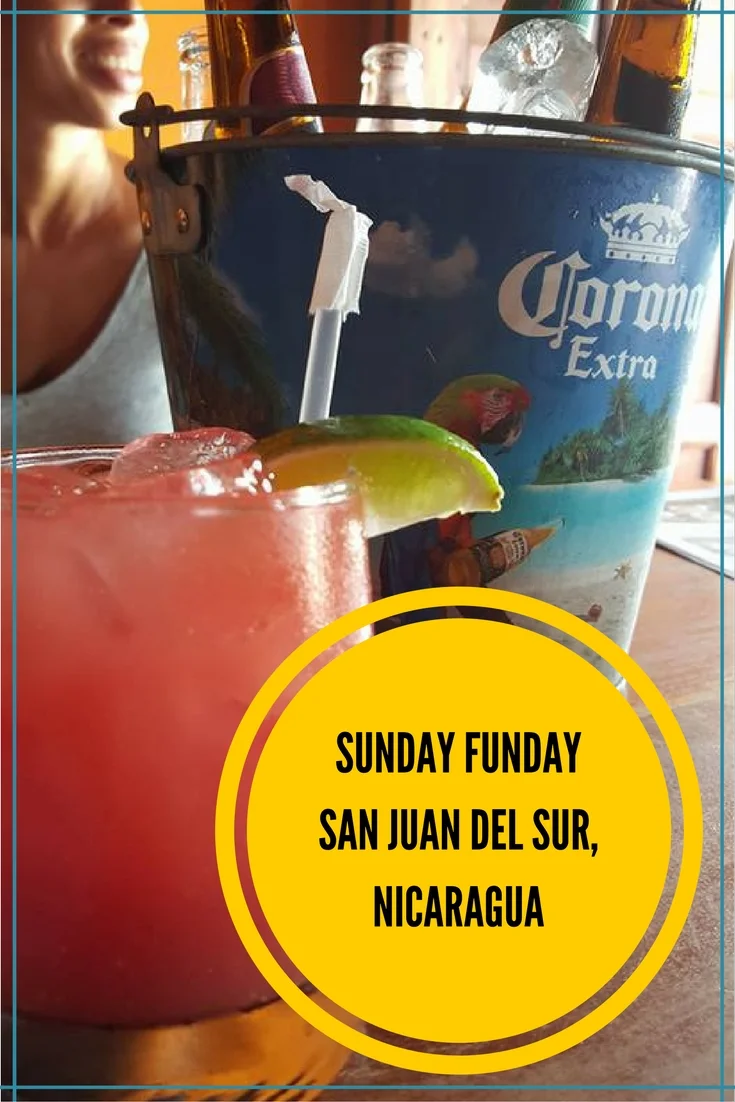
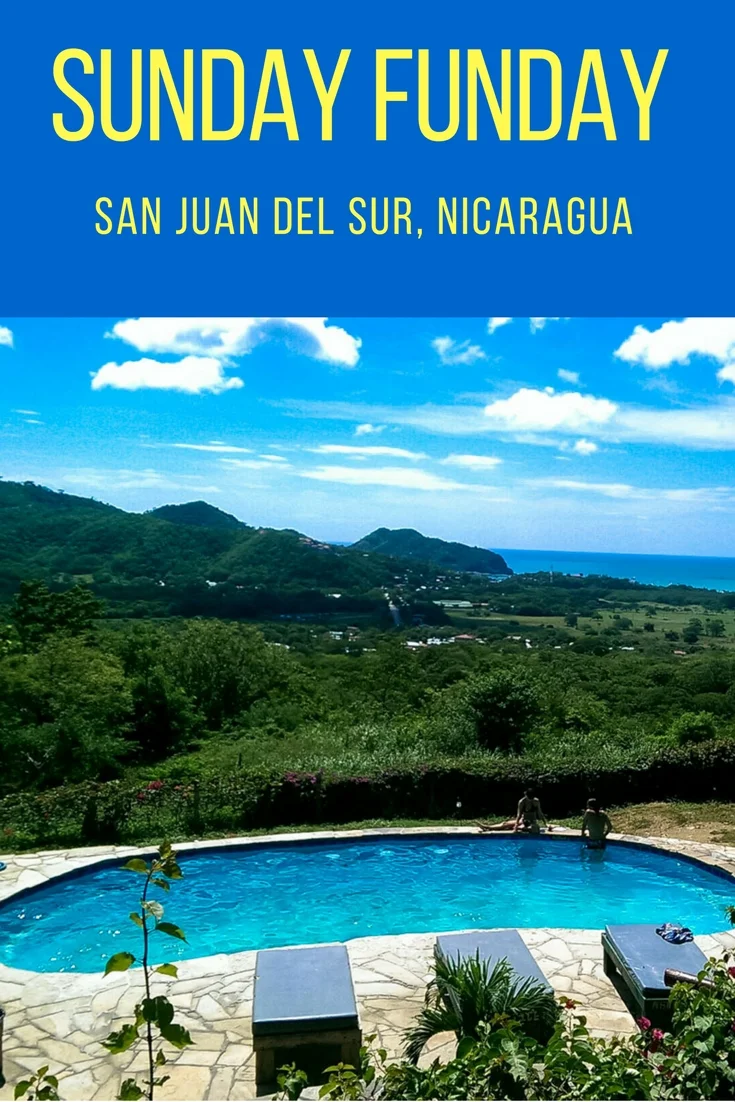
You Might Also Like

Top Things To Do In Oaxaca City, Mexico
Oaxaca City has the perfect combination of Mexican culture and modern amenities. Check out this list for some inspiration when spending some time in Oaxaca including the "petrified waterfalls", Zapotec ruins and worm salt!
Oaxaca (pronounced wah - ha - ka) is located about 500 km from Mexico City and 250 km from the beaches on the Oaxaca State coastline, like Puerto Escondido and Mazunte. I recently spent two months there taking a break from travelling and volunteering with a local organisation.
I chose Oaxaca City, the capital of the state and largest of Oaxaca cities, as it is the perfect combination of Mexican culture and modern amenities. Oaxaca is known as the culinary capital of Mexico and also the home of mezcal. During my time there I met a lot of lovely people who made my experience all the richer and I found a ton of fun things to do in Oaxaca.
Check out this list for some inspiration when spending some time in Oaxaca and while you’re there don’t forget to take some time to soak in the rich history and culture all around you. Sometimes the best activity is just exploring a new city by foot and Oaxaca is perfect for that.
Take the opportunity to chat to the people you see around you because I always found most people loved to share a lazy afternoon sharing time with a new friend. Oaxaca City is definitely worth a visit and is one of my favourite places to visit in Oaxaca State.
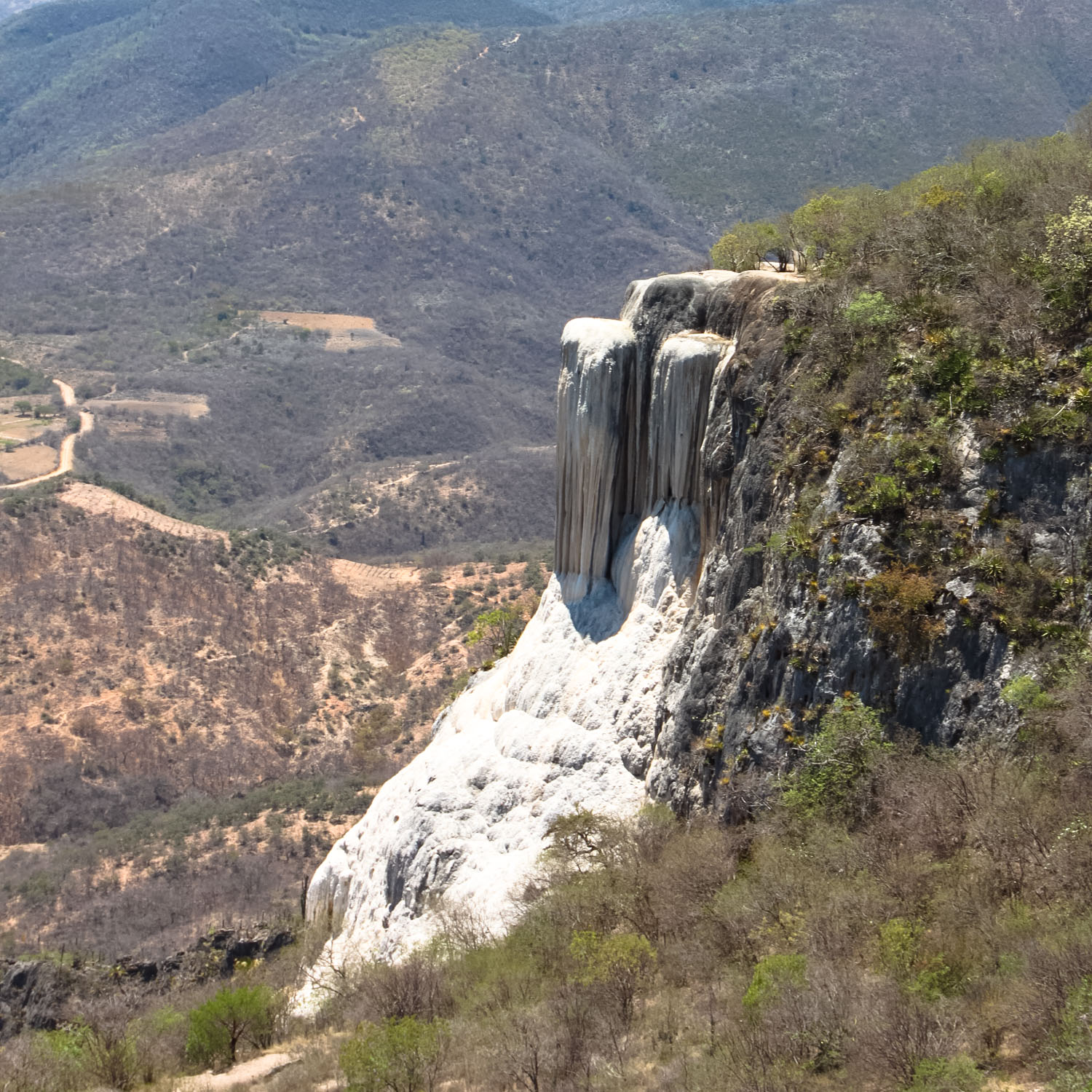
The petrified waterfalls at Hierve de Agua
1) Hierve el Agua
This is a must visit and you will see this site on most tours based in Oaxaca. Ask anyone in town what to do in Oaxaca and Hierve el Agua will be the first thing they list. Hierve el Agua is often referred to as a petrified waterfall as the site consists of two waterfall-like formations that have been formed over many years with a process similar to that of stalactites in caves. There are also several “mineral-rich” pools that you can bathe in, one that goes all the way to the edge of the cliff forming a natural infinity pool.
If going on your own I would suggest heading there as early as possible so that you can take advantage of the various hiking trails and also don’t forget to head to the further waterfall so you can view the big one from afar! It’s far too warm to do this trip in the middle of the day. Also, don’t forget a hat and sunscreen as there is not a lot of shade.
There are several small food and goods stalls located at he entrance to the site including loads of fresh, chopped fruit, tamales and cocktails, of course. I had one of the best tamales of my trip at the stall nearest the entrance of the site so look out for that one if you’re hungry!
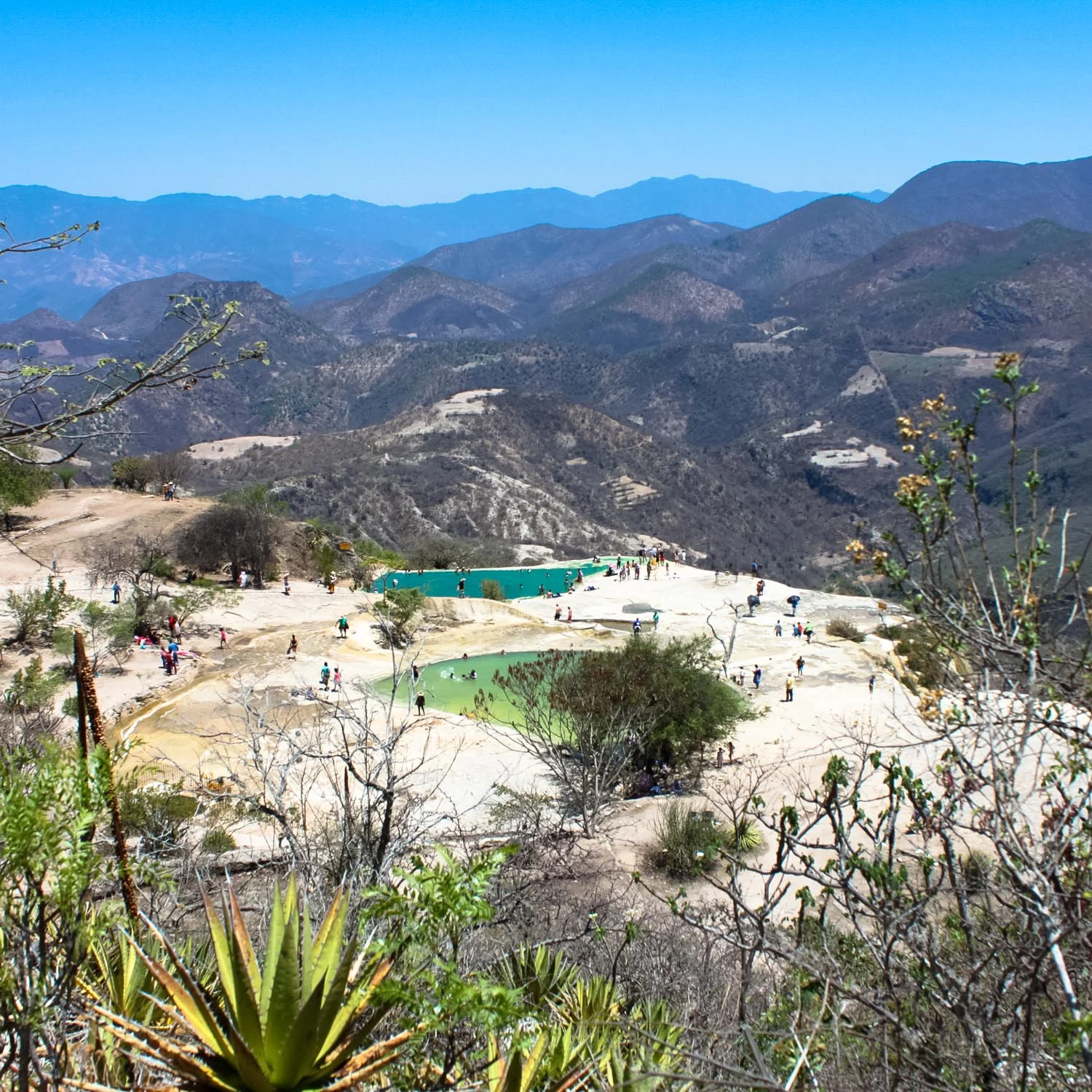
The natural mineral pools at Hierve el Agua
2) Oaxaca Stamp Museum (Museo de Filatelia de Oaxaca)
http://www.mufi.org.mx/en/home1.php
A stamp museum might sound like one of the most boring place in the world (unless you’re really into stamps!) but this museum is actually a treasure trove of historical information on Oaxaca State and Mexico in general. There’s also a beautiful courtyard where you can relax and ignore the bustle of the city for an hour or two.
If you’re a big Frida Kahlo fan check out the section with many of her own correspondences. If you’re travelling with kids, there are also some cool interactive exhibits. There’s also no entry fee. Bonus! Okay, I have to admit I do sound a bit excited. Maybe I should start stamp collecting?

Checking out the Frida section!

Our little joke in the guestbook for any Anchorman fans out there ;)
3) Pochote Market
Oaxaca has it fair share of grand markets. I have fond memories of visiting my local market to pick up my groceries for the day and sometimes a fresh fruit juice to treat myself. The city centre also has a huge market that I loved to weave through to get my fix of nieve - the Oaxacan version of ice cream, and some of the famous Oaxaca cheese.
If you want a slice of expat life in Oaxaca though, you should check out the Pochote Market. Held every Friday and Saturday in the garden and courtyard of the Iglesia Xochimilco. The Pochote Market has a wide range of produce available. You can find some traditional Oaxacan and Mexican cuisine with an international twist, as well as organic produce including eggs, coffee, and fresh fruit and vegetables.
Best of all, if you want to try a traditional Mexican dish but are a vegan or vegetarian then this is a great place to sample meat heavy foods replaced with tofu or other plant based foods. Tofu, Mexico style ;)
Sometimes there is live music which just adds to the lovely feeling of snacking under the trees within the shade of the local church with the sounds of church bells ringing in the background. An excellent way to start your morning!
4) Arbol del Tule
Ever seen the tallest tree in the world? What about the oldest tree? You might think that the widest tree in the world wouldn’t be as impressive and that’s what I thought before visiting. How wide could it be??
Well Arbol del Tule is actually pretty wide, with a circumference of 42 metres, it is certainly wide enough to be impressive anyway and it is a beautiful tree. It's so wide I couldn't actually fit it in a photo! Scientist believe the tree to be between 1,433 and 1,600 years old. You don’t have to be a nature buff to really appreciate the grandeur of the tree! I would suggest visiting even for a short while and exploring the cute little town that it’s located in.
There’s also a well maintained topiary garden where I had fun trying to guess exactly what the different animals were. They're not exactly the most accurate representations!

An emu?

5) Check out the artist workshops and graffiti around town
Oaxaca is filled with amazing art both inside and outside. I would strongly recommend spending a few hours walking around the city, stopping into different workshops and galleries and keeping an eye out for any graffiti.
I suggest starting at Porfrio Diaz and Independencia and heading north, also a good route if you’re heading to Pochote Markets.

6) Monte Alban
Breathtaking Monte Alban will give you panoramic views of the valley and over a couple of hours you can experience its vast complex of pyramids, tombs, temples and ancient plazas. It is 400 m above the floor of Oaxaca valley so you can see amazing views from all around.
One of the more fascinating aspects of Monte Alban is the significant number of carved stone monuments. Called "Los Danzantes" (literally The Dancers), they depict naked men in contorted poses. They represent tortured and sacrificed war prisoners. Over 300 have been found to date and you can see them both on site and in the museum.

We found a small patch of shade!


7) Interesting festivals in surrounding villages
While I was in Oaxaca I got invited to a lot of different festivals both in Oaxaca and in the nearby villages. I would suggest visiting one if you get a chance while you’re visiting. You will really get a taste for the huge cross section of cultures that exist just in this one part of Mexico.
Check out my article here on some of my favourite festival memories. I also had a pretty sobering experience during the Semana Santa activities and if you’re lucky enough to be in Mexico or Central America at this time you will really get to witness something special.
8) Visit a mezcaleria or a mezcal factory
I am not the biggest fan of mezcal. I tried and tried but could never make myself like it or even stomach it sometimes. I can drink tequila by the litre (not literally) but when it comes to mezcal, there’s something about its smokey undertones that make me gag.
Instead of your traditional lime and salt that you would have with tequila, Mezcal is served with orange slices and sal de gusano or worm salt. This is exactly what it sounds like, a mixture of sea salt, toasted and ground agave worms and a touch of chile. You can also find several varieties of mezcal including flavoured and aged.

What to do in Oaxaca State? Drink mezcal of course!
9) Laze about in the Zocalo
In most Mexican cities, the zocalo is the place to be at any time of the day. It’s basically the square or park that marks the centre of town. It’s a meeting place, where parades start and end, a place to protest and be heard and a place to just while away the day people watching.
In Oaxaca there always seems to be something on at the Zocalo. Whenever I had nothing on I would head down to the Zocalo to check out the action. A bonus for me was that some of the kids I worked with would hang out there when not in school or at the centre because their mum worked there so I would always have a playmate if I wanted too as well. It’s very interesting hanging out in the zocalo and seeing everything from a 10 year old’s perspective.
Resources
Que Pasa Oaxaca
There always seems to be something happening in Oaxaca so make sure you stay on top of all the events and activities by checking out the QuePasa Oaxaca website, the best of the Oaxaca blogs. You’ll find loads of information in English about the going ons of this very cultural city and its surrounds.
Oaxaqueños love to party and there seems to be a festival on every single day. I would often head out on a Saturday to go to the markets and would find myself surrounded by a parade or tents for a food festival.
Oaxaca Lending Library
In town for a little while? You should definitely check out the library. They have a huge selection of English language books, newspapers and magazines. You can hire and even some great deals if you want to buy a book. They also have a regular language exchange every Saturday where you can spend a couple of hours with a small group having conversations in Spanish and then English.
They are also a great place to visit if you just want some advice about the town. There’s a message board with a variety of different posts so it’s worth a stop by just to check out what’s happening in town. There are loads of little quiet nooks to sit in as well as free wifi and a rooftop seating area!
Top Tip: There are several tour companies that offer a variety of the above activities bundled into a one day excursion. Usually something like Arbol del Tulle, a mescal factory and Hierve el Agua. Take it from someone who did all these things individually and just go with the organised excursion.
You might not have as much time as you want at places like Hierve el Agua but the costs really aren’t much more than what you would pay yourself and you don’t have to wait in the hot sun for local pickup trucks to show up.

That's it for the best places to visit in Oaxaca. If you're planning a trip consider these Oaxaca hotels and if you're already there check out my love letter to Mazunte and consider including it into your itinerary. If you can't visit for a while at least now you know how Oaxaca is pronounced and how fun it is to say!
Where to stay in Oaxaca City
Quinta Real Oaxaca
My luxury pick for your stay in Oaxaca, Quinta Real, is located in a historic convent. It is in a great location, just one block from the Santo Domingo Cultural Centre and the walkway that houses most of the galleries, museums and handicraft stores. This full service hotel has everything you would expect in a four star hotel, like a gym, pool, and concierge with the unique colonial touches that are special to the region.
Read the latest reviews on Trip Advisor
Check out the best prices: Hotels.com | Expedia | Booking.com
Hotel La Casona De Tita
This small six-room hotel receives near perfect reviews on Trip Advisor and is widely reviewed as one of the best places to stay in Oaxaca. If you can grab a room here then don't hesitate! Each room is unique and all are exquisitely decorated with antique and contemporary furniture, and Oaxacan textiles.
Read the latest reviews on Trip Advisor
Check out the best prices: Booking.com
Casa Angel Youth Hostel
For the best budget option you should definitely check out Casa Angel. I practically lived here for a couple of weeks until I found a more permanent place to live and was sad to leave. The two best things about Casa Angel are their Deluxe Rooms and their cooked breakfasts. You can fill up on a huge breakfast in the morning while you chat to other travellers about your plans for the day and at night sleep in one of the most comfortable dorms I have ever tried. There's also a rooftop terrace with BBQ facilities, garden and weekly events.
Read the latest reviews on Trip Advisor
Check out the best prices: Hostelz.com
What else is there to do in Oaxaca State?
There are loads of places to visit and things to do in Oaxaca State besides Oaxaca City. When I was researching stuff to do in Oaxaca I learnt about the Magic Mushroom Capital of Mexico, San Jose del Pacifico.
Alternative travellers flock to this beautiful, tiny, mountain town with one main street of about 300 metres where you can indulge in mushrooms and temazcal. If you're looking for a holistic, one with nature type experience, the this is the place to go.
One of the most relaxing places to visit in Oaxaca State is Mazunte on the Pacific Coast. Mazunte is my favourite beach destination in Mexico and if you want to do nothing but swim, eat and hammock the day away then this is for you.
If you're into surfing or want to learn, then Puerto Escondido is an excellent place to practice. If you're heading here from Oaxaca city then definitely take an official bus instead of the minivans. The twisty route taken by the smaller vehicles can make turn the strongest of stomachs.
Pin for later!


Tell me your favourites!
These are some of my favourite activities and locations in Oaxaca. Please share if there’s anything I didn’t mention that you would include. What were your favourite experiences in Oaxaca?
You Might Also Like


Festival Life In Oaxaca, Mexico
There is a lot to see and do in Oaxaca and my favourite part of the city is its lively cultural calendar. There was always something on and Oaxaceños love any excuse to party.
I recently spent two months living in the colonial city of Oaxaca (pronounced wa-hah-kah), volunteering with a small volunteer group that helped tutor disadvantaged kids who had been given scholarships. I usually worked in the middle of the day for about four hours and then had the rest of the time to explore.
There’s a lot to see and do in Oaxaca but my favourite part of the city was its lively cultural calendar. There was always something on and Oaxaceños loved any excuse to party. During my time there I was lucky enough to be invited to the party of a Quinceañera in the smallest village I have ever visited. There were literally chickens and cows roaming the streets! I went to many a food festival where I got to try so many delicacies from the well-known “culinary capital” of Mexico. I also got to experience a Semana Santa parade which was literally sobering (more on that another time).
One Saturday I got a message from a friend letting me know that there was a water festival on. "World’s Dullest Festival,” I replied. She convinced me to meet her there and it turned out to be a huge festival with local dances, parades and stalls all to honour “agua”. Agua means water in Spanish but in Mexico it often refers to a flavoured water refreshment, full name Agua Fresca or Fresh Water, that mixes fruits, grains and other flavours with water. It’s a drink you are often served in local eateries and also sold on the streets.
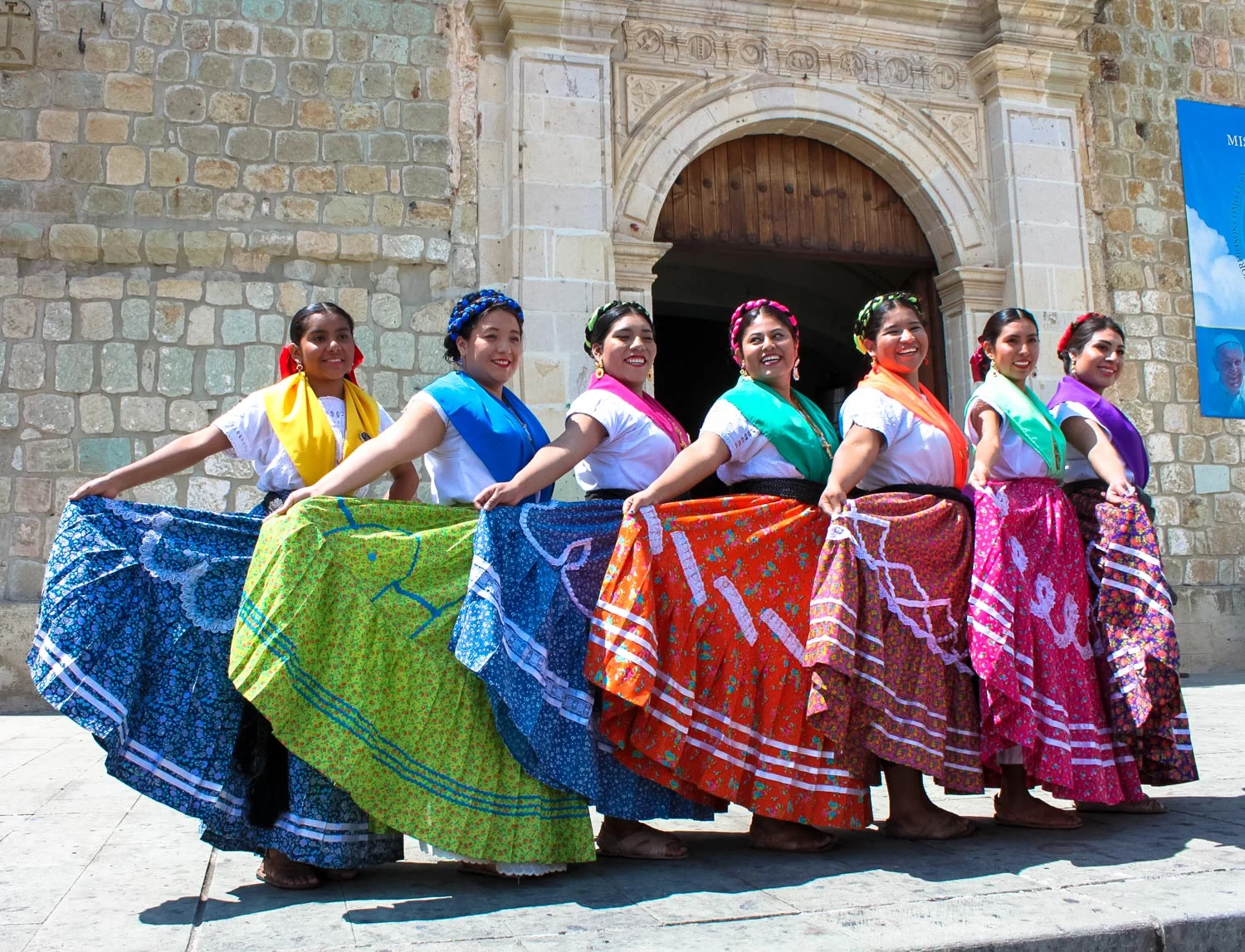
The festival encouraged local business owners all around the city to give away free “agua” to passersby and there were also a variety of the more popular flavours available to try at the festival. It was a great opportunity for me to try some of the more “interesting” flavours that I wouldn’t usually want to buy due to their strange consistency and colours!
Some of the flavours of aqua that you might find in Oaxaca include tamarind, hibiscus and agua de horchata, my personal favourite which is made with rice, vanilla and cinnamon.
Moral of the story is - if you see a festival happening while you are in Oaxaca, you should definitely take some time to check it out. You never know what you will learn and what you will get to try.
The Quinceañera is the celebration of a girl’s fifteenth birthday in many parts of Latin America and it marks the transition from childhood to young womanhood. The party I was invited to was for the daughter of my good friend’s Spanish teacher. As there was not going to be anyone who was likely to speak English there she was allowed to bring a plus one.
We were super excited to attend the party as neither of us had been to a Quinceañera before and the opportunity to visit a new village was a big positive as well. The morning of the party we were stressing about what to buy as a present and kept being advised that a bottle of mezcal was definitely the right choice. So with a present appropriate for a fifteen-year old (apparently) we hopped into collectivo and off we went.

Party Time!
Side note about public transport in Oaxaca: The most common way to get around is by collectivo which is essentially a maroon and white coloured taxi which will have a placard on the dash stating location. The collectivo has a regular route and you just need to know where you’re headed too and let the driver know where you want to get off along the way. It’s called a collectivo because you’re essentially sharing the ride with anyone else who flags the driver along the route.
The most interesting part is that the driver will try to squeeze in as many people as possible and this means that you could get as many as two people in the front seat with the driver and four in the back seat. My top tip is to always choose the back seat when you jump in. You definitely don’t want to be in that awkward spot with the gear stick being jammed into your calf over and over again!
Once we were well on our way and everyone else had gotten on and gotten off, we started to have a chat with the driver and learnt that he lived in this small village and knew the party girl! We probably should not have been as shocked once we saw the size of the town. He drove us right to her door and told us how regularly the collectivos left for when we were ready to leave.
The party was well under way by the time we got there as I had mastered the art of “Latin American time” and we were introduced to the birthday girl. She was dressed in the most beautiful and elaborate dress and, compared to the rest of us, looked like a princess. I felt seriously underdressed but apparently it’s tradition for the Quinceañera to wear the big faux-wedding dress so no one really felt out of place.

So many cakes for one girl!
After a touching speech from her obviously proud parents, there was cake cutting and then we feasted! There was so much to eat and everything looked amazing. There was lots of grilling going on and also I got to try lots of things I would not usually.
The afternoon was pretty spectacular, spending time getting to know her friends, family and neighbours as we all ate and listened to music but the best part was towards the end when she gathered al her friends together to open presents. This day has turned into one of my most memorable times in Mexico because of this beautiful girl and her little sister. Sometimes watching a child open presents can be a depressing thing for me. Seeing their bored reaction after opening pricey toy and after pricey toy which are then all shoved in a corner to be forgotten about.
The birthday girl spent so much time savouring every moment opening every present and even turned it into a little game by having the guests try to guess what the present could be. She even let her little sister open some as she was desperate to join in on the fun. She also loved book presents the most and her eyes would glisten over in excitement every time she thought she was about unwrap a book.
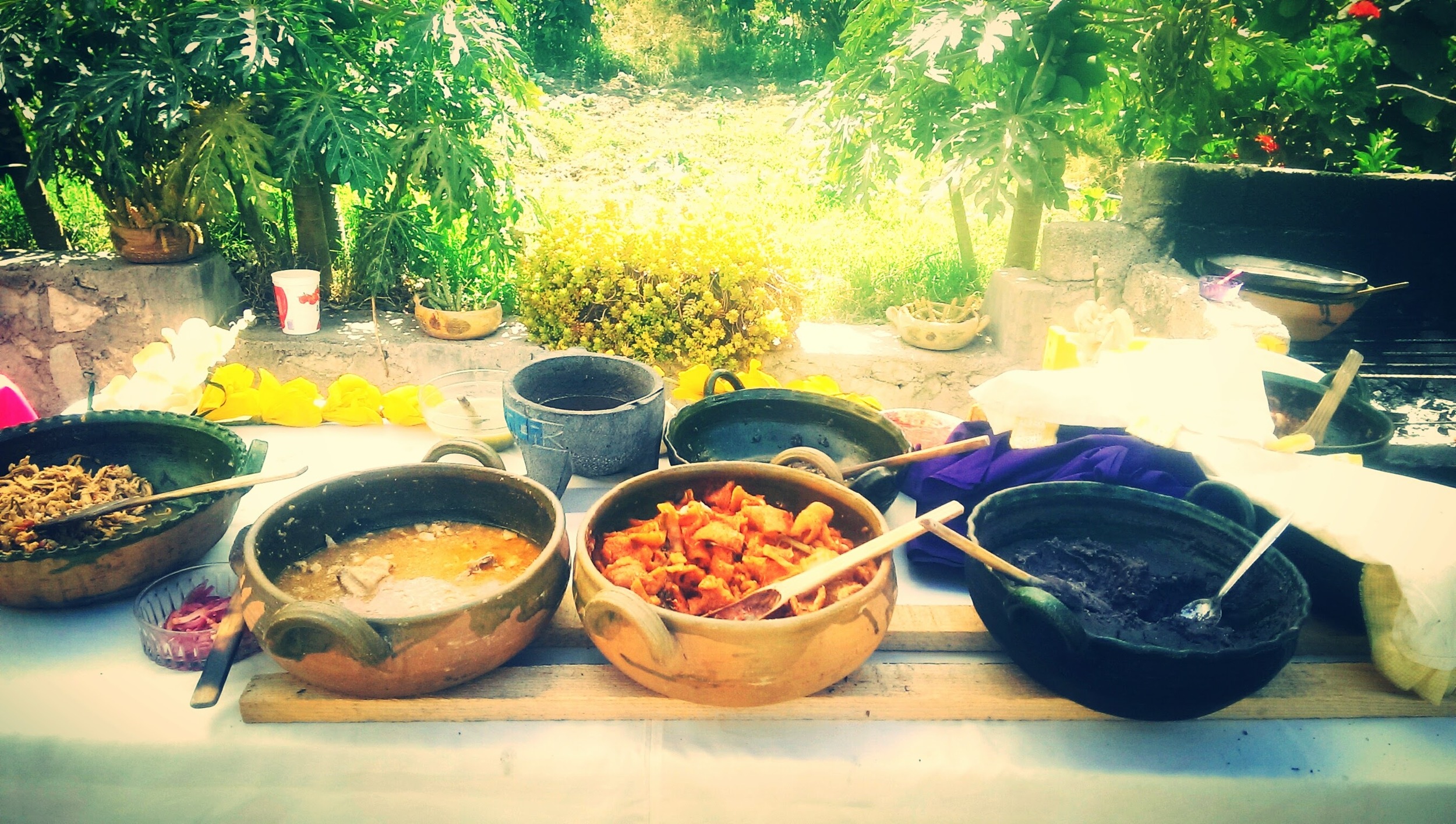
After opening the presents we started to play some party games and all the kids begged us to join in. They were super sweet and even got into charades with my friend who’s Spanish was non-existent. It was truly special to spend time hanging out with fifteen year olds who actually acted like fifteen year olds.
When we left they treated us like family and all saw us out and made sure we got into the collectivo. I am so grateful that I was lucky enough to peer into the life of a fifteen-year old in one of the smallest towns in Oaxaca. I love travel because I am gifted with these experiences! Have you ever been to a Quinceañera and was it a smaller event like mine or one of the large elaborate types?

Read more about Mexico and Central America!

Mazunte - A Pacific Paradise
Of all the beaches I’ve been to on the Pacific coast, Mazunte is definitely my favourite. During the day there are huge pelicans diving for fish and beautiful hummingbirds flitting around. Everyone seems to respect the peace and there is rarely any loud music blaring, at the most you might hear the strains of a guitar or drumming.
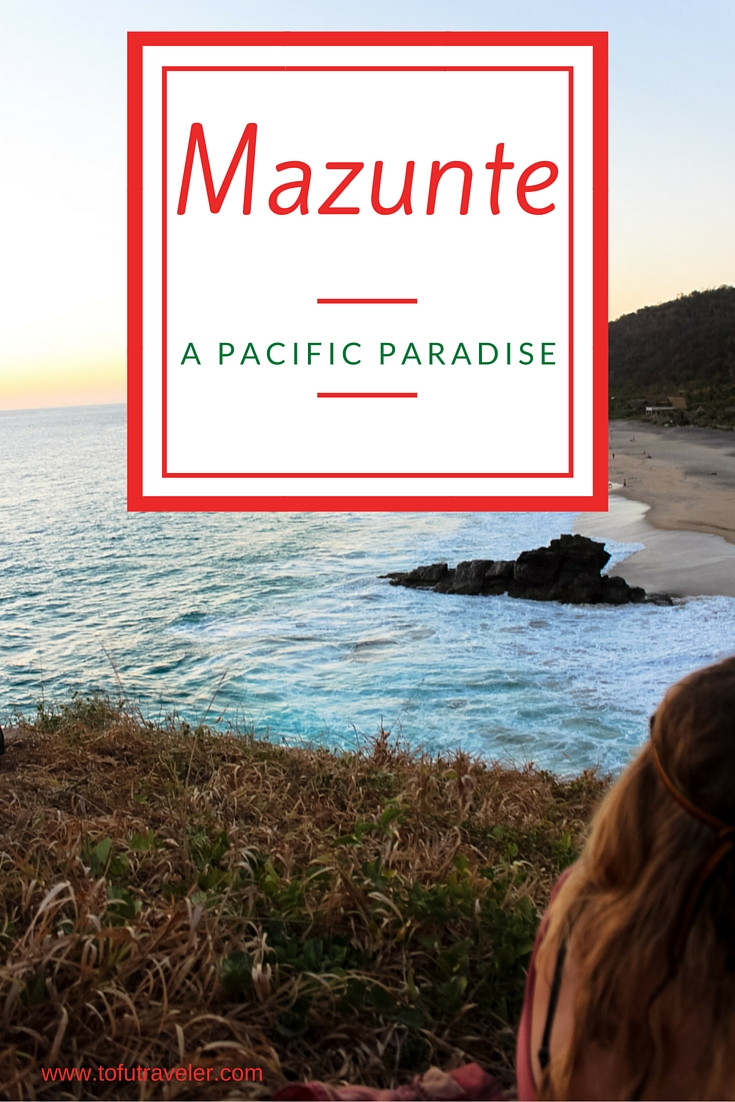
Here’s a tale about one of my favourite places in the world. I intended to visit for a couple of days just to de-stress and get some sun after the chilly nights of San Cristobal but ended up staying for a whole week. I could have stayed much longer had I not already committed to volunteering in Oaxaca City.
I took a night bus to San Pedro Pochutla and then a colectivo to Mazunte. A colectivo can really be anything, often a minivan or taxi but in this case, it was the back of a pickup truck. As more and more people piled in along the way, I was eventually squished next to two lovely older men and got to find out about what they did in Mazunte and they loved telling me about their families.
As we were nearing the coast and I could start to smell the sea air, we got stopped by a road block. The police were checking licences and it turned out our driver deigned not to carry one that day. We sat in the back of the truck for about five minutes as the passengers continued to make jokes and were in general good spirits even though we were about to be stuck a 20 minute walk from our destination.
Everyone eventually realised the police were not going to let us continue so we all hopped out and made our way down the hill to Mazunte. By this time it was seven in the morning and not much was happening. I heard this could be a bit of a hippy town and witnessed a few early morning locals going about their business but it was quiet otherwise.
Upon my first sighting of the beach I knew this was the place for me. I settled into my new hostel, Posada Del Arquitecto, which was right on the beach and started my new life in Mazunte.
There is really not much to do in Mazunte but everyday my friends and I would find ourselves declaring, “Another perfect day in Mazunte!” The weather is lovely, the people are relaxed and if you want to spend some time doing absolutely nothing surrounded by natural beauty then this is the place to be!
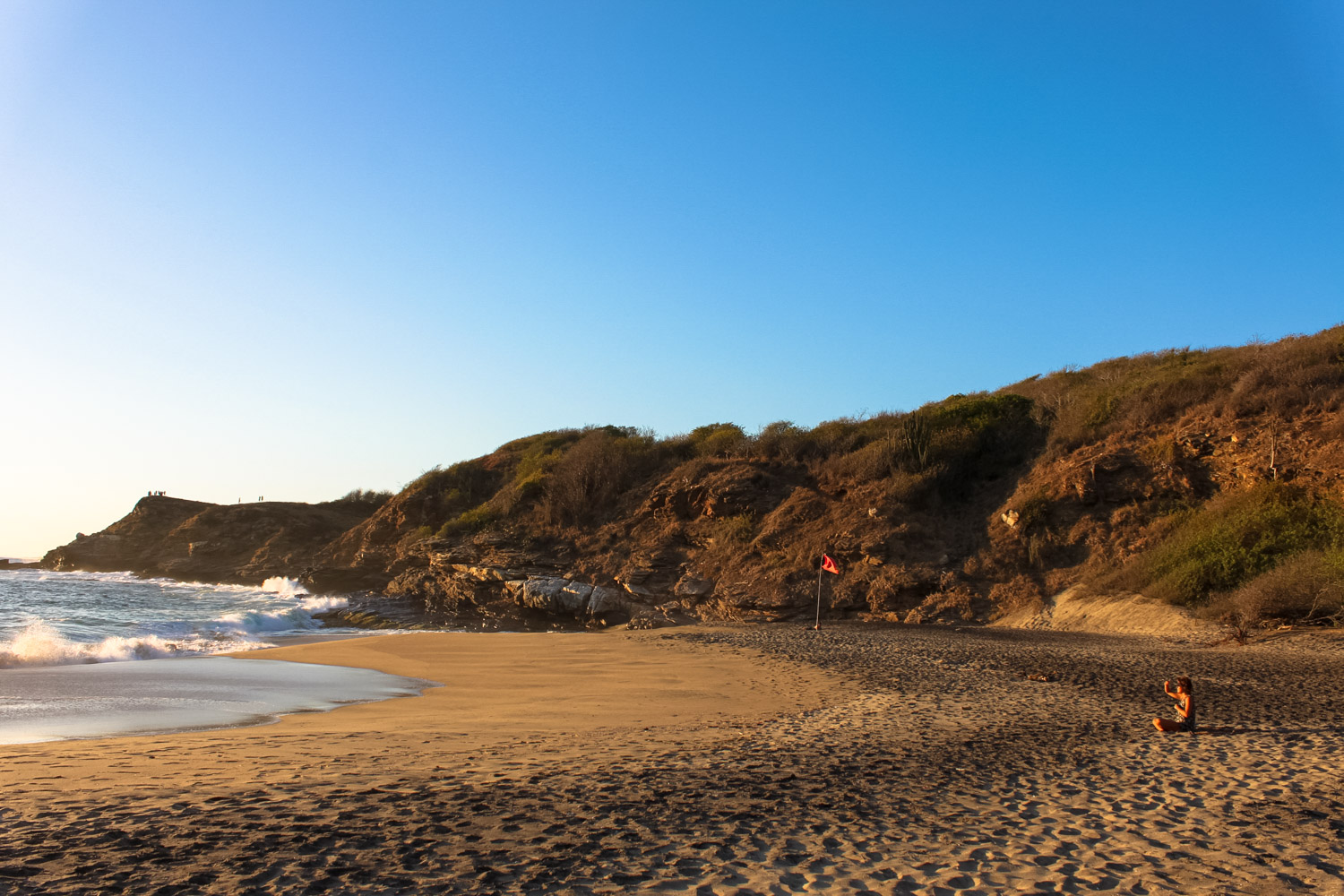
Eating and drinking
There are some genuinely great places to eat including a spectacular wood fired pizza place run by a real Italian, a fish and chip shop, a falafel place, an Italian gelato stand and a juice bar where you can get a litre of juice for 35 pesos! Due to the large expat community you will really be surprised by the variety and quality of food available.
Cafes and restaurants seem to open whenever they want to so you can't plan anything. It's like a nice surprise as you walk through town and find that your favourite places are open. The main street always seem new to me because of this phenomenon; there's always a different combination of stores opened on any given day.
You can also eat your way around the world just by laying on the beach as food vendors bring around a variety of treats for you to snack on. My personal favourites were the sushi lady, the pizza lady and the donut guy.
Most nights there's usually a movie night in one of the hostels. The organisers post a flyer up everyday with details of that night’s movie and location. Depending on the hostel they’ll offer some drink specials and even some dinner options. While I was there, they played a variety of movies from recent blockbusters (like The Revenant) and more classical movies from the 1920’s.
There's not much party life here so you could easily find yourself in bed by 11 so you can get a full night's sleep before you wake up for the sunrise or morning yoga.
If you do want to party, you can walk the streets and there’s usually a gathering of people outside the juice bar, where they offer 2 large mojitos for 100 pesos or the Mezcaleria is open Friday and Saturday nights with live music late into the evening along with free mezcal tasting.

Chasing the sunset
You can watch the sunrise right from the beach in Mazunte but need to walk to another beach to see the sunset. Every afternoon about 4:30 pm locals and foreigners alike start congregating on the beach to see the evening in. Those who are up to a walk start heading to the hill to do the sunset hike.
You start by walking through some local forest while gradually climbing up to a point looking back down to the Mazunte beach. There’s usually a lovely Portuguese lady selling some delicious chocolate truffles and other treats and you could stay here and witness the sunset if you’re not up for anymore walking (or you ate too many chocolate truffles!).
After hanging out here for while, you climb down to an almost deserted little beach where you can sit and stare as the sun sets seemingly right in front of you. Take a dip in the orange waters and fully immerse yourself in this spectacular time of the day.
After watching the sun set for a bit on this beach, everyone then heads up to the furthest point, Punta Cometa. You walk through some more forest, pass some spectacular rock formations and then come upon the point which takes my breath away every time.
The sunset is different every day and since you’re now on Mexican time and you take things as slow as possible then you’re always in a hurry to catch that last bit of sunset as you head toward the point, making it even more special.
From here, it’s all about sitting and staring in awe at the sunset and the otherworldly atmosphere of the beach below. There are huge rocks with some real personality and it almost reminds me of landscapes you encounter when traveling through Salar de Uyuni and South East Bolivia.
Once the sun sets, you still have another hour or so of dramatic orangey-coral landscapes to soak up so you can stay on the point or climb down to the beach below. Once there you can take another swim or head to the small bar located right on the beach for a very strong cocktail or some nibbles.
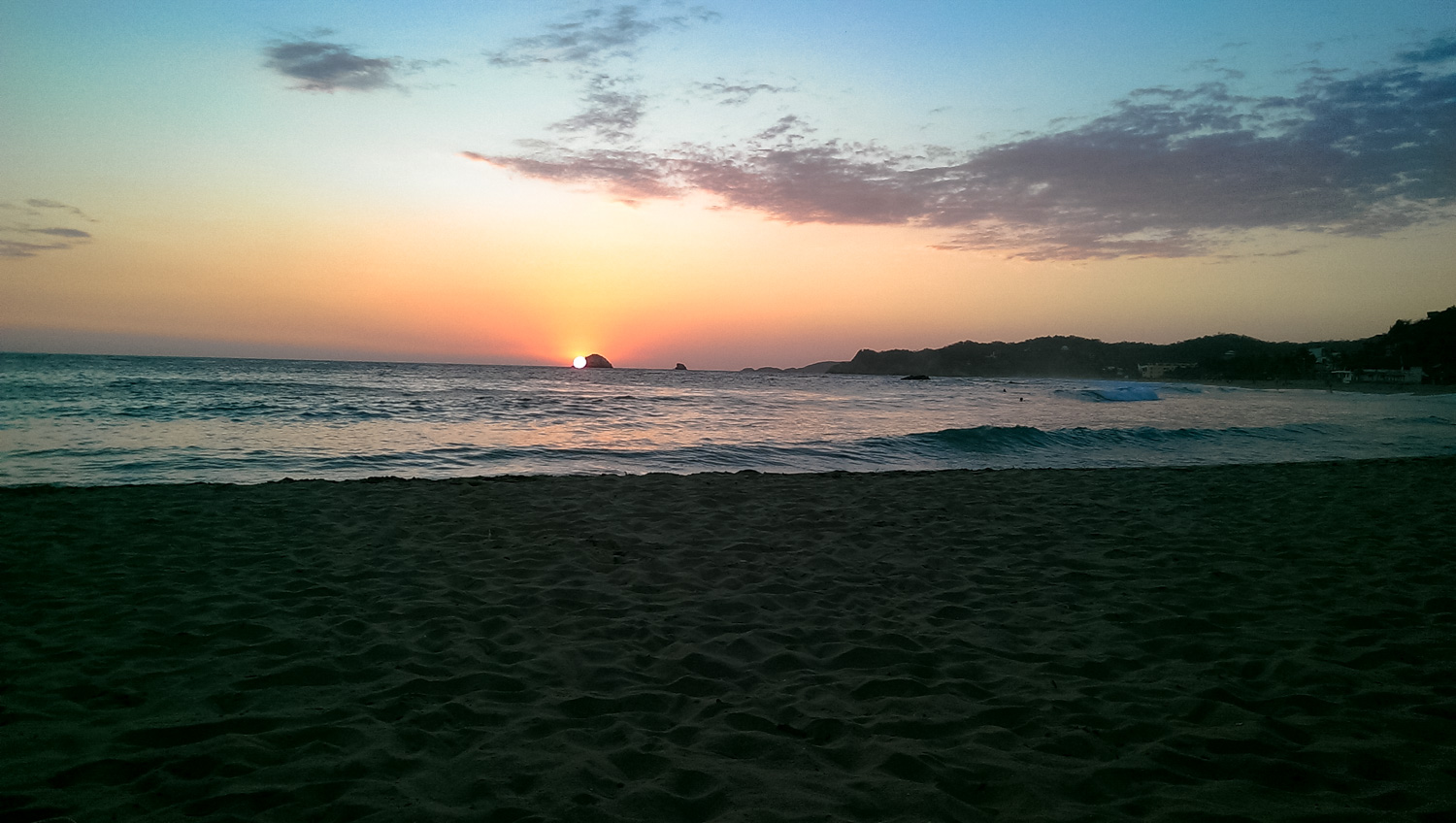
A Pacific Paradise
Of all the beaches I’ve been to on the Pacific coast this is definitely my favourite. During the day there are huge pelicans diving for fish and beautiful hummingbirds flitting around. Everyone seems to respect the peace and there is rarely any loud music blaring, at the most you might hear the strains of a guitar or drumming.
In Mazunte you can do yoga every morning for as little as 50 pesos. You can sleep in a swinging bed looking out into the coast for 90 pesos. You can eat like you’re in Europe or indulge in local Mexican fare. You can do nothing at all and still end the day with a contented sigh and a stupid grin on your face because you’re just so happy to be there.


A Traveler's Guide to the Corn Islands, Nicaragua
The Corn Islands in Nicaragua are a special place to visit. I wasn’t sure which I would like best so I spilt my two weeks between the two islands evenly. I actually enjoyed my time on both islands and would recommend either but here are some of my observations between the two which might help you choose where to spend your time.

The Corn Islands in Nicaragua are a special place to visit. Even now, several months later and many islands later, I still look back fondly at my time there. It’s a bit out of the way and I think for that reason you don’t get the swarms of drunk backpackers like you can find at Utila, Honduras or Caye Caulker, Belize and there is still plenty of quality and inexpensive diving available.
I wasn’t sure which I would like best so I spilt my two weeks between the two islands evenly. I actually enjoyed my time on both islands and would recommend either but here are some of my observations between the two which might help you choose where to spend your time.
Solo travel on the Corn Islands
At Big Corn, it’s not as easy to meet other travellers because the island is quite big and all the hotels are spread out, there’s no central hotel zone. If you’re here with a friend or partner and just want to relax on a beautiful island without seeing hundreds of other tourists, then this is the place for you.
On Little Corn, even if you don’t meet people where you are staying it’s so easy to just walk down the main road and meet other travellers hanging out at the various bars and restaurants. The local to tourist ratio is definitely off here but you can still find some tranquility by going for a walk out of the main strip and exploring the island.

Diving
One common activity that many visitors to the islands share is diving! You will also meet so many people on your various dive adventures! The most popular dive site is a little way from both islands (40 mins from Big Corn and an hour from Little Corn), Blowing Rock. This site is incredible. As soon as you jump off the boat and peer down you will spot many large schools of fish.
Snorkeling
Snorkeling at both islands is incredible but I found it a lot easier to find sites on Big Corn. There seemed to be good snorkelling at many places around the island. On Little Corn there are five or six specific spots where you can snorkel and they may not be that close to your hotel. There are still, however, spectacular! I spotted a spotted eagle ray very close to the shore at one of the sites.


Local interaction
Little Corn Island has a very chill vibe. Every afternoon if the sky is clear, you can spot foreigners and locals alike taking some time to check out the amazing sunsets.
On Big Corn Island I really enjoyed catching the collective taxis and sharing in the conversations with spanish-speaking and creole-speaking locals.
Eating out
Little Corn has great vegetarian options. Even the little restaurants have a vegetarian section on their menu! On Big Corn Island I often struggled to get a decent meal with vegetables. I ate a lot of pasta while I was there and used my breakfast for dinner trick quite a few times. On both islands it’s all about the seafood so if you’re looking for cheap lobster, you’ve found the place!
Beach time
On Little Corn I had a couple of special places where I liked to swim and lie on the beach to read a book. As it’s a small island, you would think that it would be inundated with people but I was often surprised at having great stretches of beach all to myself. You can really live out your desert island fantasy here.
If you want quality beach time on Big Corn, you might have to do some walking or get a taxi. There’s only a couple spots on the island where there is genuinely nice stretches of sand. Although, If you just want to go for a dunk in the water then you can really do that anywhere.
Still need help deciding which to choose? Check out my biggest comparison guide yet:
Big Corn VS Little Corn

Getting here
There are two main ways to get to the islands, flying or by land and sea. Flying is by far the quickest and most painless option and from Managua it will cost you about $180 USD return with La Costena. It’s slightly cheaper to purchase a return ticket but if you get in touch with the office, you can purchase an open ended ticket. The flight is approximately 70 minutes.
By land and boat it will take about 20 hours but you can stop over in Bluefields. I opted for the flight so don’t have much experience with this method but I did meet a few people who braved the trek and heard mixed reviews. Most people got along fine while one couple got stuck out in the ocean for a couple of days.
Where to stay
Big Corn Island
On Big Corn I stayed at Los Escapados, which is run by a lovely Aussie guy and his sweet dog. It’s kind of like glamping, where you stay in semi-permanent structures but it’s all lovely and well taken care of. He also offers breakfast for a very reasonable price which includes yummy treats like fresh coconut and fruit and tamarind juice.
If you want something a little more up-market check out Hotel Casa Canada or Arenas Beach Hotel. Both are under $150 a night and offer beachside accommodation.
Little Corn Island
Because I visited on the cusp of low season, there weren’t a lot of accommodation options on Little Corn. A lot of the food and hotel option were starting to close for the rainy season which meant that I didn’t have a lot to choose from. I wouldn’t recommend the place I stayed, Sunshine Hotel. It was adequate and kept clean and included air-con and breakfast but it was on the pricey side and breakfast was the same thing everyday, rice and beans and eggs with a small bowl of fruit.
If you’re visiting during the low season I’d suggest visiting a few places around the island to see what might suit you. Some of the hotels also offer discounts with the dive centres on the islands. There are some very basic cabins on the far side that offer you direct access to the beach, just head around there once you get off the panga and be prepared to negotiate.
I heard some really great thing about the Lighthouse Hostel for the backpackers and Little Corn Beach and Bungalow for a mid-price place.

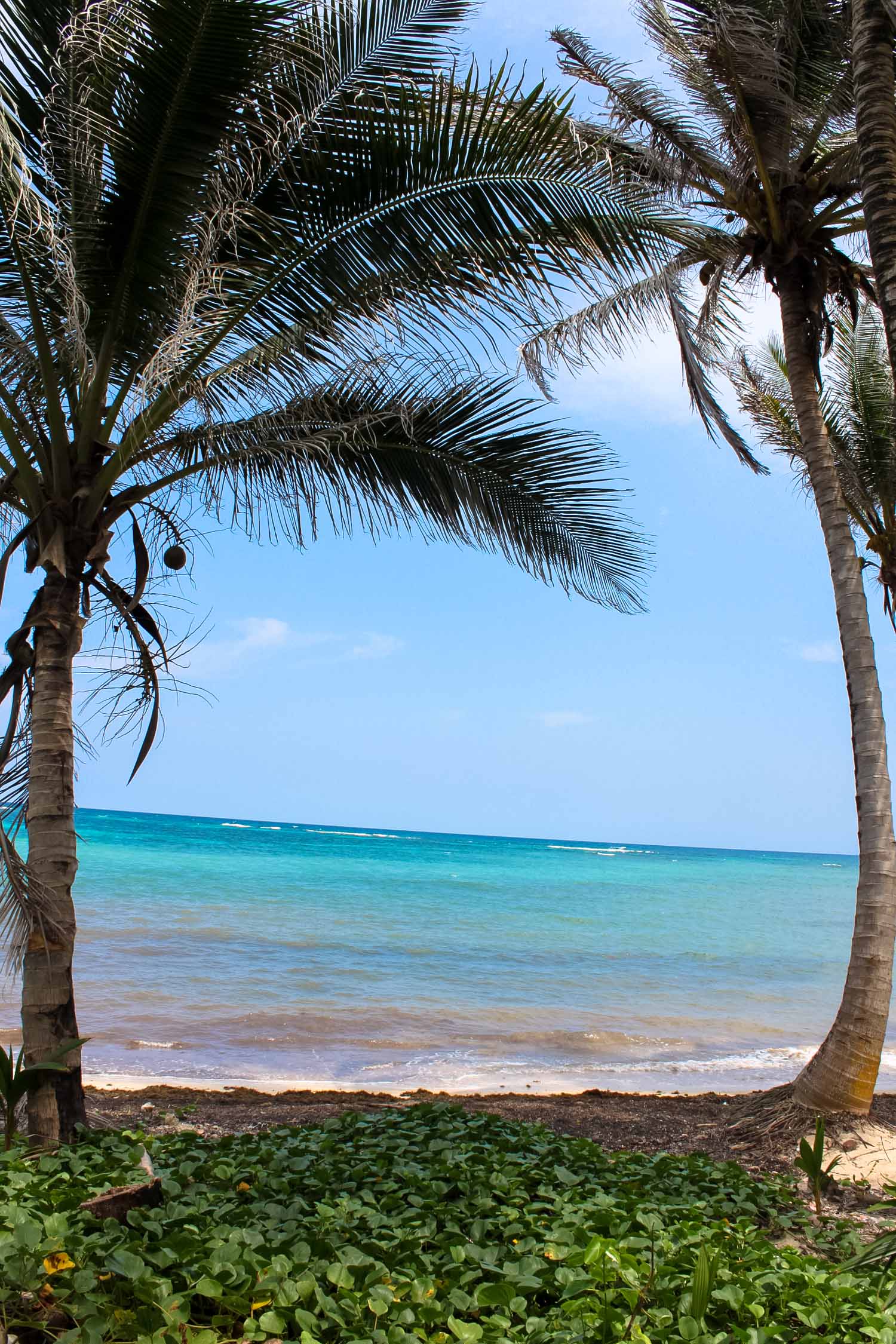

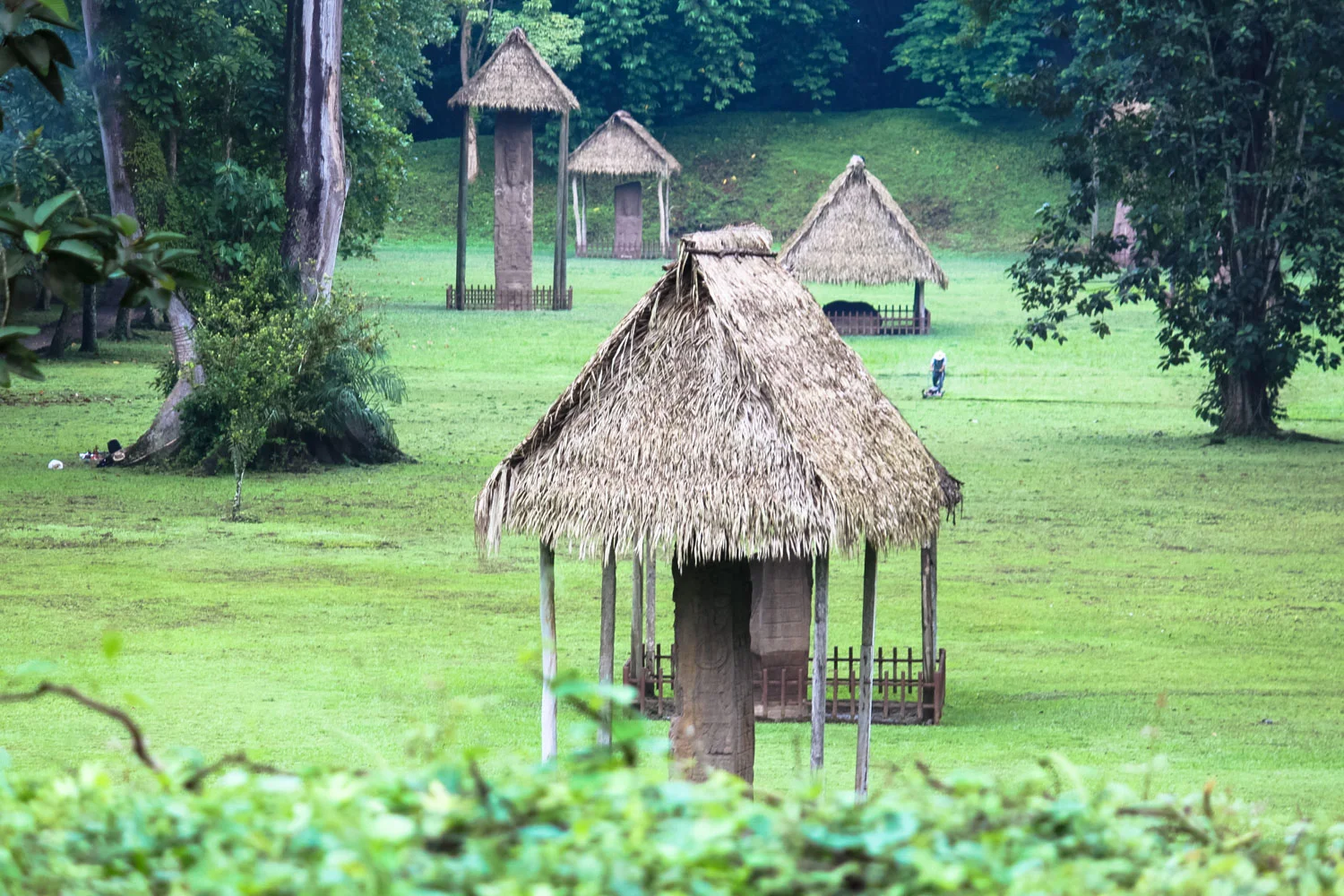
Travel Guide to Quirigua, Guatemala
The ruins at Quirigua are smaller than some of the better known ruins in the region, like Copan in Honduras and Tikal in Guatemala but still worth at least a couple of hours as stop over if you’re heading between the Rio Dulce/ Livingston area and Antigua or Guatemala City.

The ruins at Quirigua are smaller than some of the better known ruins in the region, like Copan in Honduras and Tikal in Guatemala but still worth at least a couple of hours as stop over if you’re heading between the Rio Dulce/ Livingston area and Antigua or Guatemala City.
I enjoyed taking my time to walk through the site and explore on my own. Also if you’re lucky you might get to witness a traditional ceremony taking place.
There is a small gift shop on site as well as a shop for drinks and snacks. Located near the entrance is a museum which you shouldn’t forget to visit.

A TRADITIONAL CEREMONY AT QUIRIGUA RUINS
What to wear
Depending on the weather, I would strongly suggest wearing your hiking boots/sneakers or shoes you don’t mind getting dirty. There wasn’t a lot of rain at the time of my visit but the grounds were still inundated with mud. You should be fine if you stick to the gravel path but where’s the fun in that!
Also remember:
- insect repellant
- sun screen
- hat
- long sleeve shirt and pants
How to get here
You can stop here on your way to or from the Rio Dulce/Livingston area. You should be able to buy a bus ticket and advise them that you want to get off at Las Ruinas de Quirigua.
Note: If you’re planning to stay in town, request to get off at PASARELA de QUIRIGUA. It’s just a little bit further down the road from the ruins stop but it saves you having to walk until you find a tuk tuk.

Traditional Japanese meal at posada de quirigua in the smallest town of quirigua, guatemala
Where to stay
Besides the ruins there is really not much to do in town but if you’d like to take a night to recharge or take a break from bus trips, then I highly recommend staying at Posada de Quirigua. Check out their excellent reviews on Trip Advisor.
The Posada is run by the lovely, Japanese-born Masaki and you can tell instantly by the detailing of the posada that she has put a lot of herself into the rooms and the surrounding gardens.
The room comes with a delicious breakfast where you choose from a typical Guatemalan meal or if you've had enough local cuisine, you can try something new with a Japanese breakfast. Masaki also offers dinner for a reasonable cost and I can attest that every meal I had at Posada de Quirigua was delicious and creative. It was a real treat staying in a Japanese style posada and sampling Japanese fare while travelling through Central America.
This post is part of my Top 30 in Central America and Mexico. You can also check out some more of my favourite sites and activities in Guatemala here.


Why You Should Give Livingston A Chance
Livingston is a small town with several places to explore, including the Siete Altares. The best part for me was just wandering around town, chatting to the local people and experiencing life in this very different part of Guatemala.

When I was deciding whether I should visit Livingston I read a lot of negative impressions of the town online. Many people felt that it wasn’t worth staying here for more than a few hours or a day in transit; that it was unsafe and dirty and; that it was full of hustlers and people trying to make money off you.
Information online was scarce and I worried that this would be another fishing village that would test my vegetarian diet once again.
I found the exact opposite. When I walked off the boat in Livingston I was asked by one young man if I already had a place to stay and when I told him yes, he left me alone. Walking out of the small port I was greeted with Garifuna music and I really felt like I’d found somewhere I could explore for a few days.
It’s a small town but there are several places to explore, including some great food options. The best part for me was just wandering around town, chatting to the local people and experiencing life in this very different part of Guatemala.
Livingston does have a problem with trash that has floated down river and collected here at the mouth of Rio Dulce but most of it is away from the main streets and there are still a couple nice beach areas that you can swim in to cool down.

Siete Altares
(Seven Altars)
Open from 6am to 4:30pm; Cost: 20Q
One of the best ways to spend half a day in Livingston is to visit the Siete Altares site. When you get there you don’t need a guide so you take your time to walk to the waterfall and then have a picnic or just bathe in the cool pool below. There is also a jump off the falls that you can attempt if you’re not afraid of climbing up there.
It’s about a 1.5 - 2 hour walk there and then another half an hour to the top pool and waterfall. To save some time you can take a taxi halfway and arrange for it to pick you up again. You can also get a boat directly to the site and arrange for a pick up.
The halfway point is Hotel Salvador Gaviota where you can stop for a drink or a meal either on the way there or the way back. There are beach chairs and hammocks for you to relax in along the shore.
If you have the time and if this is the only activity you do in Livingston, then I strongly suggest you walk the whole way there as you get to walk through the whole town and see life outside of the main tourist streets near the dock. You can always try to get a ride on a boat on the way back or get a taxi on you’re past the halfway point.
You will spot some trash on the beaches along the way which is kind of a downer but once you get to the site it is very well maintained.
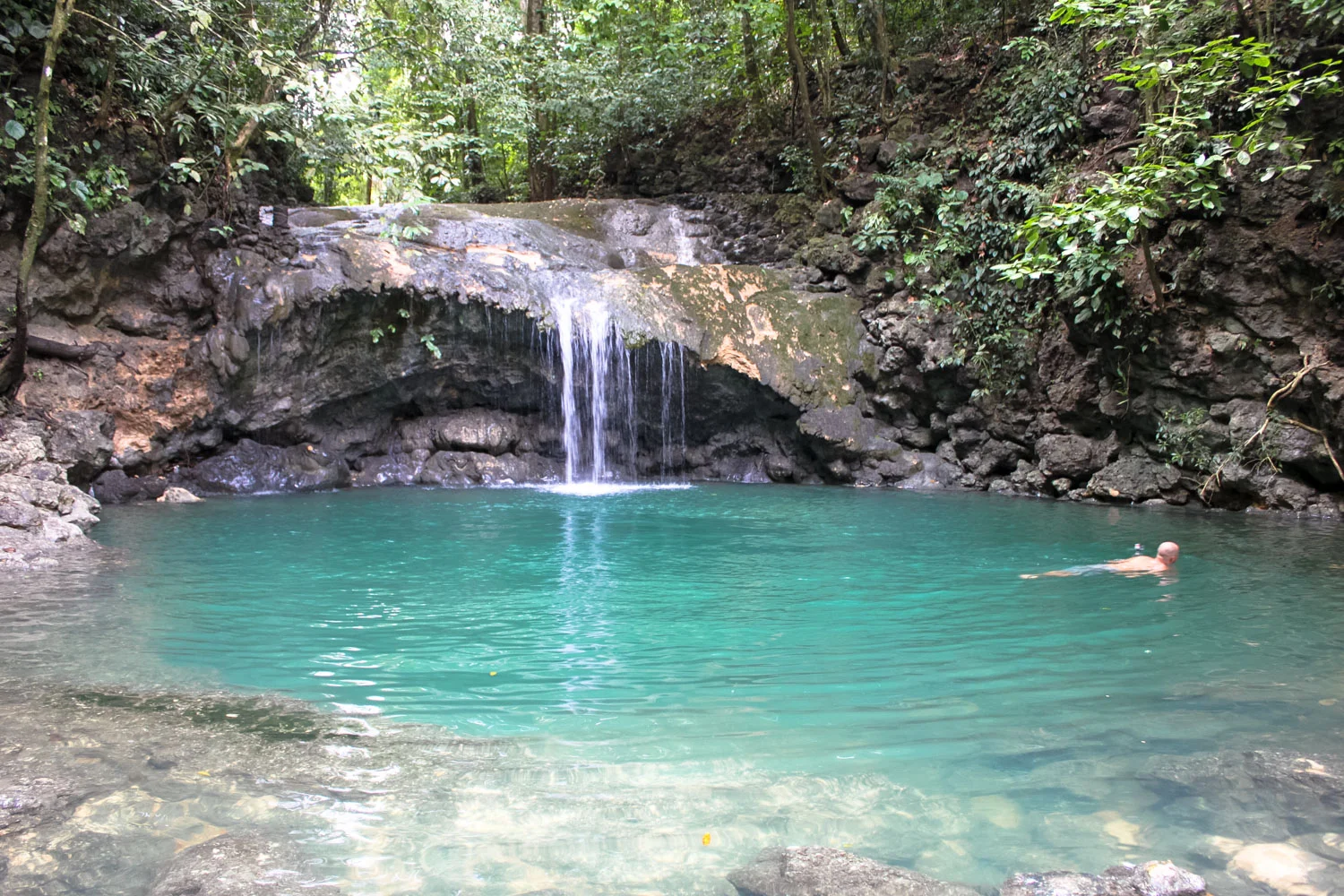
The Garifuna People
The Garifuna people are the descendants of West African, Central African and the Carib and Arawak people often found throughout the Caribbean. They speak the Garifuna language which has influences from French, Spanish and English so you might recognise some words every now and then if you stop to have a listen.
One interesting fact about the Garifuna people is that their name is actually derived from the Caribs who were originally called "Karifuna" which means the "Cassava Clan". "Garifuna" literally means "cassava-eating people". Cassava or yuca is a popular root vegetable used through Central America and in the Caribbean. You can get a sense of the rich history of the Garifuna people by trying some cassava bread in town.
Getting there and away
The best part about Livingston is that it is a convenient stop when visiting nearby Rio Dulce which is a popular stopping point for travellers en route to or from Honduras. As there are no roads in and out of Livingston, the journey is an experience in itself as you need to get a boat that will take you through some interesting sites along the way and you also get to see what life is like for people who live along the river.


Have you been to Guatemala and skipped Livingston? Or even better, have you visited and have anything else to add? Let me know in the comments below!

Get step-by-step instructions to help you get the yellow fever vaccine in Panama City. From costs, to how to get there and what to know about the clinic, find out how to navigate the whole process.