
Indian's Nose - Lake Atitlan
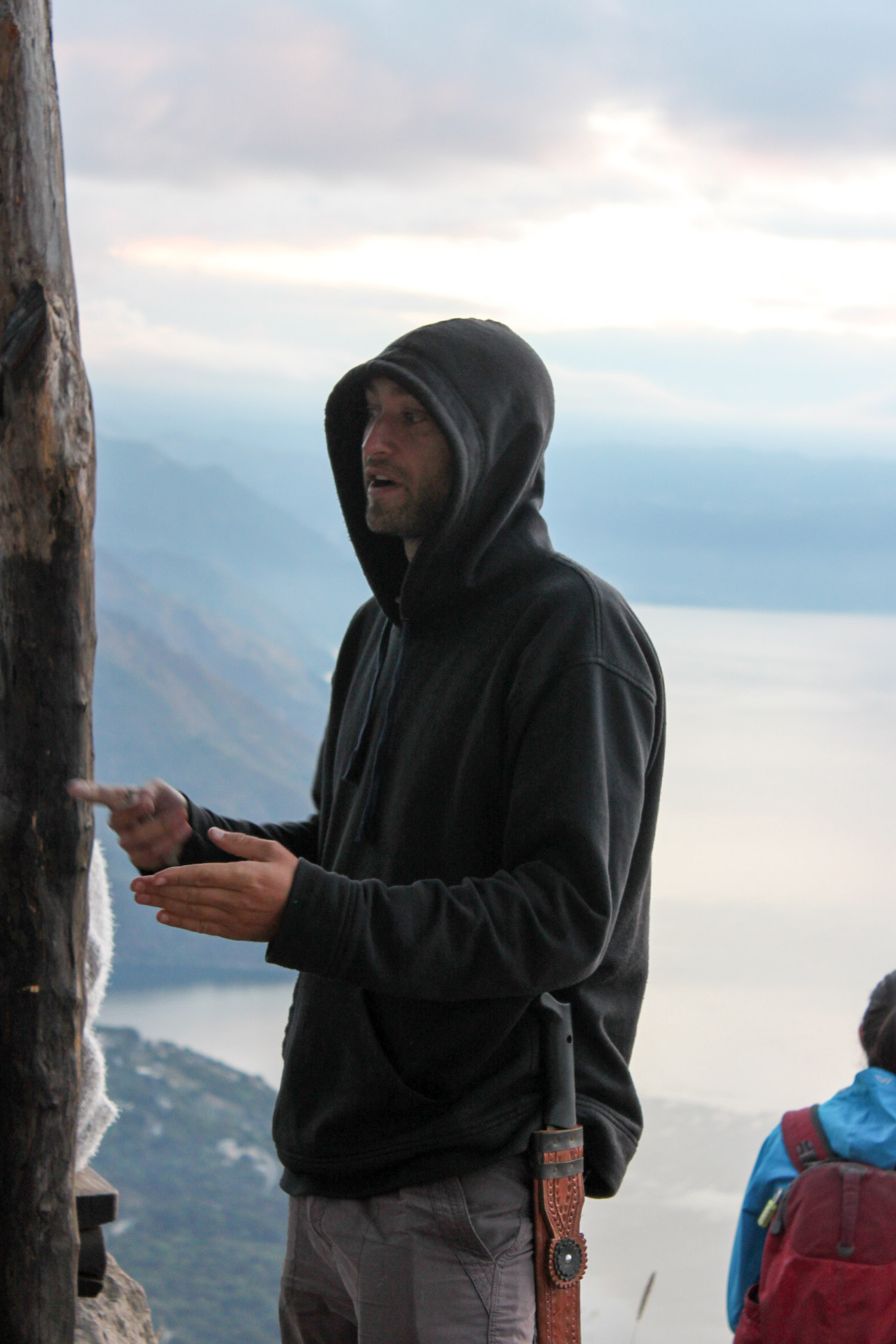
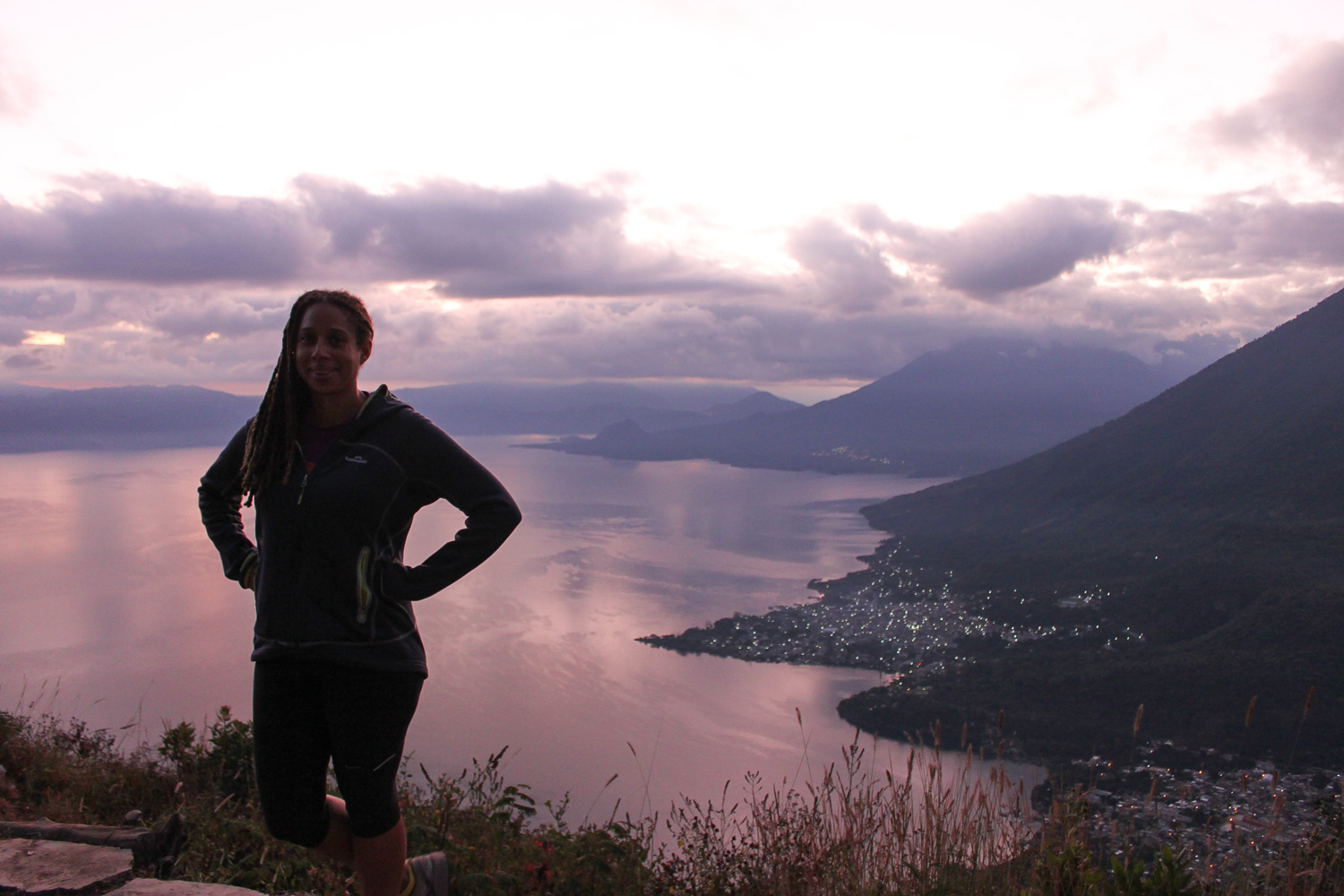
The Indian’s Nose viewpoint sits at at 2,863 meters looking over the pueblos of San Pedro, Santa Clara and San Marcos. Its name comes from the fact the profile of the mountain looks like a sleeping Indian with the viewpoint as its nose. The hike is 1.5 to 2 hours of a very steep climb. Definietly worth it though!
While visiting San Pedro for a few days I found out about a moderate hike to see the sunrise over the lake. San Pedro is one of the larger towns located on Lake Atitlan and is known as a party town. This doesn’t stop the travel agencies from selling volcano treks to the nearby volcano and the shorter but steeper hike to Indian’s Nose.
The Indian’s Nose viewpoint sits at at 2,863 meters looking over the pueblos of San Pedro, Santa Clara and San Marcos. Its name comes from the fact the profile of the mountain looks like a sleeping Indian with the viewpoint as its nose. The hike is 1.5 to 2 hours of a very steep climb.
While I was doing my research on how to get there and whether I should do guide or no guide, I found out about an expat called Matt Purvis who is a geologist and runs specialist tours up to the lookout and around the area. Matt has a B.S.c. in Geology and an M.S.c. in The Science of Natural Hazards and the selling point of his tour is that you can learn all about how the area was formed and the unique history that makes up the region.

You can do this hike at any time of the day but the most rewarding time is early in the morning so you can see the sunrise. Worthy goal but we did have to get up at 3:30 am. I was more than happy to head to bed early to get some sleep but unfortunately we were staying in a bit of a party hostel. Picture me brushing my teeth in my pyjamas at 8 pm in the sink that is next to the bar declining offers for “just one more drink!"
I managed to convince one of my new travel friends, Laura, to do the hike with me but had some trouble waking her up the next morning. Why can’t everyone be a morning person like me?
Our guide, Matt, was full of energy when he arrived, while a few of the group looked worse for wear, myself included. I had woken up feeling dreadful and wasn’t sure my stomach was going to survive the hike. I didn't know if whatever was going on in there wanted to go up or down and I think it hadn’t made its mind up yet.
The worst part was while they were feeling ill because they had stayed up partying all night, I was genuinely unwell. I didn’t want to be lumped into the hungover category! To avoid this I was determined to get up that mountain and not make a word of complaint on the hike up.

Once we had the whole group together we headed to the chicken bus stop up the steep hill in San Pedro. Challenge #1 completed!
Challenge #2 was the chicken bus ride to the trailhead and after a few close calls, I managed to keep my small breakfast down.
The group gathered at the trailhead where Matt and his two local guides handed out flashlights. These were absolutely necessary because the trail is completely dark and quite slippery in some points.
We set off on some relatively flat terrain while navigating through the back of the town until we hit the start of the steepest hike I’ve ever done. For about an hour I climbed up the side of the mountain while simultaneously holding down my breakfast and praying that it wasn’t going to try to come out in a hurry through the other end.
I struggled to make it all the way to the top, determined to not look like a whingey baby and even tough I was one of the last people up there I was pleased to see the top. Matt and his guides has built a fire to help warm us up while we waited for the sun rise but after getting a few whiffs of the smoke I promptly threw up off the side and into the poor bushes.
The good news was I felt completely fine after that, I just wish it had happened earlier! I also got to experience the sunrise without feeling awful.

Success!
Once we had some coffee and a light breakfast and soaked in as much of the view as we could handle, Matt gathered the group together to go through his mini geology lesson.
From Indian’s Nose you can spot the 8 volcanoes of the region. Matt explained how they came to stand in a line and how Lake Atitlán was formed. He spent about 20 minutes going through the basics of volcano formation and the unique history of the region complete with diagrams and makeshift drawings in the dirt.

Lake Atitlan fills the Atitlan caldera, a huge hole in the ground caused by a massive volcanic eruption 85,000 years ago. The eruption has been named the Los Chocoyos event after the birds that now burrow nest holes into the extensive deposits.
To help bring the size of Los Chocoyos into perspective compare it with the eruption of some modern day volcanoes. When Mt. St. Helens in the US blew up in 1980, one cubic kilometre (1km3) of rock, lava and ash shot from the volcano. This seems small compared with the 1991 eruption of Mt. Pinatubo in the Philippines, which ejected around 10 km3 of magma, the largest in living memory.
These modern eruptions are dwarfed, however, by Los Chocoyos 85,000 years ago. A total of 270km3 of volcanic debris was thrown out of the caldera, covering Guatemala with ash and rock.
Ash from the Atitlan caldera can be found in the rock strata as far north as Florida and as far South as Panama and most of Central America would have experienced a darkening of the skies as the ash rose into the atmosphere. Crazy interesting right?

After his talk, we headed back down the mountain but via different path so we could experience a different viewpoint. We got to walk through some local maize fields and coffee plantations where one of the local guides also taught us about local medicinal practices and the interesting division of land. The parents divide the land up amongst their children and the children continue the tradition. What was once a large plot of land has now become many smaller plots.
I highly recommend hiking Indian’s Nose when you’re in the area and if you have the opportunity go through Matt! Hiking is so much more fun when you get to learn something new and unique to the area that you’re in.
“Matt Purvis
geotravelguatemala@gmail.com
+502 3168 8625”

What to take
- Definitely take a flashlight. Your guide might offer one or if you have a head torch, even better. It gets really dark on that trail.
- Wear some good shoes. Hiking shoes if you have them but anything enclosed is best. It can be slippery even just from the dew at that time in the morning so no flip flops.
- Wear layers. If you’re doing the sunrise hike then it will start off cold but that see hike will have you warmed up before you know it.
- A poncho in case of rain.
- Enough water, at least 1 litre.
- Some food for the top
- Have you ever had a tough hike that you almost couldn't finish?

You Might Also Like



Why You Should Give Livingston A Chance
Livingston is a small town with several places to explore, including the Siete Altares. The best part for me was just wandering around town, chatting to the local people and experiencing life in this very different part of Guatemala.

When I was deciding whether I should visit Livingston I read a lot of negative impressions of the town online. Many people felt that it wasn’t worth staying here for more than a few hours or a day in transit; that it was unsafe and dirty and; that it was full of hustlers and people trying to make money off you.
Information online was scarce and I worried that this would be another fishing village that would test my vegetarian diet once again.
I found the exact opposite. When I walked off the boat in Livingston I was asked by one young man if I already had a place to stay and when I told him yes, he left me alone. Walking out of the small port I was greeted with Garifuna music and I really felt like I’d found somewhere I could explore for a few days.
It’s a small town but there are several places to explore, including some great food options. The best part for me was just wandering around town, chatting to the local people and experiencing life in this very different part of Guatemala.
Livingston does have a problem with trash that has floated down river and collected here at the mouth of Rio Dulce but most of it is away from the main streets and there are still a couple nice beach areas that you can swim in to cool down.

Siete Altares
(Seven Altars)
Open from 6am to 4:30pm; Cost: 20Q
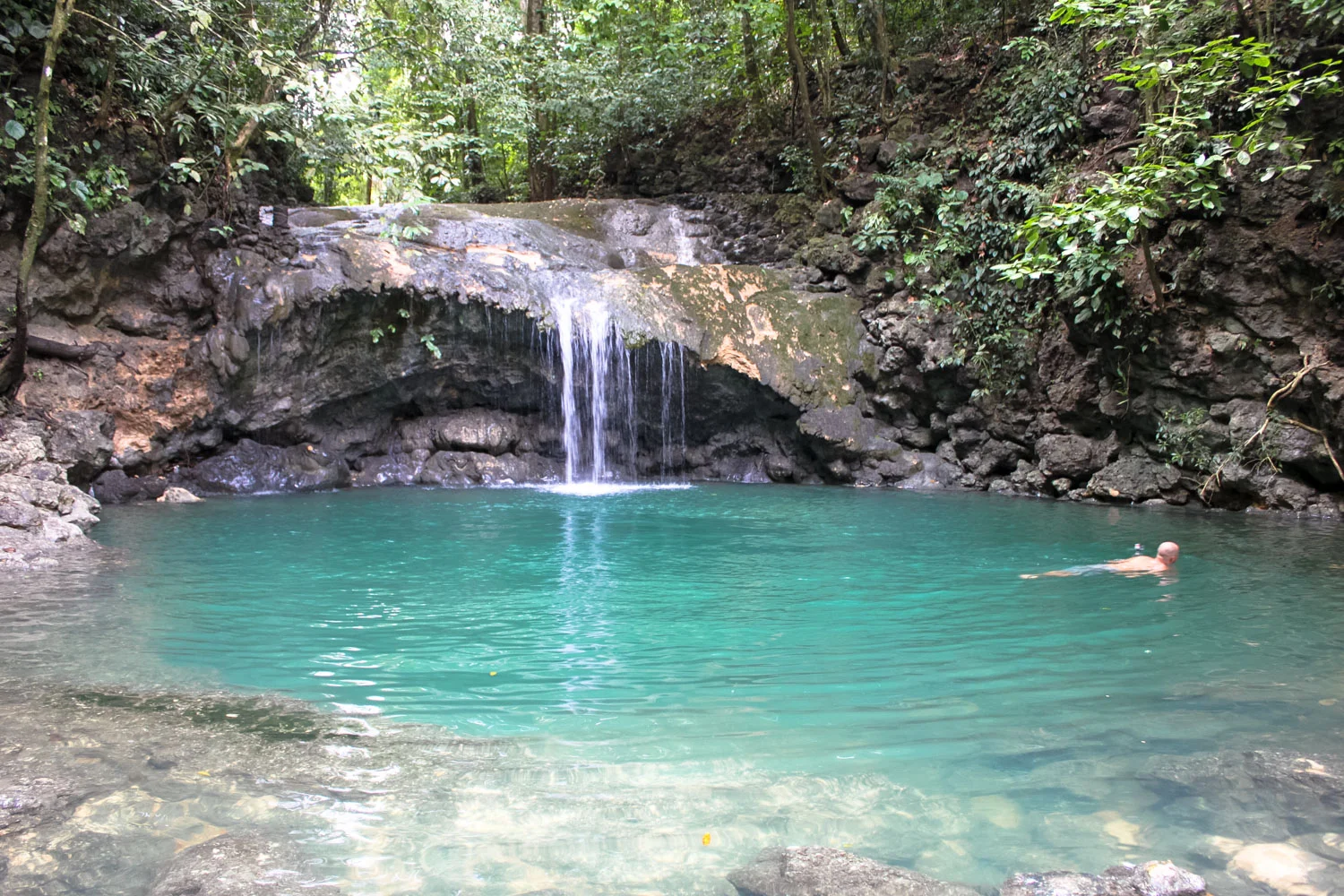
One of the best ways to spend half a day in Livingston is to visit the Siete Altares site. When you get there you don’t need a guide so you take your time to walk to the waterfall and then have a picnic or just bathe in the cool pool below. There is also a jump off the falls that you can attempt if you’re not afraid of climbing up there.
It’s about a 1.5 - 2 hour walk there and then another half an hour to the top pool and waterfall. To save some time you can take a taxi halfway and arrange for it to pick you up again. You can also get a boat directly to the site and arrange for a pick up.
The halfway point is Hotel Salvador Gaviota where you can stop for a drink or a meal either on the way there or the way back. There are beach chairs and hammocks for you to relax in along the shore.
If you have the time and if this is the only activity you do in Livingston, then I strongly suggest you walk the whole way there as you get to walk through the whole town and see life outside of the main tourist streets near the dock. You can always try to get a ride on a boat on the way back or get a taxi on you’re past the halfway point.
You will spot some trash on the beaches along the way which is kind of a downer but once you get to the site it is very well maintained.
The Garifuna People
The Garifuna people are the descendants of West African, Central African and the Carib and Arawak people often found throughout the Caribbean. They speak the Garifuna language which has influences from French, Spanish and English so you might recognise some words every now and then if you stop to have a listen.
One interesting fact about the Garifuna people is that their name is actually derived from the Caribs who were originally called "Karifuna" which means the "Cassava Clan". "Garifuna" literally means "cassava-eating people". Cassava or yuca is a popular root vegetable used through Central America and in the Caribbean. You can get a sense of the rich history of the Garifuna people by trying some cassava bread in town.
Getting there and away
The best part about Livingston is that it is a convenient stop when visiting nearby Rio Dulce which is a popular stopping point for travellers en route to or from Honduras. As there are no roads in and out of Livingston, the journey is an experience in itself as you need to get a boat that will take you through some interesting sites along the way and you also get to see what life is like for people who live along the river.


Have you been to Guatemala and skipped Livingston? Or even better, have you visited and have anything else to add? Let me know in the comments below!
